

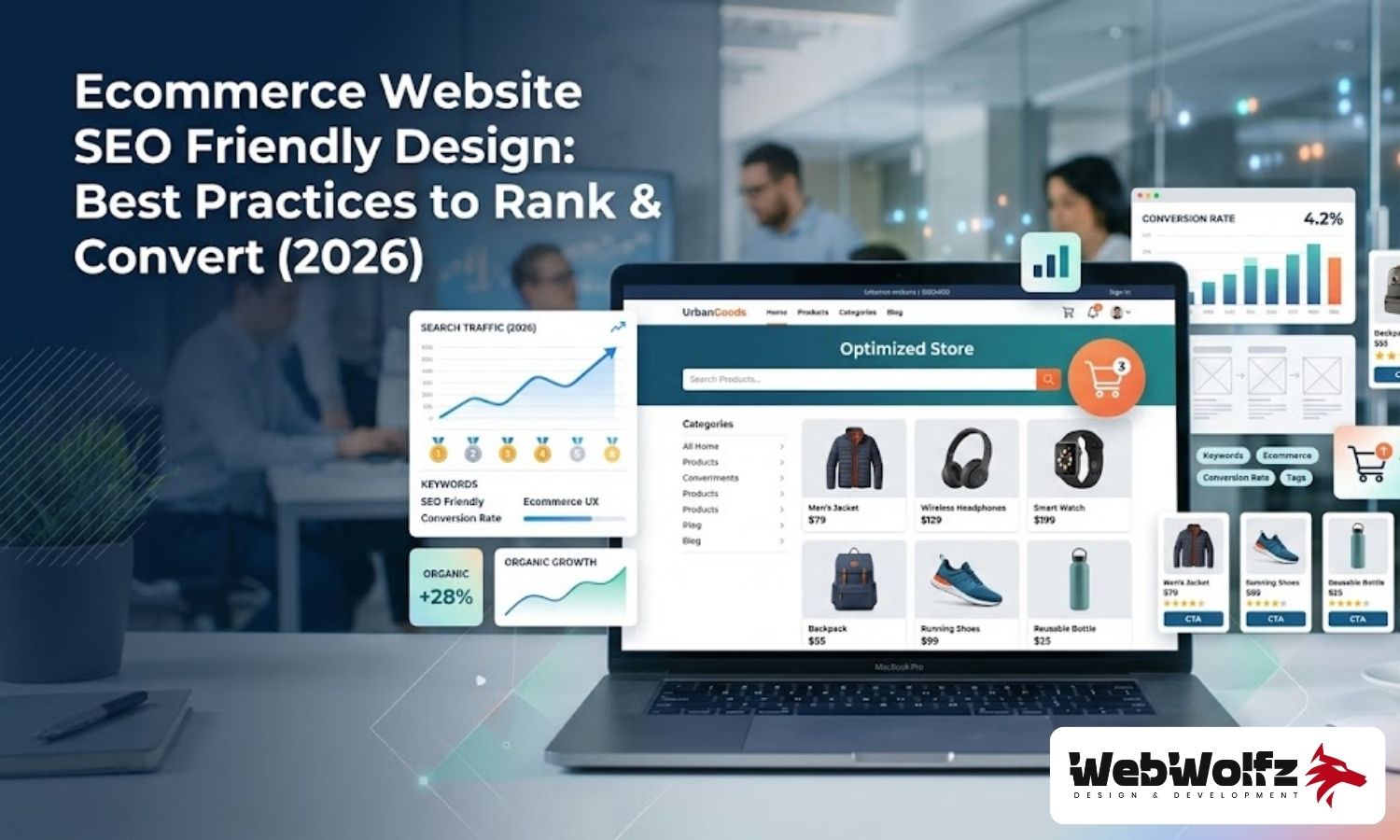
In the competitive world of online business, simply launching an ecommerce website is not enough. Thousands of ecommerce stores compete for attention every day, and most customers begin their buying journey through search engines. If your website does not appear in search results, potential customers may never discover your products.
This is where ecommerce website SEO friendly design becomes essential. A well-structured ecommerce website helps search engines understand your content while also providing a smooth experience for visitors.
In this guide, we will explore how SEO-friendly design works for ecommerce websites, what features matter most, and how businesses can build online stores that rank well and convert visitors into customers.
Why SEO Friendly Design Matters for Ecommerce Websites
Search engine optimization is often associated with keywords and content, but website design plays an equally important role. A poorly structured website can prevent search engines from properly crawling and indexing pages.
A strong ecommerce website SEO friendly design helps businesses:
-
Improve search engine rankings
-
Increase organic traffic
-
Provide a better user experience
-
Reduce bounce rates
-
Increase conversions and sales
When design and SEO work together, an ecommerce website becomes more visible and easier to navigate.
Key Elements of SEO Friendly Ecommerce Website Design
Several design elements directly affect how search engines evaluate and rank ecommerce websites.
Clear Website Structure
Search engines prefer websites with a logical structure. Product categories, subcategories, and pages should be organized in a way that makes sense for both users and search engines.
A typical ecommerce structure includes:
Homepage
Product categories
Subcategories
Product pages
Blog or resource pages
Clear structure improves both usability and SEO performance.
SEO Optimized URLs
URLs should be simple, descriptive, and keyword-focused.
For example:
example.com/shoes/running-shoes
instead of
example.com/product?id=123
Search engines can easily understand descriptive URLs, which improves ranking potential.
Mobile Responsive Design
Mobile traffic now accounts for the majority of ecommerce visits. Google also prioritizes mobile-friendly websites in search results.
Mobile responsive design ensures:
-
Easy navigation on phones
-
Faster loading pages
-
Improved user experience
-
Better search engine visibility
Google provides helpful guidance about mobile-first indexing and SEO here:
https://developers.google.com/search/docs/fundamentals/seo-starter-guide
Fast Page Loading Speed
Website speed has a direct impact on SEO and conversions. Slow websites often lose visitors before they even see the products.
Optimizing page speed involves:
-
Compressing images
-
Reducing unnecessary scripts
-
Using reliable hosting
-
Optimizing code structure
Fast websites perform better in both search rankings and user engagement.
User Experience and SEO Go Hand in Hand
Search engines increasingly prioritize websites that provide good user experience. This means ecommerce websites must be designed for both search engines and real users.
Important UX factors include:
-
Clear navigation menus
-
Simple checkout process
-
Readable product descriptions
-
High quality product images
-
Internal linking between pages
These elements improve both usability and SEO.
Product Page Optimization
Product pages are the heart of every ecommerce website. They must be optimized carefully to perform well in search results.
Effective product pages include:
-
Keyword optimized titles
-
Unique product descriptions
-
Structured product specifications
-
High quality images with alt tags
-
Customer reviews and ratings
Well optimized product pages help search engines understand what the product is about.
Importance of Internal Linking
Internal linking helps search engines discover pages and understand relationships between them.
Examples include:
-
Linking category pages to product pages
-
Linking blog posts to relevant products
-
Linking related products together
Internal linking also keeps visitors engaged by guiding them to additional content.
Content Marketing for Ecommerce SEO
Many successful ecommerce websites combine product pages with educational content.
Blog content helps ecommerce websites:
-
Target informational keywords
-
Attract organic traffic
-
Build brand authority
-
Guide users toward product pages
For example, an ecommerce store selling sports equipment might publish articles about training tips or product comparisons.
Common Ecommerce SEO Design Mistakes
Many ecommerce websites struggle with SEO due to avoidable design issues.
Common mistakes include:
-
Poor website navigation
-
Duplicate product descriptions
-
Slow loading pages
-
Non-mobile friendly layouts
-
Weak internal linking
Avoiding these issues significantly improves search performance.
Why Professional Development Matters
While website builders and templates are widely available, building a truly optimized ecommerce website requires technical knowledge.
Professional development ensures:
-
SEO friendly architecture
-
Clean and optimized code
-
Proper speed optimization
-
Secure checkout functionality
-
Scalable website structure
This is why many businesses prefer working with experienced developers rather than building complex ecommerce websites alone.
Why Businesses Choose Affordable Development Agencies
Managing ecommerce development, SEO, hosting, and maintenance can be time consuming for business owners.
Instead of learning technical tools and solving website problems, many companies prefer hiring an affordable and reliable development partner.
This approach allows businesses to focus on marketing, product management, and customer service while experts handle the website.
WebWolfz helps businesses build ecommerce websites that combine modern design with SEO friendly structure.
You can explore their web development services here:
https://webwolfz.com/web-development-service/
Cost of SEO Friendly Ecommerce Website Design
The cost of building an SEO optimized ecommerce website varies depending on complexity and features.
Typical pricing ranges include:
Basic ecommerce website: ₹25,000 to ₹40,000
Professional ecommerce website: ₹40,000 to ₹80,000
Advanced custom ecommerce website: ₹1,00,000 and above
Most businesses choose the professional range because it provides strong performance while remaining affordable.
Saving Time and Effort with the Right Partner
Running an ecommerce business already involves inventory management, marketing, and customer service. Managing website development and SEO at the same time can become overwhelming.
Working with a reliable development agency allows businesses to save time and focus on growth.
WebWolfz works with ecommerce brands that want professional websites without unnecessary effort. Their team builds websites that are optimized for search engines while maintaining clean and modern design.
If you want to discuss your ecommerce website project or get a clear estimate, you can contact WebWolfz here:
https://webwolfz.com/contact-us/
Final Thoughts
Building a successful online store requires more than attractive design. Ecommerce website SEO friendly design ensures that your website performs well in search results while also providing a smooth experience for customers.
Businesses that invest in SEO friendly ecommerce design benefit from higher search visibility, increased traffic, and better conversion rates.
With the right strategy and the right development partner, an ecommerce website can become one of the most powerful growth tools for any online business.