

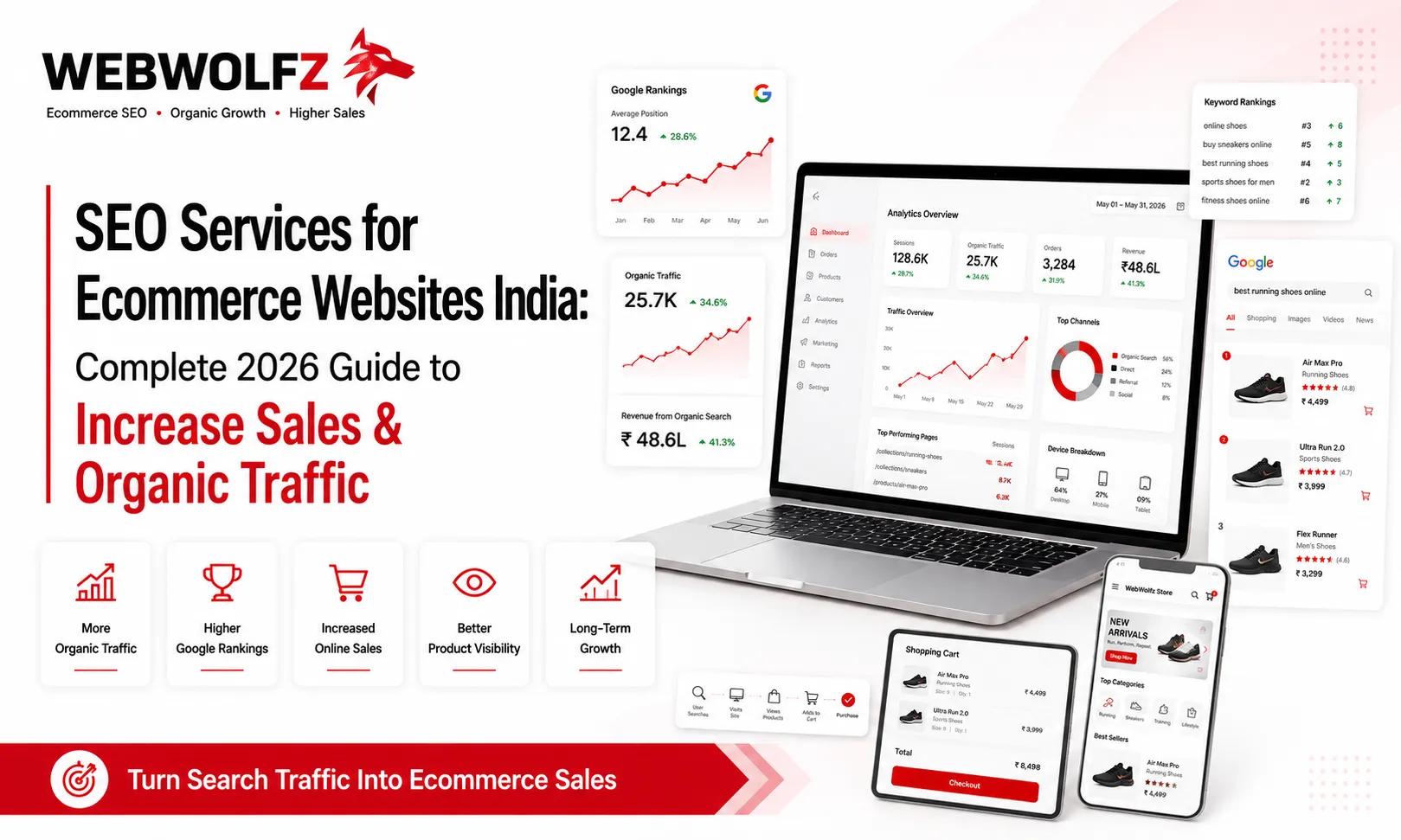
Running an ecommerce store in 2026 is more competitive than ever. Thousands of online stores are competing for the same customers, often selling similar products at similar prices. While paid advertising can generate quick traffic, long-term growth depends heavily on search engine visibility.
When potential customers search for products on Google, the stores appearing on the first page receive the majority of clicks and sales. Businesses that fail to rank organically often spend significantly more on advertising to stay competitive.
This is why many brands invest in SEO services for ecommerce websites India to improve rankings, increase traffic, and generate sustainable sales growth.
In this guide, you’ll learn how ecommerce SEO works, why it matters, the most important ranking factors, and how to choose the right SEO partner in 2026.
What Is Ecommerce SEO?
Ecommerce SEO is the process of optimizing an online store so that product pages, category pages, and informational content rank higher in search engines.
Unlike traditional SEO, ecommerce SEO focuses on:
- Product pages
- Category pages
- Shopping intent keywords
- Product schema
- Internal linking
- Site architecture
- Conversion-focused optimization
The goal is simple: attract customers who are actively searching for products and convert them into buyers.
Businesses looking for professional support can explore:
https://webwolfz.com/seo-services/
Why SEO Matters for Ecommerce Businesses
Many ecommerce businesses rely heavily on paid advertising.
The problem is that advertising costs continue to rise every year.
SEO offers long-term benefits such as:
- Sustainable traffic growth
- Lower customer acquisition costs
- Better brand visibility
- Increased trust
- Higher return on investment
According to Google’s Search Essentials documentation, high-quality content, strong technical performance, and user-focused experiences play an important role in organic visibility. Google Search Essentials
This is one reason why SEO services for ecommerce websites India continue to be a valuable investment for growing online stores.
How Ecommerce SEO Differs from Traditional SEO
A local business website may only have a few service pages.
An ecommerce store often contains:
- Hundreds of products
- Multiple categories
- Filters and faceted navigation
- Seasonal collections
This creates unique SEO challenges.
These include:
- Duplicate content
- Crawl budget issues
- Thin product descriptions
- Indexation problems
- Internal linking complexity
Proper optimization helps search engines understand and rank your store effectively.
Core Components of Ecommerce SEO
Keyword Research
Every successful ecommerce campaign starts with keyword research.
The focus should be on:
- Product keywords
- Category keywords
- Commercial intent searches
- Informational content opportunities
Related resource:
https://webwolfz.com/blog/seo-content-writing-services-india/
On-Page SEO
Product and category pages should include:
- Optimized titles
- Meta descriptions
- Header tags
- Image alt text
- Internal links
Learn more:
https://webwolfz.com/blog/on-page-seo-services-india/
Technical SEO
Technical SEO ensures search engines can properly crawl and index your website.
Key areas include:
- Site speed
- Mobile responsiveness
- XML sitemaps
- Canonical tags
- Structured data
Helpful guide:
https://webwolfz.com/blog/technical-seo-vs-on-page-seo/
Product Page SEO Best Practices
Product pages often drive the majority of ecommerce revenue.
Each page should include:
Unique Product Descriptions
Avoid copying manufacturer descriptions.
High-Quality Images
Images should be optimized without sacrificing quality.
Customer Reviews
Reviews improve trust and can increase click-through rates.
Structured Data
Product schema helps search engines understand pricing, availability, and ratings.
Internal Links
Link related products and categories strategically.
These improvements support both rankings and conversions.
Category Page Optimization
Category pages are often easier to rank than individual products.
A strong category page should include:
- Optimized category content
- Clear navigation
- Descriptive titles
- Internal linking
- Helpful filtering options
Many successful stores generate significant traffic through well-optimized category pages.
The Role of Content Marketing in Ecommerce SEO
Content marketing remains one of the most effective SEO strategies.
Content helps target informational searches that occur before purchase decisions.
Examples include:
- Buying guides
- Product comparisons
- Industry trends
- Educational resources
Related resources:
https://webwolfz.com/blog/how-seo-helps-small-businesses-grow/
https://webwolfz.com/blog/seo-company-for-new-websites/
Technical SEO Factors That Impact Ecommerce Rankings
Technical performance plays a major role in search visibility.
Important areas include:
Site Speed
Faster websites provide better user experiences.
Mobile Optimization
Most ecommerce traffic now comes from mobile devices.
Crawlability
Search engines must be able to access important pages.
Indexation Management
Only valuable pages should be indexed.
Helpful resource:
https://webwolfz.com/blog/website-seo-optimization-services-india/
Link Building for Ecommerce Stores
Backlinks remain one of Google’s strongest ranking signals.
Effective strategies include:
- Digital PR
- Guest posting
- Resource pages
- Industry partnerships
- Link-worthy content
Related guide:
https://webwolfz.com/blog/link-building-services-for-websites/
Why UX Matters for Ecommerce SEO
SEO is not just about rankings.
User experience influences engagement and conversions.
Factors such as:
- Navigation
- Site speed
- Mobile usability
- Checkout experience
all impact performance.
Helpful guide:
https://webwolfz.com/blog/ux-optimization-services-for-conversion-rate/
Google increasingly rewards websites that deliver positive user experiences.
Common Ecommerce SEO Mistakes
Many online stores make avoidable SEO mistakes.
Duplicate Product Content
Using copied manufacturer descriptions reduces uniqueness.
Poor Site Architecture
Complex navigation makes crawling difficult.
Ignoring Technical SEO
Technical issues often limit growth potential.
Weak Internal Linking
Important pages may receive insufficient authority.
Thin Category Pages
Category pages should provide valuable context.
Avoiding these mistakes often creates quick SEO wins.
Local SEO for Ecommerce Businesses
Even online stores can benefit from local SEO.
This is especially important for:
- Hybrid businesses
- Local delivery services
- Showrooms
- Regional brands
Helpful resource:
https://webwolfz.com/blog/local-seo-services-for-service-businesses/
How Long Does Ecommerce SEO Take?
SEO is a long-term investment.
Typical timelines include:
- 1–3 months: Technical improvements and indexing
- 3–6 months: Ranking improvements
- 6–12 months: Significant traffic growth
Results vary based on:
- Competition
- Website authority
- Industry
- Content quality
Businesses seeking faster results often combine SEO with paid advertising while organic rankings grow.
How to Choose the Right Ecommerce SEO Company
Before hiring an agency, evaluate:
Experience
Look for ecommerce-specific SEO expertise.
Reporting
Clear reporting helps measure progress.
Technical Knowledge
Ecommerce SEO requires strong technical skills.
Content Strategy
Content remains a major ranking factor.
Related resources:
https://webwolfz.com/blog/monthly-seo-packages-for-small-business/
https://webwolfz.com/blog/seo-services-for-small-business-in-india/
https://webwolfz.com/blog/seo-services-in-india/
Why Many Ecommerce Brands Choose WebWolfz
Growing an ecommerce business requires more than basic keyword optimization.
Successful SEO campaigns combine:
- Technical SEO
- Content creation
- On-page optimization
- Link building
- Conversion-focused improvements
WebWolfz helps businesses create SEO strategies that support both rankings and revenue growth.
Instead of managing multiple vendors for content, SEO, technical fixes, and optimization, many businesses prefer working with one experienced team.
Explore SEO services:
https://webwolfz.com/seo-services/
Or discuss your ecommerce growth goals:
https://webwolfz.com/contact-us
Final Thoughts
Organic search remains one of the most profitable traffic channels for ecommerce businesses.
A well-planned SEO strategy helps attract qualified visitors, improve visibility, and increase online sales without relying entirely on paid advertising.
Professional SEO services for ecommerce websites India help businesses overcome technical challenges, improve rankings, and create sustainable growth.
For ecommerce brands looking to scale in 2026, investing in SEO today can create long-term competitive advantages that continue generating traffic and revenue for years.
Frequently Asked Questions
What are SEO services for ecommerce websites?
These services help online stores improve search engine rankings, increase organic traffic, and generate more sales through SEO strategies.
How long does ecommerce SEO take?
Most ecommerce websites begin seeing measurable improvements within 3 to 6 months, depending on competition and website quality.
Is SEO better than paid advertising?
SEO provides long-term organic traffic, while paid advertising delivers immediate visibility. Many businesses use both together.
Why is technical SEO important for ecommerce websites?
Technical SEO helps search engines crawl, index, and understand product and category pages efficiently.
Why choose WebWolfz for ecommerce SEO?
WebWolfz provides technical SEO, content optimization, link building, and ecommerce-focused strategies designed to increase rankings and sales.