

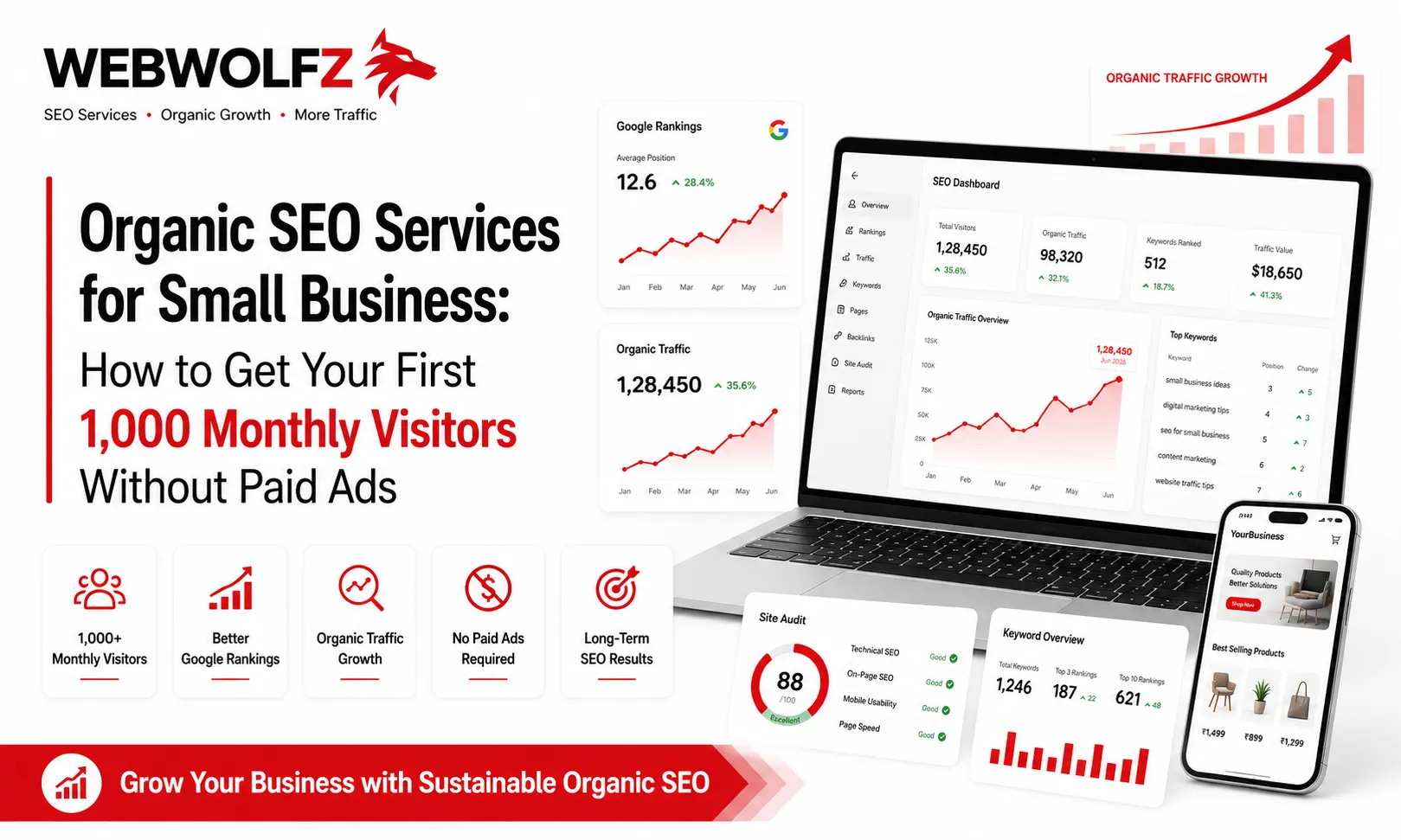
Many small business owners believe they need Google Ads, Facebook Ads, or expensive marketing campaigns to generate website traffic.
The reality is different.
Thousands of businesses generate consistent leads and customers every month through organic search traffic alone. While paid advertising stops the moment your budget runs out, SEO continues delivering visitors long after the work is completed.
If your goal is to attract qualified traffic, generate leads, and build long-term growth, investing in organic SEO services for small business can be one of the smartest decisions you make in 2026.
This guide explains exactly how small businesses can reach their first 1,000 monthly website visitors without relying on paid advertising.
Why Organic SEO Matters More Than Paid Ads
Paid ads can generate traffic quickly.
However, they come with challenges:
- Rising advertising costs
- Continuous spending
- Increased competition
- Temporary results
Organic SEO offers a different approach.
Benefits include:
- Long-term traffic growth
- Higher trust from users
- Better ROI over time
- Consistent lead generation
- Improved brand visibility
According to Google’s Search Central documentation, organic search remains one of the most valuable sources of website traffic for businesses that create helpful, high-quality content.
What Are Organic SEO Services?
Organic SEO focuses on improving a website’s visibility in unpaid search results.
These services typically include:
- Keyword research
- On-page SEO
- Technical SEO
- Content creation
- Link building
- SEO audits
- Local SEO optimization
Businesses looking for professional SEO support can explore:
https://webwolfz.com/seo-services/
Step 1: Start With the Right Keywords
Many websites fail because they target highly competitive keywords from day one.
Instead, small businesses should focus on:
Long-Tail Keywords
Examples:
- Affordable accountant in Toronto
- Best immigration consultant in Brampton
- Website development company for startups
Long-tail keywords typically have:
- Lower competition
- Higher conversion rates
- Faster ranking opportunities
Keyword research tools such as Google’s Keyword Planner and Google’s Search Console can help identify opportunities.
Step 2: Build Topic Clusters
One of the biggest SEO mistakes is publishing random blog posts.
Google prefers websites that demonstrate expertise around specific topics.
For example, if your business offers SEO services, your content should cover:
- SEO audits
- Technical SEO
- On-page SEO
- Local SEO
- Link building
- Content optimization
Helpful related resources include:
https://webwolfz.com/blog/technical-seo-vs-on-page-seo/
https://webwolfz.com/blog/on-page-seo-services-india/
https://webwolfz.com/blog/seo-audit-services-for-websites/
Step 3: Publish Helpful Content Consistently
Google rewards websites that solve user problems.
Instead of writing generic articles, create content that answers specific questions.
Examples:
- How much does SEO cost?
- How long does SEO take?
- How to rank a new website?
Good content should:
- Answer search intent
- Include examples
- Be easy to read
- Provide actionable advice
This strategy is often included in professional organic SEO services for small business because content remains one of the strongest ranking factors.
Step 4: Optimize Every Page for Search Intent
Many websites focus on keywords but ignore user intent.
Ask yourself:
Why is someone searching this keyword?
Are they:
- Looking for information?
- Comparing providers?
- Ready to buy?
Pages should match that intent.
For example:
- Informational keywords need educational content.
- Commercial keywords need service pages.
- Transactional keywords need strong calls to action.
Step 5: Improve Technical SEO
Technical SEO helps search engines crawl and understand your website.
Important areas include:
Website Speed
Fast websites improve user experience and rankings.
Mobile Friendliness
Most searches now happen on mobile devices.
XML Sitemap
Helps search engines discover pages.
Clean URL Structure
URLs should be descriptive and easy to understand.
Helpful resource:
https://webwolfz.com/blog/website-seo-optimization-services-india/
Step 6: Create Internal Linking Opportunities
Internal links help users and search engines navigate your site.
For example, a blog about SEO growth can naturally link to:
https://webwolfz.com/blog/how-seo-helps-small-businesses-grow/
https://webwolfz.com/blog/seo-company-for-new-websites/
https://webwolfz.com/blog/monthly-seo-packages-for-small-business/
This strengthens topical authority and distributes ranking power throughout the website.
Step 7: Build Quality Backlinks
Backlinks remain one of Google’s strongest ranking signals.
However, quality matters more than quantity.
Focus on:
- Industry directories
- Guest posts
- Local citations
- Business partnerships
- Resource pages
Avoid spammy link-building tactics.
Helpful guide:
https://webwolfz.com/blog/link-building-services-for-websites/
Step 8: Focus on Local SEO
Many small businesses serve specific locations.
Local SEO helps businesses appear in:
- Google Maps
- Local search results
- Location-based queries
Important actions include:
- Optimizing Google Business Profile
- Building local citations
- Collecting customer reviews
- Creating location-specific content
Learn more:
https://webwolfz.com/blog/local-seo-services-for-service-businesses/
Step 9: Optimize Existing Content
Many websites already have content that can rank with improvements.
Update:
- Headlines
- Meta descriptions
- Internal links
- Statistics
- Examples
Refreshing old content often produces faster results than publishing entirely new articles.
Step 10: Monitor Performance Regularly
SEO should be guided by data.
Track:
- Organic traffic
- Keyword rankings
- Click-through rates
- Conversions
- Bounce rates
Tools such as Google Search Console and Google Analytics provide valuable insights for continuous improvement.
How Long Does It Take to Reach 1,000 Monthly Visitors?
The timeline depends on:
- Industry competition
- Website age
- Content quality
- SEO consistency
For most small businesses:
- 1–3 months: Initial indexing and impressions
- 3–6 months: Ranking improvements
- 6–12 months: Significant traffic growth
Businesses that consistently publish quality content often reach 1,000 monthly visitors faster than those relying on occasional updates.
Common SEO Mistakes Small Businesses Make
Targeting Competitive Keywords
New websites rarely rank for highly competitive keywords quickly.
Publishing Thin Content
Short, low-value content rarely performs well.
Ignoring Search Intent
Content must satisfy user expectations.
Poor Internal Linking
Related pages should connect naturally.
Neglecting Technical SEO
Technical issues can prevent ranking progress.
Why Content Quality Matters More Than Ever in 2026
Google’s ranking systems increasingly reward content that demonstrates:
- Experience
- Expertise
- Authority
- Trustworthiness
This means businesses should focus on helping users rather than trying to manipulate rankings.
High-quality content often earns:
- Better rankings
- More backlinks
- Higher engagement
- Greater trust
Why Many Small Businesses Choose WebWolfz
Managing SEO internally requires:
- Research
- Content creation
- Technical optimization
- Link building
- Analytics monitoring
Many business owners simply do not have the time to manage every aspect consistently.
WebWolfz helps businesses build sustainable organic growth through strategic SEO campaigns focused on long-term results rather than short-term tricks.
Whether you need content optimization, technical SEO, local SEO, or complete SEO management, working with specialists can accelerate growth while allowing you to focus on running your business.
Explore SEO services:
https://webwolfz.com/seo-services/
Or discuss your goals directly:
https://webwolfz.com/contact-us
Final Thoughts
Getting your first 1,000 monthly visitors is not about finding a secret SEO trick.
It is about consistently applying proven strategies:
- Keyword research
- Helpful content
- Technical SEO
- Internal linking
- Link building
- Local optimization
Professional organic SEO services for small business help companies implement these strategies effectively while avoiding costly mistakes.
The businesses that invest in SEO today will continue benefiting from organic traffic, leads, and growth long after paid advertising campaigns have ended.
If your goal is sustainable growth in 2026, organic SEO remains one of the most reliable digital marketing investments available.
Frequently Asked Questions
What are organic SEO services for small business?
Organic SEO services help businesses improve their rankings in unpaid Google search results through content, optimization, technical SEO, and link building.
How long does SEO take to show results?
Most small businesses begin seeing meaningful SEO improvements within 3 to 6 months, depending on competition and website quality.
Can I get website traffic without paid ads?
Yes. Organic SEO can generate consistent traffic and leads without relying on ongoing advertising budgets.
Why is local SEO important for small businesses?
Local SEO helps businesses appear in Google Maps and local search results, making it easier for nearby customers to find them.
Why choose WebWolfz for SEO services?
WebWolfz provides content optimization, technical SEO, local SEO, link building, and long-term growth strategies tailored for small businesses.