

Launching a startup is exciting, but getting consistent website traffic can be one of the biggest challenges. Most startups focus heavily on social media, paid ads, and outreach while overlooking one of the most sustainable growth channels available: SEO.
Unlike paid advertising, search engine optimization continues generating traffic long after the initial work is completed. The challenge is knowing where to start.
Many startup founders assume SEO takes years to work. While SEO is a long-term investment, a structured plan can help startups achieve meaningful results within the first few months.
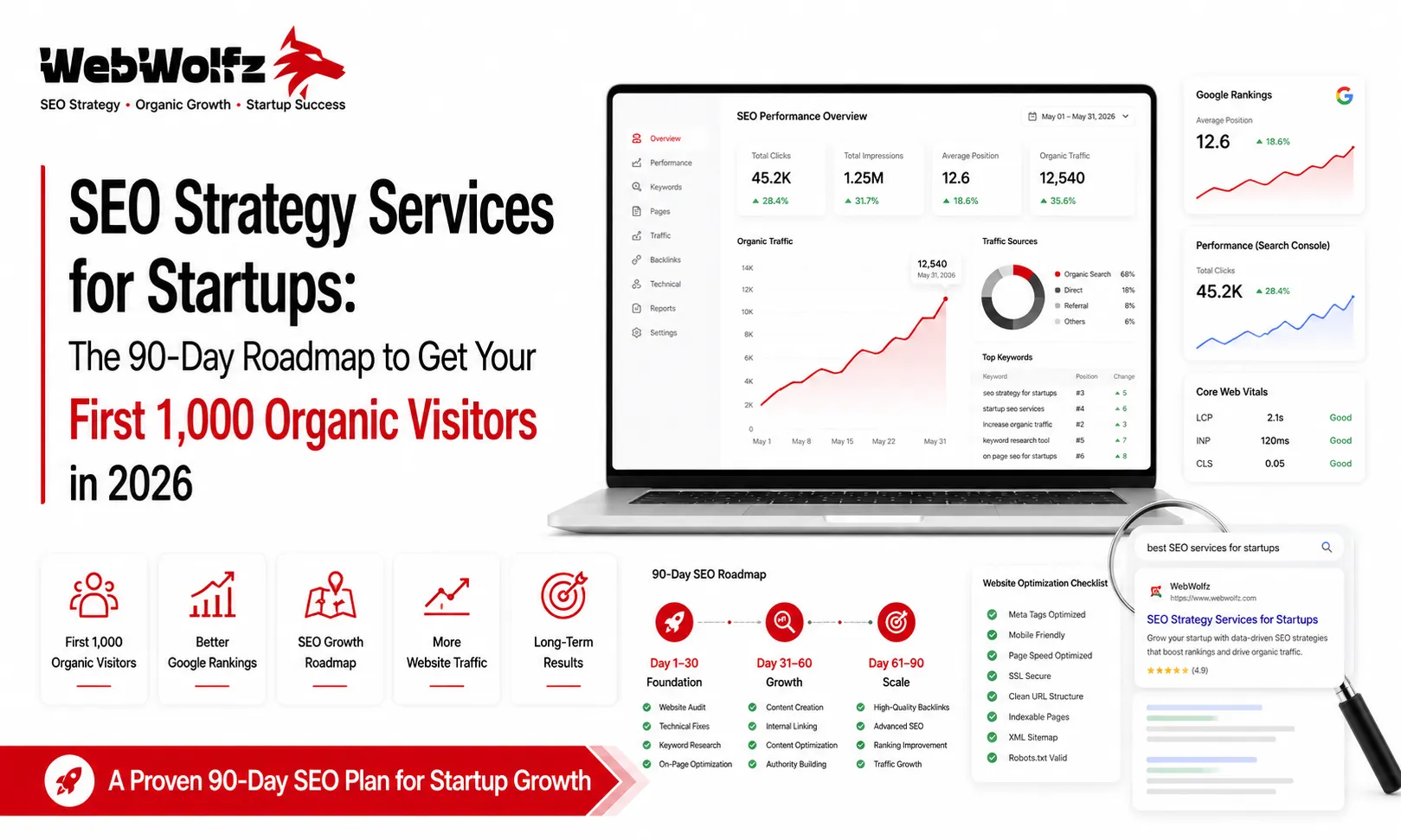
This guide outlines a practical 90-day framework used by successful businesses to build visibility, improve rankings, and attract their first 1,000 organic visitors. This is why many founders invest in SEO strategy services for startups to avoid costly mistakes and accelerate growth.
Why SEO Matters for Startups in 2026
Search behavior continues to evolve, but one thing remains unchanged: people use search engines to find solutions.
Potential customers search for:
- Products
- Services
- Comparisons
- Reviews
- Solutions to problems
If your startup does not appear in search results, competitors receive those opportunities.
According to guidance published by Google Search Central, websites that focus on helpful content, technical quality, and user experience are more likely to succeed in search results.
For startups with limited marketing budgets, organic traffic often delivers one of the highest long-term returns on investment.
The Goal: First 1,000 Organic Visitors
The first milestone for many startups should not be 100,000 visitors.
It should be:
- Consistent rankings
- Qualified traffic
- Brand visibility
- First 1,000 organic visitors
This creates a foundation for future growth.
Businesses seeking professional guidance often start with:
https://webwolfz.com/seo-services/
Phase 1: Days 1-30 – Build the Foundation
The first month focuses on creating a technically sound website and developing a keyword strategy.
Step 1: Perform a Technical SEO Audit
Technical problems can prevent content from ranking regardless of quality.
Key areas to evaluate include:
- Crawlability
- Indexability
- Page speed
- Mobile responsiveness
- XML sitemap
- Broken links
- Schema markup
Helpful resource:
https://webwolfz.com/blog/technical-seo-audit-services-for-websites/
You should also understand the difference between technical and content optimization:
https://webwolfz.com/blog/technical-seo-vs-on-page-seo/
Step 2: Set Up Essential SEO Tools
Every startup should install:
- Google Search Console
- Google Analytics
- Bing Webmaster Tools
Google Search Console helps monitor:
- Indexing
- Rankings
- Click-through rates
- Technical issues
This data becomes essential during later optimization phases.
Step 3: Conduct Keyword Research
Many startups target highly competitive keywords too early.
Instead, focus on:
- Long-tail keywords
- Problem-based searches
- Buyer intent keywords
- Industry-specific queries
Example:
Instead of targeting:
“CRM software”
Target:
“best CRM software for small agencies”
Long-tail keywords often deliver faster results and higher conversion rates.
Step 4: Optimize Core Website Pages
Before publishing blog content, optimize:
- Homepage
- Service pages
- About page
- Contact page
Each page should have:
- Unique title tags
- Meta descriptions
- Clear headings
- Internal links
- Relevant keywords
Related guide:
https://webwolfz.com/blog/on-page-seo-services-india/
Phase 2: Days 31-60 – Build Content Authority
Once the technical foundation is complete, focus on content creation.
This phase is where many startups begin generating search visibility.
Step 5: Create Topic Clusters
Instead of publishing random blog posts, organize content around themes.
Example:
Main topic:
SEO Services
Supporting topics:
- Technical SEO
- Local SEO
- Link Building
- Content SEO
- Ecommerce SEO
This structure helps search engines understand topical authority.
Step 6: Publish High-Quality Blog Content
Google increasingly rewards useful, experience-based content.
Every article should:
- Solve a specific problem
- Answer user questions
- Include examples
- Provide actionable advice
Helpful resource:
https://webwolfz.com/blog/seo-content-writing-services-india/
A consistent publishing schedule is more effective than publishing dozens of articles at once.
Step 7: Build Internal Links
Internal links help search engines discover pages and distribute authority.
For example, startups interested in growth strategies can explore:
https://webwolfz.com/blog/how-seo-helps-small-businesses-grow/
Businesses with new websites can also benefit from:
https://webwolfz.com/blog/seo-company-for-new-websites/
Strong internal linking improves both rankings and user experience.
Step 8: Optimize Existing Content
Content optimization often produces faster results than publishing new content.
Review existing pages for:
- Outdated information
- Missing keywords
- Weak headings
- Thin content
Many businesses overlook this opportunity.
Phase 3: Days 61-90 – Build Authority and Traffic
After establishing content foundations, focus on authority building.
This is where SEO strategy services for startups often provide the most value.
Step 9: Start Link Building
Backlinks remain an important ranking factor.
Effective methods include:
- Guest posting
- Industry directories
- Digital PR
- Resource pages
- Partnerships
Helpful guide:
https://webwolfz.com/blog/link-building-services-for-websites/
Focus on quality rather than quantity.
A few strong links outperform dozens of weak links.
Step 10: Strengthen Local SEO
If your startup serves specific geographic regions, local SEO can generate faster results.
Focus on:
- Google Business Profile
- Local citations
- Location pages
- Customer reviews
Helpful resource:
https://webwolfz.com/blog/local-seo-services-for-service-businesses/
Step 11: Improve User Experience
SEO is increasingly connected to user satisfaction.
Google evaluates signals such as:
- Mobile usability
- Page speed
- Engagement
- Navigation
Websites that provide better experiences often perform better in search results.
Step 12: Monitor Search Console Data
Analyze:
- Click-through rates
- Ranking improvements
- Query performance
- Index coverage
These insights reveal opportunities for further optimization.
The 15 SEO Activities Startups Should Repeat Monthly
After the initial 90 days, maintain momentum through recurring activities.
- Publish new content
- Update existing pages
- Review keyword rankings
- Build backlinks
- Improve page speed
- Audit technical issues
- Optimize meta titles
- Improve internal linking
- Analyze competitors
- Monitor Search Console
- Refresh old articles
- Improve CTR
- Expand topic clusters
- Track conversions
- Review SEO goals
Consistency is often more important than volume.
Common SEO Mistakes Startups Make
Targeting Competitive Keywords Too Early
New websites struggle to rank for highly competitive terms.
Ignoring Technical SEO
Technical problems limit growth.
Publishing Thin Content
Short, low-value content rarely performs well.
Inconsistent Publishing
SEO rewards consistency.
Neglecting Internal Linking
Many startups miss easy ranking opportunities by failing to connect related pages.
How Long Does SEO Take for Startups?
Most startups see:
First 30 Days
- Technical improvements
- Better indexing
60 Days
- Keyword visibility
- Initial impressions
90 Days
- Organic traffic growth
- Ranking improvements
- Lead generation opportunities
Results vary based on:
- Competition
- Industry
- Content quality
- Website authority
However, a structured approach significantly improves success rates.
Why Many Startups Choose Professional SEO Support
Managing SEO internally requires:
- Technical expertise
- Content planning
- Keyword research
- Link building
- Performance analysis
For many founders, this becomes overwhelming.
Instead of spending months learning every aspect of SEO, many startups choose experienced partners.
WebWolfz helps startups build search visibility through:
- Technical SEO
- Content optimization
- Keyword research
- Link building
- Growth-focused SEO strategies
Explore SEO services:
https://webwolfz.com/seo-services/
Or discuss your project:
https://webwolfz.com/contact-us
Final Thoughts
The first 1,000 organic visitors are often the hardest to earn, but they create momentum that compounds over time.
A structured plan built around technical optimization, content creation, internal linking, and authority building can help startups establish a strong search presence.
Professional SEO strategy services for startups provide the expertise, processes, and consistency needed to accelerate growth while avoiding common mistakes.
Rather than relying solely on paid advertising, startups that invest in SEO today can build a long-term traffic asset that continues generating leads, customers, and revenue well into the future.
Frequently Asked Questions
What are SEO strategy services for startups?
These services help startups improve search visibility through keyword research, technical SEO, content creation, link building, and ongoing optimization.
How long does SEO take to work for startups?
Most startups begin seeing improvements within 60 to 90 days, while significant traffic growth often takes several months of consistent effort.
Can a startup do SEO without paid ads?
Yes. Many startups build organic traffic through technical SEO, content marketing, and strategic keyword targeting without relying heavily on paid advertising.
What is the most important SEO activity for a new startup?
Building high-quality content around relevant search intent is one of the most effective ways to generate organic traffic and rankings.
Why choose WebWolfz for startup SEO?
WebWolfz provides technical SEO, content optimization, keyword research, link building, and growth-focused SEO strategies tailored for startups and growing businesses.