

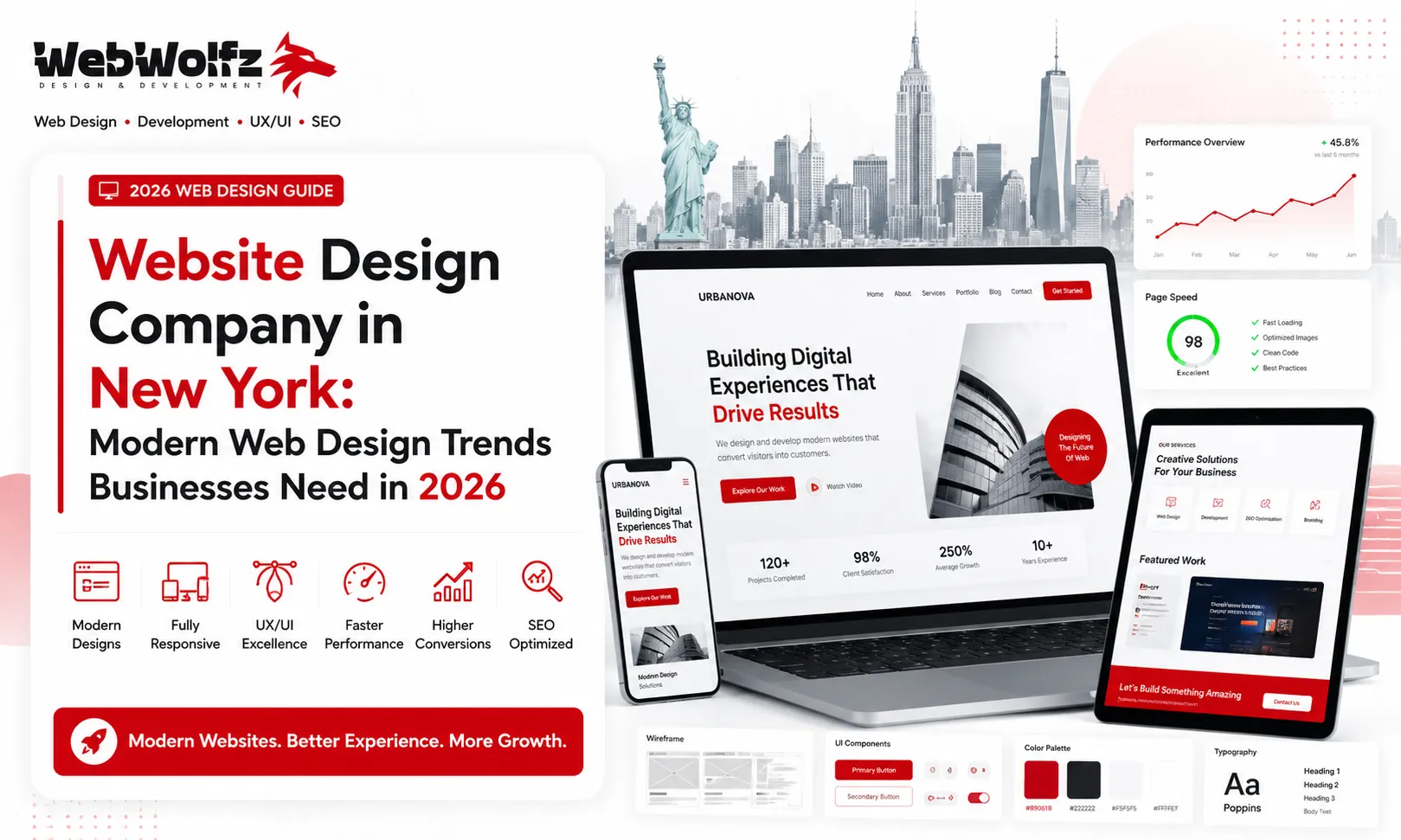
In one of the most competitive business markets in the world, having a website is no longer enough. Your website is often the first interaction potential customers have with your business, and first impressions are made within seconds.
Businesses across New York are investing heavily in modern web design because user expectations continue to evolve. Customers want fast-loading websites, intuitive navigation, engaging visuals, and seamless mobile experiences. Companies that fail to adapt often lose visitors before they even have the opportunity to convert them into customers.
A professional Website Design Company in New York understands these changing expectations and helps businesses build websites that not only look impressive but also generate measurable results.
This guide explores the most important web design trends shaping business websites in 2026 and explains how organizations can use them to improve conversions, user engagement, and long-term growth.
Why Modern Website Design Matters More Than Ever
A website is no longer just a digital brochure.
Today’s websites function as sales representatives, lead generation tools, customer service channels, and brand-building platforms all at once.
According to Google’s Web Vitals recommendations, users expect websites to load quickly, remain visually stable, and respond instantly to interactions. Websites that fail to meet these standards often experience lower engagement and reduced visibility in search results.
Google Web Vitals:
https://web.dev/vitals/
Modern website design directly influences:
- User trust
- Conversion rates
- Search engine rankings
- Customer retention
- Brand perception
- Revenue growth
Businesses that invest in professional website design gain a significant competitive advantage over outdated competitors.
Trend #1: User Experience Is Becoming the Top Priority
In 2026, successful websites are built around users rather than businesses.
Many older websites were designed primarily to showcase company information. Modern websites focus on helping visitors accomplish goals quickly and easily.
Key UX elements include:
- Clear navigation menus
- Fast page loading
- Mobile responsiveness
- Logical content structure
- Simple contact options
- Accessibility improvements
Businesses looking to improve user experience should also understand the importance of responsive design.
Related reading:
https://webwolfz.com/blog/responsive-website-development-services-for-small-business/
and
https://webwolfz.com/blog/benefits-of-responsive-website-design/
A positive user experience often results in longer session durations, lower bounce rates, and higher conversion rates.
Trend #2: Mobile-First Design Is No Longer Optional
More than half of all web traffic now comes from mobile devices.
As a result, modern websites are designed for mobile users first and desktop users second.
A mobile-first strategy ensures:
- Faster performance
- Better usability
- Improved SEO
- Higher engagement rates
Google uses mobile-first indexing, meaning it primarily evaluates the mobile version of your website when determining rankings.
Businesses working with a professional Website Design Company in New York often prioritize responsive layouts to ensure visitors receive a consistent experience across all devices.
For additional insights, explore:
https://webwolfz.com/blog/mobile-friendly-website-design-company-india/
Trend #3: Minimalist Design with Strong Visual Hierarchy
Cluttered websites are disappearing.
Modern websites embrace clean layouts, strategic whitespace, and focused messaging.
Instead of overwhelming visitors with excessive content, successful websites guide users toward important actions such as:
- Requesting a quote
- Booking a consultation
- Making a purchase
- Contacting the business
Effective visual hierarchy includes:
- Large headlines
- Clear call-to-action buttons
- Organized content sections
- Consistent typography
- Strategic use of colors
This approach improves readability and helps users quickly find relevant information.
Trend #4: AI-Powered Personalization
Artificial intelligence is transforming how websites interact with visitors.
Modern business websites increasingly use AI to:
- Recommend content
- Personalize user experiences
- Improve customer support
- Analyze visitor behavior
Personalization helps businesses deliver more relevant experiences that increase engagement and conversions.
Companies implementing these technologies often achieve better customer retention and stronger online performance.
Trend #5: Faster Website Performance
Website speed remains one of the most important ranking and conversion factors.
Research consistently shows that users abandon websites that take too long to load.
Modern websites prioritize:
- Optimized images
- Efficient coding
- Lightweight frameworks
- Content delivery networks
- Improved hosting environments
Businesses should regularly test website performance using Google’s PageSpeed Insights:
Website speed improvements often generate immediate benefits in both SEO and user satisfaction.
Trend #6: SEO-Friendly Website Architecture
Design and SEO must work together.
Many businesses invest heavily in visual design but overlook technical optimization.
A properly structured website includes:
- Clean URLs
- Internal linking
- Schema markup
- Optimized metadata
- Crawlable navigation
- Fast-loading pages
Websites designed with SEO in mind are easier for search engines to understand and rank.
You may also find these resources useful:
https://webwolfz.com/blog/website-design-vs-website-development-difference/
https://webwolfz.com/blog/ecommerce-website-seo-friendly-design/
Combining design and SEO from the beginning prevents costly redesigns later.
Trend #7: Interactive Content and Micro-Animations
Small interactive elements are becoming increasingly popular.
Examples include:
- Hover effects
- Animated icons
- Scroll-triggered animations
- Interactive calculators
- Dynamic content blocks
When implemented correctly, these features improve engagement without negatively impacting performance.
The key is maintaining balance. Too many animations can distract users and slow down the website.
Trend #8: Conversion-Focused Design
Beautiful websites are valuable, but conversion-focused websites generate revenue.
Modern design strategies emphasize:
- Clear calls to action
- Trust signals
- Customer testimonials
- Strategic form placement
- Simplified conversion paths
Every page should have a specific objective.
Whether the goal is generating leads or increasing sales, the design should support user actions rather than simply looking attractive.
Businesses can learn more about creating effective business websites here:
https://webwolfz.com/blog/business-website-design/
Trend #9: Scalable Websites for Growing Businesses
Many companies launch websites without considering future growth.
As businesses expand, their websites should be able to support:
- Additional content
- New services
- More traffic
- Advanced functionality
- Marketing integrations
Scalability reduces long-term development costs and supports business growth.
Learn more:
https://webwolfz.com/blog/scalable-website-development-for-growing-businesses/
A scalable website allows companies to adapt without requiring frequent redesigns.
Common Website Design Mistakes Businesses Should Avoid
Despite advancements in design practices, many websites still suffer from common issues.
These include:
- Slow loading speeds
- Poor mobile usability
- Excessive popups
- Confusing navigation
- Weak calls to action
- Outdated visuals
Avoiding these mistakes can dramatically improve user engagement and conversions.
Additional reading:
https://webwolfz.com/blog/common-website-design-mistakes-to-avoid/
Why Professional Web Design Delivers Better Results
While website builders make it easier than ever to launch a website, creating a high-performing business website requires much more than selecting a template.
Professional web designers understand:
- User behavior
- Conversion optimization
- SEO best practices
- Technical performance
- Mobile responsiveness
- Brand positioning
Working with an experienced Website Design Company in New York helps businesses avoid costly mistakes while building websites that support long-term growth.
Why Businesses Choose WebWolfz
Building a successful website requires strategic planning, technical expertise, design experience, and ongoing optimization.
At WebWolfz, we create modern websites that combine design excellence with performance, usability, and search visibility. Whether you need a business website, service-based platform, startup website, or eCommerce solution, our team develops websites designed to generate measurable business results.
Explore our website design and development services:
https://webwolfz.com/website-design-development/
Ready to discuss your project?
https://webwolfz.com/contact-us
Conclusion
The future of web design is focused on speed, user experience, personalization, mobile optimization, and conversion performance. Businesses that embrace these trends are better positioned to attract visitors, build trust, and increase revenue.
Investing in modern web design is no longer a luxury. It is a business necessity. Companies that adapt early will continue to outperform competitors and create stronger online experiences for their customers throughout 2026 and beyond.
Frequently Asked Questions
Why is professional website design important for businesses in New York?
Professional website design improves user experience, builds credibility, increases conversions, and helps businesses compete effectively in a highly competitive market.
What are the biggest website design trends in 2026?
Mobile-first design, AI-powered personalization, fast loading speeds, minimalist layouts, interactive experiences, and conversion-focused design are among the top trends.
How does website design affect SEO?
Good website design improves page speed, mobile usability, navigation, and user engagement, all of which contribute to better search engine rankings.
How often should a business redesign its website?
Most businesses should evaluate their website every 2 to 3 years and consider a redesign when technology, user expectations, or business goals significantly change.
What features should every modern business website include?
A modern business website should include responsive design, fast performance, clear calls to action, SEO optimization, secure hosting, and easy contact options.
Why choose WebWolfz for website design and development?
WebWolfz builds modern, SEO-friendly, conversion-focused websites that help businesses attract more visitors, generate leads, and grow their online presence.