
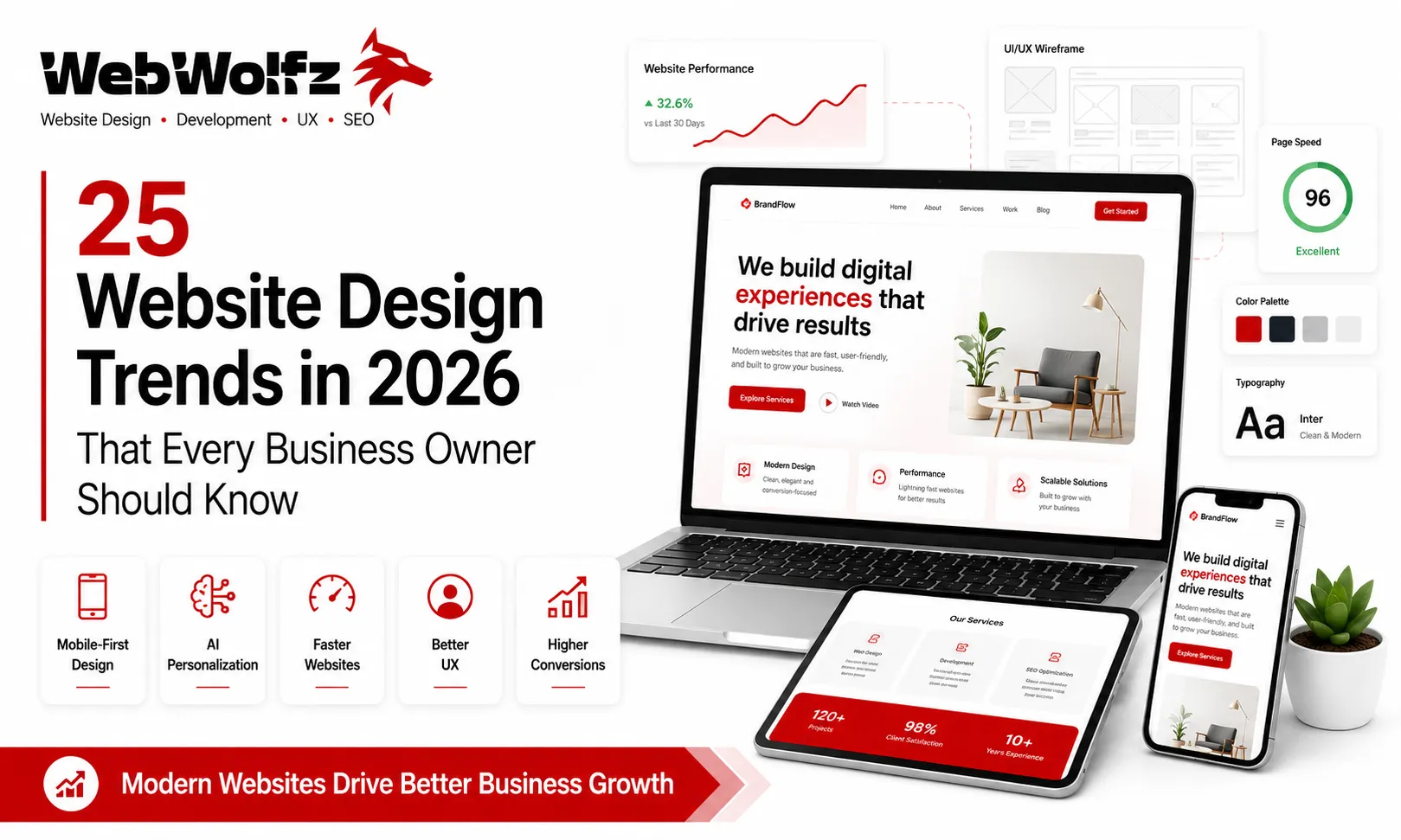
Your website is often the first impression customers have of your business. In 2026, users expect websites to be fast, visually appealing, mobile-friendly, and easy to navigate. A website that looked modern three years ago may already feel outdated today.
Businesses that stay updated with the latest design practices often enjoy better user engagement, higher conversion rates, improved SEO performance, and stronger brand credibility.
This guide explores the most important website design trends 2026 that business owners should understand before launching a new website or redesigning an existing one.
Why Website Design Trends Matter
Website design is not just about appearance.
Modern design directly impacts:
- User experience
- Lead generation
- Search rankings
- Conversion rates
- Brand trust
According to Google’s guidance on page experience and helpful websites, user-focused design contributes significantly to engagement and overall site performance.
Businesses planning a redesign can explore:
https://webwolfz.com/website-design-development/
1. Clean Minimalist Layouts
Minimalist websites continue to dominate.
Benefits include:
- Faster loading times
- Better readability
- Improved focus on key actions
- Professional appearance
Less clutter often results in higher conversions.
2. Mobile-First Design
Mobile traffic now exceeds desktop traffic for many industries.
Modern websites are designed for smartphones first and desktops second.
Related resources:
https://webwolfz.com/blog/mobile-friendly-website-design-company-india/
https://webwolfz.com/blog/responsive-website-design-services-india/
3. AI-Powered Personalization
Websites increasingly customize content based on user behavior.
Examples include:
- Personalized recommendations
- Dynamic content
- Location-based experiences
Personalization improves engagement and customer satisfaction.
4. Faster Loading Websites
Speed remains one of the most important ranking and usability factors.
Businesses continue investing in:
- Optimized images
- Lightweight code
- Better hosting
- Modern caching systems
5. Large Typography
Bold headlines help users quickly understand key messages.
Modern websites use larger fonts to improve readability and visual impact.
6. Interactive Micro-Animations
Small animations improve user engagement without slowing performance.
Examples include:
- Hover effects
- Button interactions
- Scroll-based transitions
7. Accessibility-First Design
Accessibility is becoming a business necessity.
Modern websites focus on:
- Keyboard navigation
- Color contrast
- Screen reader compatibility
- Clear content structure
8. Dark Mode Options
Many users prefer dark mode interfaces.
Offering both light and dark modes improves user experience.
9. Strong Visual Hierarchy
Visitors scan pages rather than reading every word.
Visual hierarchy helps guide attention toward:
- Headlines
- Benefits
- CTAs
- Testimonials
10. Conversion-Focused Landing Pages
Modern websites prioritize conversion optimization from the beginning.
Successful landing pages include:
- Clear messaging
- Trust indicators
- Strong CTAs
- Minimal distractions
11. Video Integration
Video content continues to increase engagement.
Popular uses include:
- Product demonstrations
- Brand introductions
- Customer testimonials
12. Advanced White Space Usage
White space improves readability and makes websites feel premium.
Many of the best-performing websites use generous spacing throughout the design.
13. Smart Chat Features
Businesses increasingly integrate AI-powered chat systems to improve customer support and lead generation.
14. Responsive Design Everywhere
Responsive design is no longer optional.
Users expect consistent experiences across:
- Mobile phones
- Tablets
- Laptops
- Desktops
Related guide:
https://webwolfz.com/blog/benefits-of-responsive-website-design/
15. Custom Illustrations
Unique illustrations help brands stand out and strengthen visual identity.
Custom graphics often perform better than generic stock images.
16. Interactive Product Experiences
Especially important for ecommerce websites.
Users increasingly expect:
- Product previews
- Interactive galleries
- Product comparisons
Related resources:
https://webwolfz.com/blog/ecommerce-website-design-for-retail-brands/
https://webwolfz.com/blog/ecommerce-website-seo-friendly-design/
17. Scrollytelling
Scrollytelling combines storytelling with interactive scrolling effects.
It helps businesses communicate complex information more effectively.
18. Dynamic Content Sections
Content that adapts based on user interests improves engagement and relevance.
19. Simplified Navigation
Navigation continues to become simpler.
Visitors should find important information within a few clicks.
Poor navigation remains one of the biggest website usability problems.
Helpful resource:
https://webwolfz.com/blog/common-website-design-mistakes-to-avoid/
20. SEO-Friendly Design Structures
Modern design must support SEO.
This includes:
- Clean code
- Fast loading pages
- Mobile responsiveness
- Logical site architecture
Businesses investing in website design trends 2026 should always consider SEO alongside aesthetics.
21. Modular Design Systems
Design systems improve consistency across large websites.
Benefits include:
- Faster updates
- Better scalability
- Consistent branding
Related resource:
https://webwolfz.com/blog/scalable-website-development-for-growing-businesses/
22. Advanced Ecommerce Experiences
Online stores continue investing in:
- Faster checkout processes
- Personalized recommendations
- Improved product discovery
Helpful resources:
https://webwolfz.com/blog/ecommerce-website-development-services-india/
https://webwolfz.com/blog/ecommerce-website-development-cost-in-india/
23. Modern Service Business Websites
Professional service businesses increasingly focus on:
- Case studies
- Testimonials
- Clear service pages
- Conversion-focused layouts
Related resources:
https://webwolfz.com/blog/modern-website-design-for-service-businesses/
https://webwolfz.com/blog/business-website-design/
24. Website Security Indicators
Trust signals are becoming more prominent.
Examples include:
- SSL certificates
- Security badges
- Privacy notices
Users are more likely to engage with websites they trust.
25. Data-Driven Design Decisions
Successful businesses no longer redesign based on assumptions.
Instead, they use:
- Analytics
- Heatmaps
- User recordings
- Conversion data
This approach often produces better business results.
How These Trends Impact SEO
Many business owners mistakenly believe design and SEO are separate.
In reality, they work together.
Modern design trends improve:
- User engagement
- Site speed
- Mobile usability
- Navigation
- Conversion rates
These factors indirectly influence search visibility and user satisfaction.
This is why businesses exploring website design trends 2026 often combine design improvements with SEO optimization.
Should You Follow Every Design Trend?
Not necessarily.
The best websites adopt trends that align with:
- Business goals
- Target audience
- Industry requirements
- Brand identity
A law firm, ecommerce store, startup, and healthcare business will all have different design priorities.
When Is It Time for a Website Redesign?
You should consider redesigning your website if:
- It looks outdated
- Mobile performance is poor
- Conversion rates are declining
- Bounce rates are increasing
- Site speed is slow
Helpful resources:
https://webwolfz.com/blog/website-redesign-services-for-existing-busines/
https://webwolfz.com/blog/website-design-cost-india-2026/
Why Many Businesses Choose WebWolfz
Keeping up with modern design trends requires more than visual creativity.
Successful websites require:
- Responsive design
- SEO optimization
- Conversion-focused layouts
- Mobile usability
- Fast performance
WebWolfz helps businesses create modern websites that balance design, usability, and business objectives.
Instead of spending months researching design trends and managing multiple vendors, many business owners choose to work with one experienced team.
Explore website design services:
https://webwolfz.com/website-design-development/
Or discuss your project directly:
https://webwolfz.com/contact-us
Final Thoughts
The digital landscape continues to evolve rapidly.
Businesses that adapt to emerging design practices often enjoy stronger user engagement, improved SEO performance, and higher conversion rates.
The most successful companies do not chase every trend. They focus on implementing the right trends that improve user experience and support business goals.
Whether you’re planning a redesign, launching a new website, or evaluating your current online presence, understanding the most important website design trends 2026 can help you make smarter decisions and stay ahead of competitors.
Frequently Asked Questions
What are the biggest website design trends in 2026?
Some of the biggest trends include AI personalization, mobile-first design, fast-loading websites, accessibility, micro-animations, and conversion-focused layouts.
Do website design trends affect SEO?
Yes. Modern design improves user experience, mobile usability, site speed, and engagement, all of which support better SEO performance.
Should small businesses redesign their websites in 2026?
If a website looks outdated, performs poorly on mobile devices, or generates few leads, a redesign may provide significant business benefits.
How often should a website be redesigned?
Most businesses should evaluate their website every 2 to 4 years to ensure it remains competitive and aligned with modern standards.
Why choose WebWolfz for website design services?
WebWolfz creates responsive, SEO-friendly, conversion-focused websites designed to support long-term business growth.