

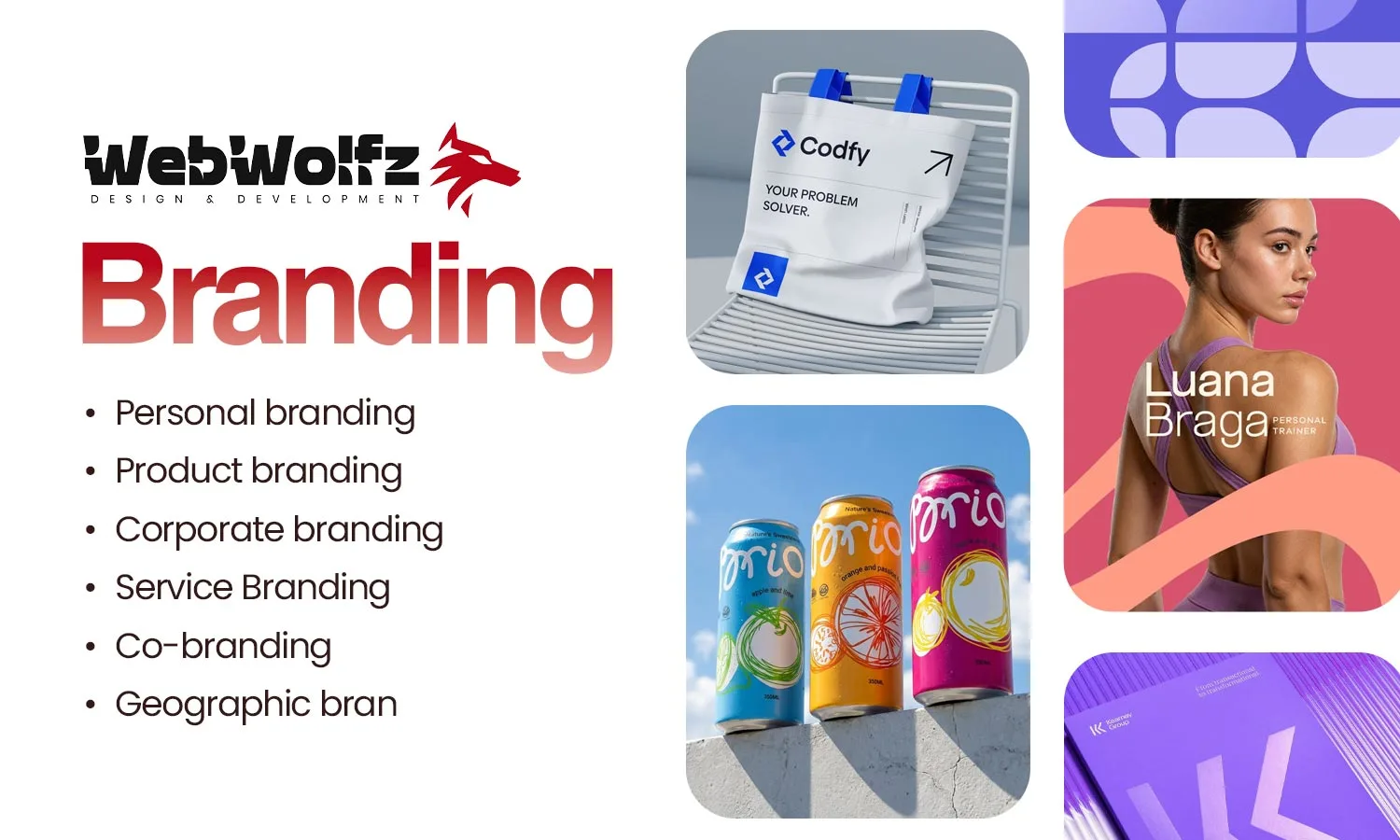
Branding is how people recognize, remember, and feel about a business before they even try what it sells. It shows up in a logo, but it lives in much more than that — the words you use, the promises you keep, and the experience someone has every time they deal with you. A strong brand turns a first-time buyer into a repeat customer, and turns a repeat customer into someone who tells their friends about you.
This guide walks through what branding actually means, why it matters more than most business owners realize, the different types of branding, and a practical step-by-step way to build one. Everything here is meant to be useful whether you are starting a brand from zero or trying to fix one that feels inconsistent.
Branding Strategy • Brand Identity Design
Build a Brand That People Remember
Your brand is more than just a logo. We help startups and growing businesses create memorable brand identities through strategy, logo design, visual identity, packaging, website design, and marketing assets that build trust, attract customers, and drive long-term business growth.
What Is Branding?

Branding is the ongoing work of shaping how people perceive a business, product, or person. It includes your brand name, logo design, colors, tone of voice, and the experience customers have at every touchpoint — website designing, packaging, support calls, social posts, and word of mouth.
A simple way to think about it: your brand is not what you say about yourself. It is what people say about you when you are not in the room. Branding is the deliberate work you do to shape that conversation in your favor.
Many people assume branding is just a logo design or a color scheme. Visual design is part of it, but it is the smallest part. The bigger part is the mental picture that forms in someone’s head — is this business reliable, expensive, friendly, boring, exciting, trustworthy? That picture is built through hundreds of small, repeated signals over time, not one single design choice.
Branding vs Marketing: What Is the Difference?
People mix these two up all the time, so it helps to separate them clearly.
Branding is who you are. Marketing is how you tell people about it. Branding shapes identity and perception over the long run. Marketing drives attention and action in the short run, through ads, emails, social posts, and campaigns. You can run marketing without a clear brand, but the results usually feel scattered and forgettable. You can have a strong brand with little marketing, but almost nobody will find out about it. The two work best together — branding gives marketing a consistent voice and look, and marketing gives the brand reach.
| Aspect | Branding | Marketing |
| What it does | Builds identity, trust, and perception | Drives visibility, leads, and sales |
| Time frame | Long term, changes slowly | Short term, changes often |
| Main question | Who are we? | How do we reach people? |
| Examples | Logo, tone of voice, values, positioning | Ads, email campaigns, social posts, SEO |
| Measured by | Recognition, trust, loyalty | Clicks, conversions, revenue |
Why Branding Matters for Growth
Branding matters because people buy from businesses they recognize and trust before they buy from businesses with the lowest price. Trust removes hesitation, and hesitation is what kills sales.
A few things happen when branding is done well:
- People trust you faster. Research on shopping behavior consistently finds that most shoppers need to trust a brand before they buy from it. Without a recognizable identity, that trust takes longer to earn.
- Customers stick around longer. Businesses that show up the same way across their website, packaging, and social channels are remembered more easily, and that familiarity turns into repeat purchases.
- You can charge a fair price without losing customers. When people believe in what a business stands for, price becomes a smaller part of the decision.
- Referrals happen naturally. A clear brand is easier to describe to a friend than a business that feels vague or inconsistent.
- Hiring gets easier too. A brand with a clear identity attracts employees who already believe in what the business is doing, not just people looking for any job.
Consistency is the part most businesses underestimate. Studies on brand consistency have found that businesses which present themselves the same way everywhere tend to see noticeably higher revenue growth compared to those with a mixed or changing identity. It is rarely one big campaign that builds a brand. It is hundreds of small, repeated details that all point in the same direction.
According to global consumer trust research by Edelman, people are more likely to buy from brands they trust, making consistent branding a key driver of long-term business growth.
The Building Blocks of a Brand
A brand is made up of pieces that work together. Missing or mismatched pieces are usually why a brand feels off, even when the business itself is good.
- Name — short, easy to say, and easy to remember.
- Logo — a simple mark people can recognize at a glance, even small.
- Color palette — two or three core colors used the same way everywhere.
- Typography — the fonts used on your website, packaging, and marketing.
- Voice and tone — how you sound in writing, whether formal, playful, or direct.
- Tagline — one short line that sums up what you offer or promise.
- Positioning — where you sit compared to competitors, and why someone should pick you.
- Customer experience — how it feels to buy from you, get support, or unbox your product.
None of these work well alone. A great logo with an inconsistent voice still feels unfinished. A great product with no clear positioning gets compared on price alone.
Types of Branding You Should Know
Branding is not one single thing. Different situations call for different approaches, and most businesses actually use more than one type at the same time.
| Type | What it focuses on | Common example |
| Personal branding | Building a reputation around one person | A consultant, coach, or founder known by name |
| Product branding | Giving one product its own identity | A specific phone model or drink brand |
| Corporate branding | The identity of the whole company | The company name, mission, and values |
| Service branding | How a service is delivered and experienced | Customer support quality, in-store experience |
| Co-branding | Two brands partnering on one offer | A joint product or shared campaign |
| Geographic branding | Promoting a place based on what makes it unique | Tourism boards, “made in” labeling |
Small businesses usually start with corporate and product branding together, since the business and its main offer are closely tied at the start. Personal branding becomes more important when a founder is the face of the business, especially in coaching, consulting, and creator-led businesses.
How to Build a Brand, Step by Step
Building a brand is a process, not a single project you finish and forget. Here is a practical order that works for most businesses, whether new or existing.
- Get clear on your audience. Know who you are actually trying to reach — their problems, their habits, and what they already trust.
- Define your positioning. Decide what makes you different from the next option someone could pick instead, and say it in one sentence.
- Pick a name that fits. It should be easy to say, spell, and search for. Check it is not already taken in your industry.
- Design your visual identity. Logo, colors, and fonts, kept simple enough to work on a phone screen and a storefront sign alike.
- Write your brand voice. Decide how you sound in an email, a social caption, and a customer complaint reply. Keep it consistent.
- Put it all in one guide. A short brand guide keeps everyone — you, your team, your designer — using the same name, colors, and tone.
- Launch consistently across every channel. Website, social profiles, packaging, and email should all match on day one, not slowly over months.
- Review and adjust. Track how people respond, ask customers what they remember, and refine what is not working. A brand should evolve, but slowly and on purpose.
Common Branding Mistakes That Hold Businesses Back
- Treating branding as just a logo project and stopping there.
- Copying a competitor’s look instead of finding your own angle.
- Changing colors, tone, or messaging often, which confuses returning customers.
- Skipping research and guessing what the audience wants.
- Chasing every design trend instead of building something that lasts.
- Ignoring the customer experience side of branding, like support and packaging.
- Launching before the basics — name, logo, voice — are settled.
Most of these come down to the same root problem: treating branding as decoration instead of a real business decision.
How to Tell If Your Branding Is Working
You do not need expensive research to check on this. A few practical signs to track:
- Recognition — can people describe your logo or name without looking at it?
- Repeat business — are the same customers coming back?
- Referrals — are people recommending you without being asked?
- Reviews and comments — do people use the same words you use to describe yourself?
- Direct traffic — are people typing your website address directly instead of searching for a generic term?
- Price sensitivity — do customers still choose you even when a cheaper option exists?
If most of these are moving in the right direction, the branding is doing its job.
Branding Trends Worth Watching in 2026
- Authenticity over polish. People respond better to honest, real content than to overly produced ads.
- User-generated content. Reviews, unboxings, and customer photos are trusted more than brand-made ads.
- Consistent presence over big campaigns. Small, steady content beats occasional large pushes.
- Sustainability and values. More buyers check what a company stands for before buying, especially younger audiences.
- Sound and voice branding. As voice search and audio content grow, how a brand sounds is becoming part of its identity too.
- Community building. Brands that create a space for customers to connect with each other build loyalty that ads cannot buy.
- Google’s latest search guidance also highlights the importance of creating helpful, people-first content and maintaining a consistent brand presence across digital channels.
Final Thoughts
Branding is not a one-time task you check off. It is the sum of every choice a business makes about how it looks, sounds, and treats people. Get the basics right — a clear name, a simple visual identity, a consistent voice — and stay consistent with them for long enough, and the trust follows on its own.
If you are working on a brand right now, start small. Fix one inconsistency at a time. At Webwolfz, we have watched businesses grow simply by tightening up the basics that most competitors never bother finishing. That is often the real difference between a business that gets remembered and one that gets forgotten.
READY TO BUILD A STRONGER BRAND?
Turn Your Business Into a Brand People Trust & Remember
Whether you’re launching a startup, refreshing an existing business, or scaling to the next level, our branding experts help you create a powerful brand identity that stands out in competitive markets. From strategy and logo design to visual identity, packaging, website design, and digital experiences, we build brands that leave a lasting impression.
Frequently Asked Questions
What is branding in simple words?
Branding is the practice of shaping how people see and remember a business. It includes the name, logo, colors, voice, and the overall experience customers have with you.
What is the difference between branding and marketing?
Branding builds identity and trust over time. Marketing promotes that identity through ads, content, and campaigns to drive attention and sales right now.
Why is branding important for a small business?
Branding helps a small business look trustworthy and consistent, which speeds up buying decisions. Without it, a small business often gets compared on price alone.
What are the main types of branding?
The most common types are personal, product, corporate, service, co-branding, and geographic branding. Most businesses use a mix of these at once.
How much does branding cost?
Cost depends on scope. A basic identity, including a logo, color palette, and simple guide, can be done affordably for a small business, while a full brand strategy with research, naming, and design for a larger company costs more.
What is the difference between a brand and brand identity?
A brand is the overall perception people have of a business. Brand identity is the visible toolkit used to shape that perception, including the logo, colors, fonts, and imagery.
How long does it take to build a brand?
The visual identity can be ready in a few weeks. Genuine recognition and trust usually take months to years of consistent effort, since it depends on repeated exposure, not a single launch.
What makes a brand successful?
Successful brands are consistent, clear about what they stand for, and easy to recognize. They also deliver on the promise their branding makes, which is what turns first-time buyers into repeat customers.