

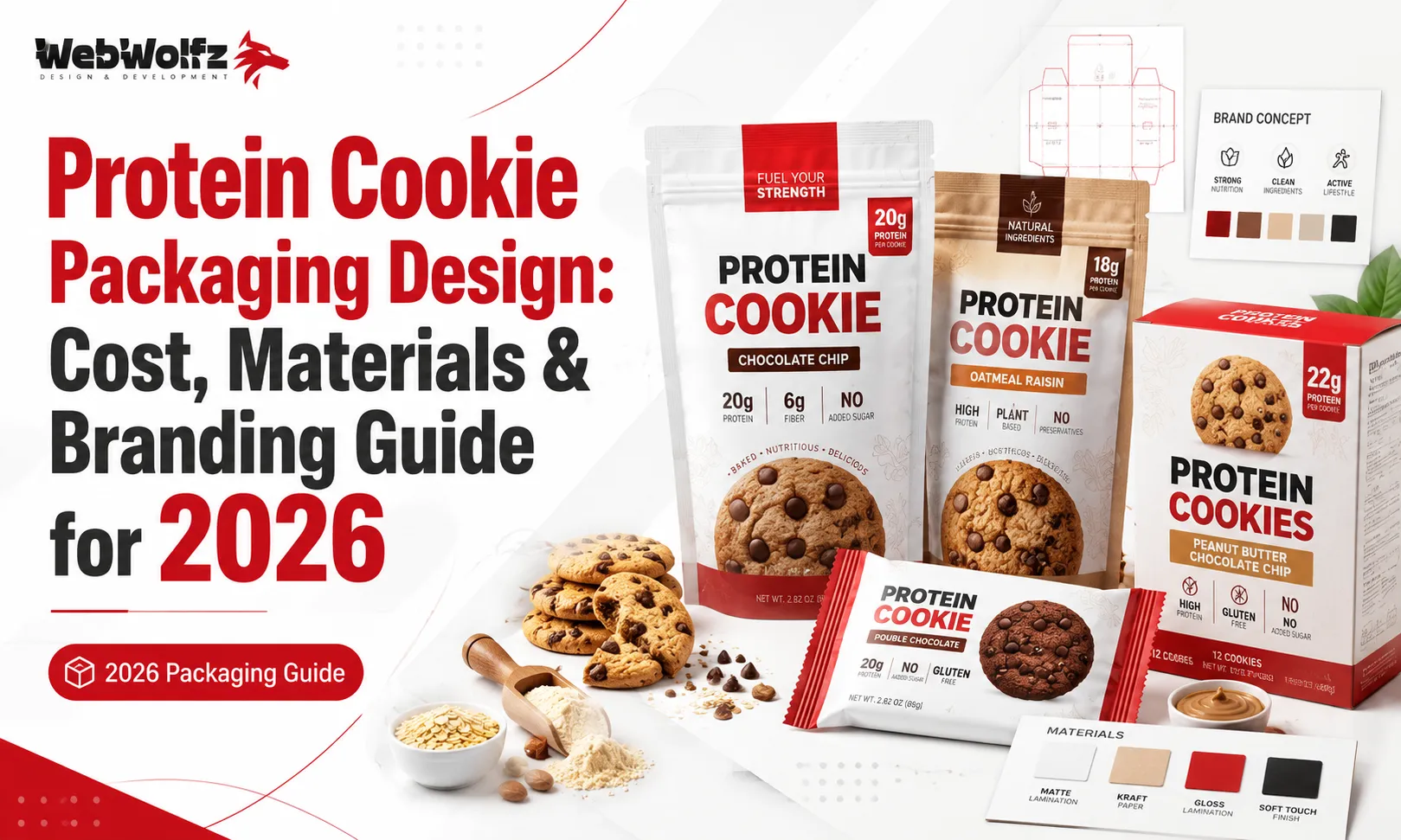
The healthy snacking industry is growing faster than ever. Protein cookies have become one of the most popular products among fitness enthusiasts, busy professionals, athletes, and consumers looking for healthier alternatives to traditional snacks.
However, launching a great product is only half the challenge.
When customers stand in front of a supermarket shelf or browse products online, they cannot taste your cookies. Instead, they judge your brand through its packaging.
A professional Protein Cookie Packaging Design not only protects the product but also communicates quality, nutrition, trust, and brand personality within a few seconds. Whether you’re introducing a new fitness snack or expanding an established food brand, packaging can directly influence purchasing decisions.
This guide explains the costs, materials, branding strategies, and design ideas that help protein cookie brands stand out in 2026.
Why Packaging Matters for Protein Cookies
Consumers buying protein snacks pay attention to much more than flavor.
They compare:
- Protein content
- Ingredients
- Sugar levels
- Brand reputation
- Sustainability
- Shelf appeal
- Convenience
Packaging becomes the bridge between your product and the customer’s decision.
According to Nielsen, packaging significantly influences purchasing decisions for food and beverage products because it shapes first impressions and perceived value.
A professionally designed package immediately tells customers your product is trustworthy and worth trying.
The Growing Demand for Functional Snack Packaging
Today’s consumers expect food packaging to do more than simply contain a product.
Modern packaging should:
- Protect freshness
- Extend shelf life
- Communicate nutrition
- Reflect premium quality
- Build brand recognition
- Support online sales
Protein cookies often compete with protein bars, granola snacks, energy bites, and healthy biscuits. Strong branding helps differentiate your product in this crowded market.
Choosing the Right Packaging Format
Different brands require different packaging formats depending on their target audience and retail strategy.
Popular options include:
Individual Flow Wrap Packs
Perfect for:
- Gym vending machines
- Convenience stores
- Single-serving snacks
- Grab-and-go purchases
Stand-Up Pouches
Ideal for:
- Multi-pack protein cookies
- Family-size packs
- Subscription boxes
Stand-up pouches provide larger branding areas while protecting product freshness.
Folding Cartons
Frequently used for premium retail presentation.
They create a stronger shelf presence and allow additional space for nutritional information and storytelling.
Display Boxes
Suitable for wholesale retailers, gyms, supermarkets, and health stores where multiple individually wrapped cookies are displayed together.
Selecting the Right Packaging Materials
Choosing the right material affects freshness, transportation, sustainability, and customer perception.
Common materials include:
- Multi-layer laminated films
- Metallized barrier films
- Kraft paper laminates
- Recyclable flexible packaging
- Food-grade plastic films
Each material offers different advantages depending on shelf-life requirements and distribution methods.
The Sustainable Packaging Coalition provides useful guidance for brands exploring environmentally responsible packaging materials.
https://sustainablepackaging.org/
How Much Does Protein Cookie Packaging Cost?
Packaging costs vary depending on several factors.
These include:
- Material selection
- Printing method
- Quantity ordered
- Packaging size
- Premium finishes
- Structural design
- Custom molds
- Label complexity
Small production runs typically have higher per-unit costs, while large-volume manufacturing reduces packaging costs significantly.
Instead of choosing the cheapest option, businesses should focus on long-term value through durability, branding, and customer appeal.
Branding Is More Than Just a Logo
Many food startups believe branding begins and ends with logo design.
In reality, successful branding combines:
- Logo
- Typography
- Color palette
- Product photography
- Brand voice
- Nutritional messaging
- Packaging structure
When these elements work together, customers recognize your products instantly across retail shelves and online marketplaces.
Highlight the Benefits Customers Care About
Protein cookie buyers usually scan packaging quickly before making a purchase.
Important information should be visible immediately.
Examples include:
- High Protein
- Low Sugar
- High Fiber
- Gluten Free
- Keto Friendly
- Vegan
- No Artificial Preservatives
Use clear typography and visual hierarchy instead of overcrowding the front panel.
Create Packaging That Works Online and Offline
Many protein cookie brands sell through:
- Supermarkets
- Fitness stores
- Amazon
- Shopify websites
- Subscription services
Packaging should perform well in both physical retail environments and small product thumbnails online.
Simple, high-contrast designs usually achieve better visibility across digital marketplaces.
Use Color Psychology Strategically
Colors influence buying behavior.
Popular choices for protein snack packaging include:
- Black for premium positioning
- White for clean nutrition
- Blue for trust
- Green for natural ingredients
- Orange for energy
- Red for bold flavor variants
Maintain consistency across your entire product range while using accent colors to differentiate flavors.
Build a Product Family
Customers who enjoy one flavor should immediately recognize every other flavor in your lineup.
Maintain consistency through:
- Logo placement
- Layout
- Typography
- Icon style
- Packaging structure
Differentiate products using:
- Accent colors
- Flavor imagery
- Ingredient highlights
This creates stronger brand recognition and encourages repeat purchases.
Learn From Other Successful Packaging Categories
Many design principles used in functional food packaging also apply to protein cookies.
For example, brands developing fitness-focused products can explore ideas from our guides on:
Protein Cake Packaging Design
https://webwolfz.com/blog/protein-cake-packaging-design/
High Protein Mini Cake Packaging Design
https://webwolfz.com/blog/high-protein-mini-cake-packaging-design/
Similarly, brands expanding into wellness beverages may find inspiration in our articles covering:
Collagen Water Packaging Design
https://webwolfz.com/blog/collagen-water-packaging-design/
Beauty Water Bottle Packaging Design
https://webwolfz.com/blog/beauty-water-bottle-packaging-design/
Studying successful packaging across related categories helps create stronger, more competitive food brands.
Premium Finishes That Increase Perceived Value
Customers often associate packaging quality with product quality.
A premium finish can make a protein cookie appear more expensive, healthier, and more trustworthy without changing the recipe.
Popular finishing options include:
- Soft-touch matte lamination
- Spot UV coating
- Metallic foil stamping
- Embossed logos
- Debossed brand names
- Matte varnish
- Premium textured films
These finishing techniques help products stand out while creating a memorable tactile experience.
Keep the Front Panel Simple
Many food brands try to place every feature on the front of the package.
Instead, focus on the information customers care about first.
An effective front panel usually contains:
- Brand logo
- Product name
- Protein amount
- Flavor
- Key benefit
- High-quality product image
Supporting information such as ingredients and nutritional facts can be placed on the back or side panels.
A clean layout improves readability and makes the product appear more premium.
Shelf Impact Matters
Retail shelves are crowded with competing products.
Customers often spend only a few seconds scanning an entire section before making a decision.
Ask yourself:
Can someone recognize your product from three to five feet away?
If not, simplify the design.
Improve shelf impact by using:
- Bold typography
- Strong color contrast
- Consistent branding
- Large product name
- Clear hierarchy
Packaging should attract attention without becoming visually overwhelming.
Sustainability Is Becoming a Competitive Advantage
Consumers increasingly prefer environmentally responsible brands.
Packaging made from recyclable or eco-friendly materials helps strengthen customer trust while supporting sustainability goals.
Consider options such as:
- Recyclable flexible films
- Mono-material packaging
- FSC-certified paper cartons
- Water-based inks
- Lightweight packaging
If sustainability is part of your brand identity, communicate it clearly using recognizable certifications and concise messaging.
Use Icons to Improve Readability
Many shoppers quickly scan packaging instead of reading paragraphs.
Simple icons help communicate important product benefits immediately.
Useful icons include:
- High Protein
- Low Sugar
- Gluten Free
- Vegan
- High Fiber
- Non-GMO
- No Artificial Colors
Icons save space while making packaging easier to understand.
Packaging Should Support Your Brand Story
Modern consumers like knowing who created the product and why.
A short brand story on the back panel helps create emotional connections.
Your story may include:
- Company mission
- Ingredient sourcing
- Fitness inspiration
- Product philosophy
- Commitment to quality
Keep it authentic and concise.
Design for E-Commerce
Protein cookies are increasingly purchased online.
Your packaging should look attractive in:
- Amazon product listings
- Shopify stores
- Social media advertisements
- Mobile shopping apps
- Email campaigns
Simple designs with strong typography usually perform better as small thumbnail images.
Choose Printing Methods Carefully
Different printing techniques affect both quality and cost.
Common options include:
Digital Printing
Best for:
- Small production runs
- Limited editions
- Product testing
Flexographic Printing
Suitable for:
- Large manufacturing volumes
- Consistent production
- Cost efficiency
Rotogravure Printing
Often selected for premium packaging with excellent image quality and vibrant colors.
Choosing the right printing method depends on production volume and budget.
Test Before Final Production
Even experienced brands rarely approve packaging without testing.
Before printing thousands of units, evaluate:
- Shelf visibility
- Readability
- Consumer preference
- Purchase intent
- Print accuracy
- Material durability
Testing reduces costly mistakes while improving product performance.
Avoid Common Packaging Mistakes
Many promising brands lose customers because of avoidable design problems.
Common mistakes include:
- Too much text
- Weak visual hierarchy
- Low-quality images
- Generic typography
- Confusing layouts
- Inconsistent branding
- Poor material selection
Professional packaging balances creativity with clarity.
Build a Complete Brand Experience
Customers remember experiences rather than individual products.
Your packaging should feel consistent across every touchpoint.
This includes:
- Shipping cartons
- Retail display boxes
- Subscription packaging
- Promotional kits
- Social media visuals
A unified brand identity increases recognition and customer loyalty.
Learn From Other Functional Food Categories
Many successful packaging strategies can be adapted from related product categories.
For example, functional beverage brands often emphasize health benefits through clean layouts and minimal design.
Explore additional inspiration in our guides on:
Hydration Drink Packaging Design
https://webwolfz.com/blog/hydration-drink-packaging-design/
Electrolyte Drink Packaging Design
https://webwolfz.com/blog/electrolyte-drink-packaging-design/
Brands developing products beyond snacks may also find valuable ideas in:
CBD Coffee Packaging Design
https://webwolfz.com/blog/cbd-coffee-packaging-design/
Functional Coffee Packaging Design
https://webwolfz.com/blog/functional-coffee-packaging-design/
Studying different food and beverage categories often leads to fresh design ideas while helping brands build stronger packaging systems.
Packaging Is an Investment, Not an Expense
Some startups focus primarily on reducing packaging costs.
However, packaging influences:
- Brand perception
- Purchase decisions
- Customer trust
- Product differentiation
- Repeat purchases
A slightly higher investment in professional packaging often generates stronger long-term returns than choosing the lowest-cost solution.
Brands that treat packaging as part of their marketing strategy generally build stronger market recognition and customer loyalty.
Future Trends in Protein Cookie Packaging for 2026
The healthy snack market is evolving quickly, and packaging trends are changing along with consumer expectations. Brands that stay ahead of these trends will have a stronger chance of attracting attention and building long-term customer loyalty.
Some of the biggest packaging trends expected to dominate 2026 include:
- Minimalist label designs
- Sustainable and recyclable packaging materials
- Smart QR code integration
- Matte finishes with premium textures
- Transparent windows to showcase the product
- Clean nutritional communication
- Bold typography with simple layouts
- Limited-edition seasonal packaging
- Personalized product collections
- Packaging designed for social media visibility
Consumers are increasingly choosing products that look premium, communicate transparency, and reflect modern lifestyles.
Why Professional Packaging Design Delivers Better Results
Creating successful packaging requires more than creativity.
Professional designers combine:
- Consumer psychology
- Food packaging regulations
- Branding strategy
- Material knowledge
- Print production experience
- Retail merchandising
- Marketing principles
Every design decision should help customers understand the product, trust the brand, and feel confident about purchasing it.
Instead of relying on generic templates, investing in strategic packaging creates long-term business value.
Why Many Food Brands Choose WebWolfz
At WebWolfz, we believe packaging should do more than protect a product. It should tell your story, strengthen your brand identity, and encourage customers to choose your product over competing alternatives.
Our team creates premium packaging solutions for food, beverage, wellness, and FMCG brands by combining branding strategy, modern design, consumer insights, and production-ready artwork.
Whether you’re launching protein cookies, functional beverages, nutritional snacks, or specialty food products, we help create packaging that looks outstanding both on retail shelves and online marketplaces.
If you’re expanding into other functional food categories, you may also find these resources useful:
Energy Gel Sachet Packaging Design
https://webwolfz.com/blog/energy-gel-sachet-packaging-design/
Collagen Water Packaging Design
https://webwolfz.com/blog/collagen-water-packaging-design/
Beauty Water Bottle Packaging Design
https://webwolfz.com/blog/beauty-water-bottle-packaging-design/
Our complete Packaging Design Services for Food Brands provide end-to-end creative solutions, from concept development to print-ready packaging artwork.
https://webwolfz.com/blog/packaging-design-services-for-food-brands/
If you’re ready to create packaging that helps your protein cookie brand stand out in a competitive market, our team is here to help.
https://webwolfz.com/contact-us
Final Thoughts
The protein snack market continues to grow, but so does the competition. Customers are presented with countless choices both in retail stores and online.
Outstanding packaging can become your biggest competitive advantage by communicating quality, nutrition, and trust before the customer even tastes the product.
From selecting the right materials and premium finishes to developing a memorable visual identity and maintaining brand consistency, every design decision contributes to long-term success.
Whether you’re launching a new protein cookie brand or refreshing an existing product line, investing in strategic packaging design can improve shelf visibility, strengthen customer confidence, and support sustainable business growth in 2026 and beyond.
Packaging is not simply a wrapper around your product. It is one of the most powerful marketing tools your brand owns.
Frequently Asked Questions
Why is packaging important for protein cookie brands?
Packaging creates the first impression, protects product freshness, communicates nutritional benefits, and helps protein cookie brands stand out in competitive retail and online markets.
Which packaging material is best for protein cookies?
Food-grade laminated films, recyclable flexible packaging, metallized barrier films, and premium paper cartons are commonly used because they provide excellent protection, durability, and shelf life.
How much does protein cookie packaging design cost?
Costs vary depending on packaging materials, printing methods, design complexity, production quantity, finishing options, and structural packaging requirements.
What are the biggest packaging trends for 2026?
Minimalist layouts, sustainable materials, premium matte finishes, QR code integration, bold typography, transparent windows, and consistent brand identity are among the leading packaging trends for 2026.
Can good packaging increase protein cookie sales?
Yes. Professionally designed packaging improves shelf visibility, builds customer trust, strengthens brand recognition, and encourages more consumers to purchase your product.
Why choose WebWolfz for protein cookie packaging design?
WebWolfz creates premium packaging that combines branding strategy, consumer psychology, retail shelf appeal, and modern packaging trends to help food brands grow with confidence.