

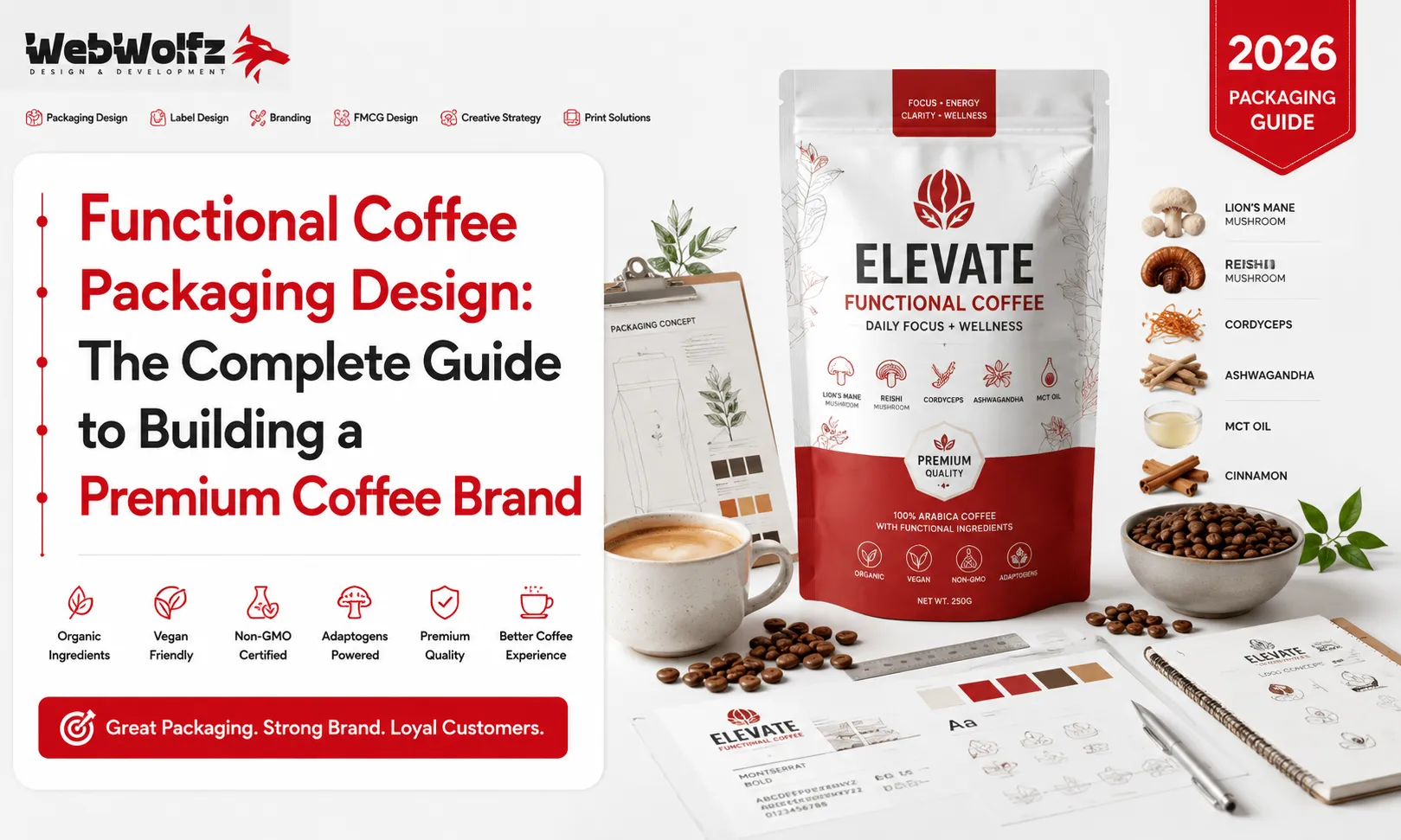
The coffee industry has changed dramatically over the last few years. Consumers no longer buy coffee only for its taste. They now look for products that provide additional health benefits, improve focus, increase energy, support immunity, or promote overall wellness.
This growing demand has created a booming market for functional coffee products infused with ingredients such as mushrooms, collagen, adaptogens, MCT oil, probiotics, vitamins, and botanicals.
However, creating a great product is only half the challenge.
The first thing customers notice is your packaging.
Before anyone experiences your coffee, they experience your brand. Packaging communicates quality, builds trust, explains benefits, and influences buying decisions within seconds.
That is why investing in professional Functional Coffee Packaging Design has become one of the most important branding decisions for coffee businesses in 2026.
This guide explores the packaging strategies that help functional coffee brands stand out, increase shelf appeal, and build long-term customer loyalty.
Why Packaging Matters More Than Ever
Today’s customers have hundreds of coffee options.
Whether they shop in supermarkets, specialty cafés, health food stores, or online marketplaces, they often make purchasing decisions based on visual presentation before reading ingredient lists.
Great packaging helps your brand:
- Build credibility
- Increase shelf visibility
- Communicate health benefits
- Improve perceived value
- Encourage repeat purchases
- Strengthen brand recognition
According to Nielsen, packaging remains one of the strongest factors influencing purchase decisions across FMCG categories.
Your package is more than a container.
It is your salesperson, your advertisement, and your brand ambassador.
What Makes Functional Coffee Different?
Unlike traditional coffee, functional coffee provides additional wellness benefits.
Common ingredients include:
- Lion’s Mane Mushroom
- Reishi
- Cordyceps
- Ashwagandha
- Collagen
- MCT Oil
- L-Theanine
- Probiotics
Because these products target health-conscious consumers, packaging must communicate both premium quality and scientific credibility.
1. Build Trust Immediately
Customers purchasing wellness products expect transparency.
Your packaging should clearly communicate:
- Key ingredients
- Primary benefits
- Product purpose
- Certifications
- Brewing instructions
Confusing labels reduce consumer confidence.
2. Design for Premium Positioning
Functional coffee is usually priced higher than traditional coffee.
Packaging should justify that premium price.
Use:
- Matte finishes
- Soft-touch coatings
- Premium typography
- Minimal layouts
- Elegant color palettes
Luxury packaging increases perceived product value.
3. Highlight Functional Benefits
Customers often purchase functional coffee for a specific outcome.
Examples include:
- Focus
- Energy
- Immunity
- Gut Health
- Calm
- Cognitive Performance
Place these benefits prominently on the front panel.
Avoid forcing customers to search the label.
4. Create Strong Shelf Visibility
Retail shelves are crowded.
Ask yourself:
Can customers identify your product within three seconds?
Large typography, bold branding, and clear visual hierarchy often outperform overly decorative designs.
5. Keep Information Organized
Functional coffee contains more product information than standard coffee.
Organize content using clear sections.
Customers should quickly locate:
- Ingredients
- Nutrition facts
- Brewing method
- Certifications
- Brand story
Good hierarchy improves readability.
6. Use Color Psychology
Colors communicate emotion before words.
Popular premium coffee colors include:
- Deep Green
- Warm Brown
- Black
- Cream
- Gold
- Forest Green
- Copper
Accent colors can differentiate flavors while maintaining consistent branding.
7. Invest in Premium Typography
Typography strongly influences perceived quality.
Avoid decorative fonts that reduce readability.
Modern sans-serif fonts paired with elegant serif accents often create a sophisticated appearance.
8. Tell a Meaningful Brand Story
People increasingly buy brands that align with their lifestyle.
A concise story explaining:
- Your mission
- Ingredient sourcing
- Sustainability
- Wellness philosophy
creates stronger emotional connections.
9. Design for E-Commerce
Coffee sales continue growing online.
Packaging should perform well on:
- Amazon
- Shopify
- Health marketplaces
- Social media advertisements
Strong contrast and simple layouts improve thumbnail visibility.
10. Create Flavor Recognition
If your coffee comes in multiple variants, maintain consistent branding while clearly differentiating flavors.
Consider:
- Color accents
- Ingredient illustrations
- Benefit icons
Customers should easily identify their preferred option.
11. Add Premium Finishing Techniques
Small finishing details create memorable experiences.
Popular options include:
- Spot UV
- Foil stamping
- Embossing
- Matte lamination
- Soft-touch finishes
These elevate perceived quality without redesigning the package.
12. Design Sustainable Packaging
Many functional coffee consumers actively seek environmentally responsible brands.
Consider:
- Recyclable pouches
- Compostable materials
- Eco-friendly inks
- Reduced plastic usage
The Sustainable Packaging Coalition offers valuable sustainability resources:
https://sustainablepackaging.org/
Sustainability also strengthens brand perception.
13. Make Certifications Easy to Find
Consumers frequently search for certifications before purchasing.
Examples include:
- Organic
- Vegan
- Fair Trade
- Gluten Free
- Non-GMO
Organize certification icons neatly without overcrowding the label.
14. Use Professional Product Photography
Excellent packaging deserves excellent presentation.
Professional product photography significantly improves online conversions.
Lifestyle imagery also helps customers imagine the product in daily use.
15. Build a Complete Brand System
Packaging should work together with:
- Website
- Social media
- Advertisements
- Email campaigns
- Retail displays
Consistent branding strengthens recognition across every customer touchpoint.
If you’re exploring beverage packaging ideas, you may also enjoy:
Hydration Drink Packaging Design:
https://webwolfz.com/blog/hydration-drink-packaging-design/
Electrolyte Drink Packaging Design:
https://webwolfz.com/blog/electrolyte-drink-packaging-design/
These examples demonstrate how consistency creates stronger consumer recognition across product categories.
16. Test Before Production
Before investing in large production runs, test packaging with real customers.
Gather feedback on:
- Readability
- Premium appearance
- Purchase intent
- Benefit communication
- Brand recognition
Testing helps identify opportunities for improvement before launch.
17. Work With Packaging Experts
Building a premium coffee brand requires much more than attractive graphics.
Successful packaging combines:
- Consumer psychology
- Retail merchandising
- Brand strategy
- Printing knowledge
- Food packaging regulations
- Visual storytelling
Many growing coffee brands choose experienced packaging specialists to ensure every design element supports business growth.
Common Functional Coffee Packaging Mistakes to Avoid
Even premium coffee brands can struggle if their packaging fails to communicate value. Avoiding these common mistakes can improve customer perception and increase purchase intent.
1. Overcrowded Labels
Trying to display every benefit on the front panel often creates confusion. Prioritize the most important message and organize supporting information logically.
2. Weak Brand Identity
Many coffee products use similar colors and layouts. Without a distinctive visual identity, customers may struggle to remember your brand after leaving the store.
3. Poor Ingredient Communication
Consumers purchasing functional coffee want to know exactly what they’re consuming. Clearly explain the active ingredients and their purpose without making unsupported health claims.
4. Inconsistent Product Variants
Different flavors should be visually unique while still looking like members of the same product family. Consistent branding strengthens recognition and encourages repeat purchases.
5. Ignoring Shelf Visibility
Packaging that looks attractive on a computer screen may disappear on a crowded retail shelf. Always evaluate designs from a distance before finalizing production.
Future Trends in Functional Coffee Packaging
The functional beverage industry continues evolving rapidly. Brands that stay ahead of packaging trends are more likely to capture consumer attention.
Smart Packaging
QR codes can provide brewing guides, ingredient sourcing information, loyalty programs, and educational content without overcrowding the label.
Sustainable Materials
Eco-friendly pouches, recyclable packaging, compostable materials, and environmentally responsible printing continue gaining popularity among wellness-conscious consumers.
Minimalist Premium Design
Clean layouts, elegant typography, and strategic use of whitespace communicate confidence and quality while improving readability.
Transparent Ingredient Communication
Customers increasingly prefer brands that clearly explain ingredient sourcing, nutritional information, and product benefits.
Personalized Customer Experiences
Limited-edition packaging, seasonal artwork, and interactive digital experiences help strengthen customer engagement and encourage repeat purchases.
Packaging Is a Long-Term Brand Investment
Great packaging does much more than protect coffee.
It influences:
- Brand perception
- Customer trust
- Retail visibility
- Repeat purchases
- Online conversions
- Premium pricing opportunities
Unlike advertising campaigns that end when budgets stop, packaging continues representing your business every day in supermarkets, cafés, specialty retailers, and eCommerce stores.
Investing in thoughtful packaging often delivers long-term returns through stronger recognition and customer loyalty.
Learn From Other Food and Beverage Packaging Categories
Many design principles used in functional coffee packaging also apply across other premium food and beverage products.
For example, seasoning brands often focus on bold shelf impact, while hydration beverages emphasize freshness, performance, and clarity.
You may also find these resources helpful:
Peri Peri Seasoning Packaging Design:
https://webwolfz.com/blog/peri-peri-seasoning-packaging-design/
Hydration Drink Packaging Design:
https://webwolfz.com/blog/hydration-drink-packaging-design/
Studying successful packaging across categories can inspire fresh creative ideas while helping your brand develop a distinctive identity.
Why Growing Coffee Brands Choose WebWolfz
Creating premium coffee packaging requires much more than graphic design.
It involves understanding consumer psychology, branding, printing techniques, retail merchandising, product positioning, and current FMCG trends.
At WebWolfz, we help food and beverage businesses create packaging that captures attention, communicates product value, and strengthens brand recognition.
Whether you’re launching a functional coffee brand, premium beverage, seasoning product, nutritional supplement, or an entirely new FMCG product, our team develops packaging that combines creativity with commercial performance.
Explore our Packaging Design Services for Food Brands:
https://webwolfz.com/blog/packaging-design-services-for-food-brands/
Need help building a premium brand?
Contact our design team:
https://webwolfz.com/contact-us
Final Thoughts
The functional coffee market is expanding rapidly, but customer expectations are rising just as quickly.
Today’s buyers expect more than attractive packaging. They want transparency, premium quality, sustainability, and a brand they can trust.
From thoughtful typography and ingredient communication to sustainable materials and consistent visual identity, every packaging decision contributes to how customers perceive your product.
Brands that invest in strategic packaging design create stronger shelf presence, improve customer confidence, and increase long-term business growth.
Whether you’re launching a new functional coffee product or refreshing an existing brand, professional packaging design can become one of your most valuable marketing investments.
Frequently Asked Questions
What is functional coffee packaging design?
Functional coffee packaging design focuses on presenting coffee products with added wellness benefits in a visually appealing, informative, and premium way that builds customer trust.
Why is premium packaging important for functional coffee brands?
Premium packaging improves shelf appeal, communicates product quality, highlights functional ingredients, and helps customers confidently choose your brand over competitors.
Which packaging materials are best for functional coffee?
High-barrier stand-up pouches, recyclable packaging, resealable bags, and premium matte-finish materials help preserve freshness while creating a professional brand image.
How can packaging help increase coffee sales?
Strong packaging attracts attention, communicates benefits quickly, builds trust, improves brand recognition, and encourages customers to make purchasing decisions.
What are the biggest coffee packaging trends in 2026?
Minimalist design, sustainable materials, smart QR packaging, premium finishes, transparent ingredient communication, and consistent branding are among the leading trends.
Why choose WebWolfz for coffee packaging design?
WebWolfz creates premium packaging solutions that combine branding, consumer psychology, shelf appeal, and modern FMCG design strategies to help coffee brands grow with confidence.