

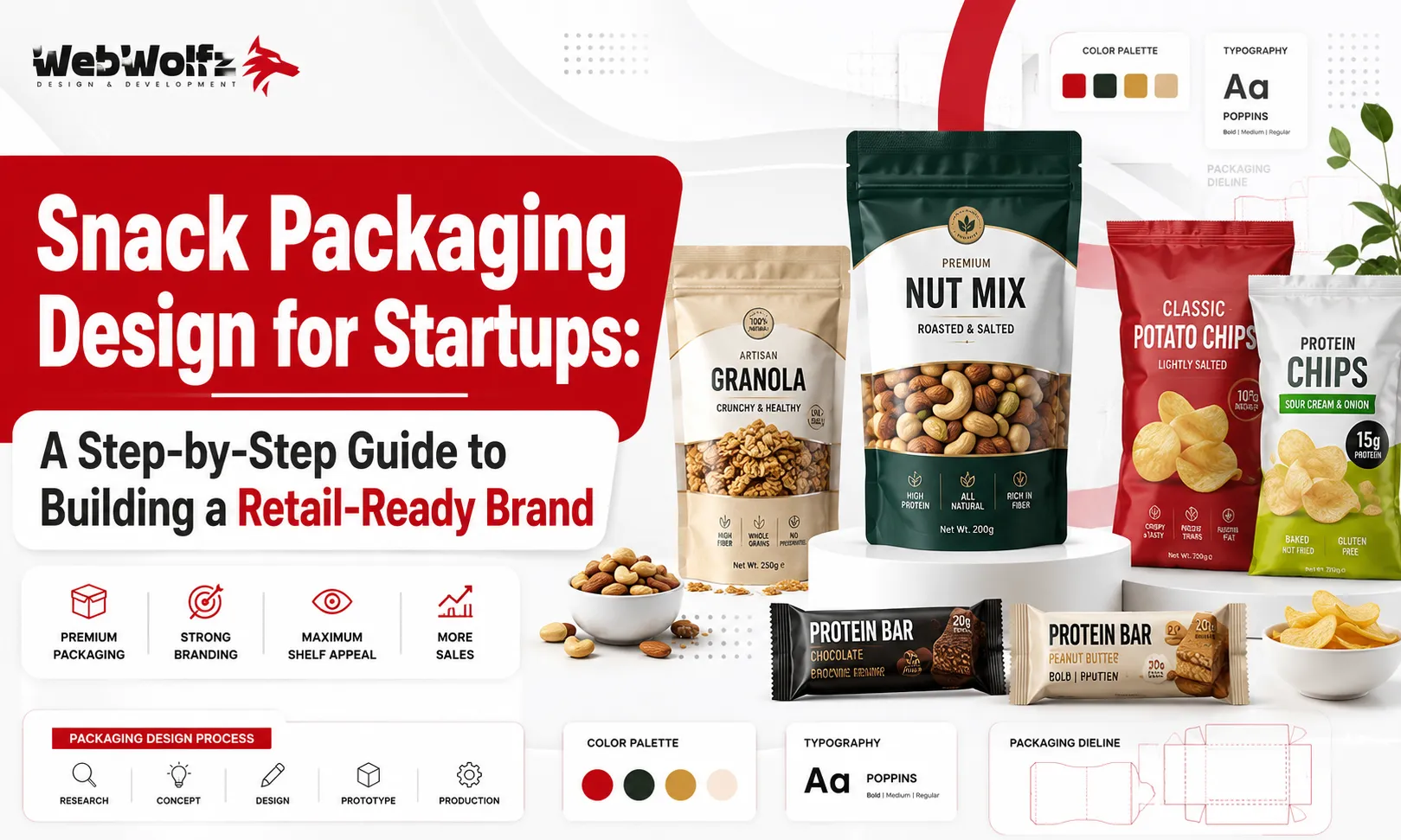
Launching a snack brand has never been easier, but standing out has never been more difficult. Supermarkets, convenience stores, online marketplaces, and quick-commerce platforms are filled with hundreds of snack products competing for the same customers. Whether you’re introducing roasted nuts, healthy chips, protein snacks, popcorn, or baked treats, the quality of your packaging often influences the first purchase long before anyone tastes your product.
Today’s customers make buying decisions within seconds. They quickly scan shelves, compare products visually, and choose the brand that looks the most trustworthy, premium, and relevant to their lifestyle. This is why professional Snack Packaging Design has become one of the most valuable investments for startups entering the food industry.
Packaging is no longer just about protecting the product. It represents your brand, communicates quality, builds trust, and differentiates you from competitors. In this guide, you’ll learn how to build retail-ready packaging that helps your startup compete with established brands in 2026.
Why Packaging Matters More Than Ever
Many startup founders invest heavily in product development but underestimate the importance of packaging. Even if your snack tastes exceptional, poor packaging can prevent customers from giving it a chance.
Your packaging acts as a silent salesperson. It works continuously in supermarkets, grocery stores, online listings, vending machines, cafés, airports, and retail shelves. Every customer interaction begins with what they see before they read a single word.
According to Nielsen, packaging remains one of the strongest influences on consumer purchasing decisions across food and beverage categories.
Professional packaging increases perceived quality while helping customers understand exactly what makes your product different.
Start With Your Brand Before Designing the Pack
One of the biggest mistakes startups make is designing packaging before defining their brand identity.
Before opening any design software, answer a few important questions.
Who is your ideal customer?
What problem does your snack solve?
Is your product positioned as healthy, premium, affordable, organic, indulgent, or high protein?
How do you want customers to describe your brand after seeing it for the first time?
The answers shape every design decision, from typography and colors to illustrations and messaging.
Packaging becomes much more effective when it reflects a clear brand personality instead of simply following current design trends.
Step 1: Understand Your Target Customer
Successful packaging speaks directly to a specific audience.
For example, packaging designed for fitness enthusiasts looks completely different from packaging designed for children or gourmet snack buyers.
Your audience may include:
- Health-conscious professionals
- Office workers
- Students
- Gym members
- Parents
- Travelers
- Premium food shoppers
Every customer group has different expectations, and your packaging should communicate with them immediately.
Step 2: Build Strong Shelf Presence
Retail shelves are crowded.
Customers often compare dozens of products within only a few seconds.
Your packaging needs to answer three questions instantly:
What is this product?
Why should I trust it?
Why should I choose it instead of the one beside it?
Large product names, strong typography, clean layouts, and recognizable branding help achieve this objective.
Many successful startups intentionally simplify their packaging because clarity often performs better than complexity.
Step 3: Choose Colors That Match Your Product
Colors create emotional responses before customers read the label.
For snack brands, different colors communicate different values.
Green often represents health and natural ingredients.
Black communicates premium positioning.
Yellow creates energy and optimism.
Orange suggests excitement and appetite.
White conveys simplicity and cleanliness.
Instead of copying competitors, build a color palette that supports your own brand identity while remaining recognizable across your complete product range.
Step 4: Make the Product Name Instantly Visible
Customers should never struggle to identify your product.
The product name should remain the largest visual element on the package.
Supporting information such as flavor, nutritional benefits, and ingredients should follow a clear hierarchy rather than competing for attention.
Simple typography usually outperforms decorative fonts because it improves readability from a distance.
Step 5: Communicate Product Benefits Clearly
Modern consumers carefully evaluate product benefits before making purchasing decisions.
Instead of writing long paragraphs, highlight important features such as:
High Protein
Gluten Free
Roasted
No Artificial Preservatives
High Fiber
Vegan
Low Sugar
Natural Ingredients
Clear messaging improves purchase confidence without making the packaging appear cluttered.
Step 6: Design for Online Shopping
Many startups focus entirely on retail shelves while forgetting that their products will also appear online.
Packaging must look attractive in:
- Amazon listings
- Blinkit
- Instamart
- BigBasket
- Shopify stores
- Instagram advertisements
- Product photography
Clean layouts and bold branding remain highly visible even in small thumbnail images.
This improves both click-through rates and customer recognition.
Step 7: Invest in Premium Materials
Customers notice quality immediately when they pick up a product.
Premium packaging materials communicate professionalism before the product is opened.
Popular options include:
Matte pouches
Soft-touch finishes
Resealable zipper packs
Metallic foils
Stand-up pouches
Transparent windows
These features improve both functionality and perceived value.
Step 8: Tell a Short Brand Story
Customers increasingly prefer brands that feel authentic.
A short brand story explaining your mission or inspiration helps create emotional connections.
Whether your snack is inspired by traditional recipes, healthy lifestyles, or sustainable farming, authenticity builds trust and encourages repeat purchases.
Step 9: Keep Information Organized
Food packaging contains a significant amount of mandatory information.
Rather than overwhelming customers, organize information into clear sections.
Use a logical hierarchy for:
Product name
Benefits
Flavor
Nutrition facts
Ingredients
Storage instructions
Brand story
Website
Customers appreciate packaging that feels easy to understand.
Step 10: Study Successful Packaging
Learning from successful brands is not about copying their designs.
Instead, analyze why they work.
Observe:
Typography
Color hierarchy
Photography
Illustrations
Logo placement
Messaging
Shelf visibility
Understanding these design principles helps startups make stronger creative decisions.
If you’re developing healthy snack products, you may also find inspiration in our guides on Makhana Packaging Design and Roasted Nuts Packaging Design.
https://webwolfz.com/blog/makhana-packaging-design/
https://webwolfz.com/blog/roasted-nuts-packaging-design/
Similarly, brands launching savory products can explore our Potato Chips Packaging Design and Popcorn Packaging Design resources for additional retail packaging insights.
https://webwolfz.com/blog/potato-chips-packaging-design/
https://webwolfz.com/blog/popcorn-packaging-design/
Step 11: Design for Different Retail Environments
Your snack may be sold in supermarkets, convenience stores, cafés, airport kiosks, vending machines, health food stores, or online marketplaces. Each environment presents products differently.
A package that looks impressive on a supermarket shelf should also remain attractive when displayed in a refrigerator, stacked in cartons, or viewed as a small product thumbnail online.
Always test your packaging in multiple situations before approving it for production.
Step 12: Create a Product Family That Looks Consistent
Most successful snack brands eventually launch multiple flavors and product variations.
Instead of designing every package from scratch, build a packaging system.
Keep these elements consistent:
- Logo placement
- Typography
- Layout
- Graphic style
- Product hierarchy
- Brand colors
Then use accent colors or illustrations to distinguish different flavors.
Customers who enjoy one flavor will immediately recognize the rest of your product range.
Step 13: Use High-Quality Product Photography or Illustrations
Customers want to understand exactly what they are buying.
Realistic product photography works well for many snack categories, while premium illustrations can help create a unique brand personality.
Whatever style you choose, keep it consistent across every product.
Avoid low-quality stock images that reduce credibility.
Step 14: Build Trust Through Transparency
Modern consumers carefully read food packaging.
Instead of hiding important information, highlight it clearly.
Useful trust signals include:
- Natural ingredients
- No artificial preservatives
- High protein
- Gluten free
- Vegan
- Organic
- Non-GMO
When presented honestly, these claims help customers make confident buying decisions.
Step 15: Improve Convenience
Great packaging solves problems.
Ask yourself:
Can customers easily open it?
Can they reseal it?
Can they carry it while travelling?
Can they store it conveniently?
Small usability improvements create better customer experiences and encourage repeat purchases.
Step 16: Consider Sustainable Packaging
Sustainability continues to influence purchasing decisions across food categories.
Many customers now prefer brands using environmentally responsible packaging.
Options include:
- Recyclable pouches
- Compostable materials
- FSC-certified paper
- Eco-friendly inks
- Lightweight packaging
If sustainability is one of your brand values, communicate it clearly without overwhelming the design.
The Sustainable Packaging Coalition offers useful guidance for brands interested in sustainable packaging solutions.
https://sustainablepackaging.org/
Step 17: Design for Printing Accuracy
Beautiful digital artwork does not always produce beautiful printed packaging.
Before final production, review:
- Color consistency
- Barcode placement
- Bleed areas
- Font sizes
- Print resolution
- Material compatibility
Working closely with experienced packaging designers and printers helps avoid costly production mistakes.
Step 18: Think Beyond the Front Panel
Many startups spend most of their design time on the front of the package.
However, every side of the packaging provides branding opportunities.
The back panel can include:
- Brand story
- Serving suggestions
- Social media links
- QR codes
- Nutritional information
- Customer support details
Every section should reinforce your brand identity.
Step 19: Prepare for Future Product Expansion
Successful startups rarely stop after launching one product.
Design your packaging system so new products can be added easily.
A flexible brand system saves time and creates stronger recognition as your business grows.
Whether you later introduce protein snacks, baked products, healthy beverages, or seasoning blends, consistent branding strengthens your market presence.
Brands expanding into functional snacks may also find inspiration in our guides covering:
Protein Cookie Packaging Design
https://webwolfz.com/blog/protein-cookie-packaging-design/
Protein Brownie Packaging Design
https://webwolfz.com/blog/protein-brownie-packaging-design/
Protein Cake Packaging Design
https://webwolfz.com/blog/protein-cake-packaging-design/
High Protein Mini Cake Packaging Design
https://webwolfz.com/blog/high-protein-mini-cake-packaging-design/
Step 20: Test Before Mass Production
One of the smartest investments startups can make is testing packaging before manufacturing thousands of units.
Collect feedback from:
- Potential customers
- Retailers
- Distributors
- Sales teams
- Friends and family
- Focus groups
Evaluate questions such as:
Does the product stand out?
Is the branding memorable?
Is the information easy to read?
Would you buy this product?
Small improvements discovered during testing often lead to significantly stronger retail performance.
Common Packaging Mistakes Startups Should Avoid
Many startups lose valuable sales because of avoidable design mistakes.
Some of the most common include:
- Overcrowded layouts
- Weak logo visibility
- Too many fonts
- Poor color contrast
- Low-quality photography
- Inconsistent branding
- Confusing product hierarchy
- Cheap packaging materials
The goal of packaging is not to include as much information as possible.
The goal is to communicate the right information as quickly as possible.
Packaging Is a Long-Term Business Investment
Many founders see packaging as an expense.
Successful brands see it as an investment.
Professional packaging continues working long after production because it:
- Attracts attention
- Builds trust
- Improves recognition
- Supports premium pricing
- Encourages repeat purchases
- Strengthens brand identity
Unlike advertisements that disappear once budgets are exhausted, excellent packaging continues selling your product every day.
Learn From Other Successful Food Packaging Categories
Studying different food categories often generates valuable creative ideas.
For example, brands developing functional products may benefit from exploring packaging concepts used in:
Energy Gel Sachet Packaging Design
https://webwolfz.com/blog/energy-gel-sachet-packaging-design/
Collagen Water Packaging Design
https://webwolfz.com/blog/collagen-water-packaging-design/
Beauty Water Bottle Packaging Design
https://webwolfz.com/blog/beauty-water-bottle-packaging-design/
These categories demonstrate how premium branding, minimal design, and clear messaging help products stand out in highly competitive markets.
Why Professional Packaging Design Gives Startups a Competitive Advantage
As your startup grows, packaging becomes much more than a protective layer around your product. It becomes one of your strongest marketing assets.
Every package represents your brand in front of potential customers. Whether someone discovers your snack in a supermarket, an online marketplace, a café, or through social media, the packaging creates the first impression.
Professional packaging design helps startups:
- Build customer trust
- Increase shelf visibility
- Improve brand recall
- Support premium pricing
- Encourage repeat purchases
- Strengthen marketing campaigns
In highly competitive food categories, these advantages often determine whether a product succeeds or struggles.
Packaging Trends Every Snack Brand Should Watch in 2026
Consumer expectations continue to evolve, and successful brands adapt quickly.
Some of the biggest packaging trends shaping the food industry include:
Sustainable Materials
Customers increasingly prefer brands that reduce environmental impact through recyclable or eco-friendly packaging.
Minimalist Design
Clean layouts with strong typography continue to outperform cluttered designs because they improve readability and create a premium appearance.
Smart Packaging
QR codes can connect customers to recipes, loyalty programs, nutritional information, promotional campaigns, or your brand story.
Premium Finishes
Matte lamination, soft-touch coatings, embossed logos, and metallic accents help products feel more premium without overwhelming the design.
Honest Branding
Consumers appreciate transparent ingredient lists, authentic messaging, and brands that communicate clearly rather than making exaggerated claims.
Build a Brand, Not Just a Package
Many startups focus only on designing an attractive pouch.
However, long-term success comes from building a recognizable brand system.
Your packaging should work consistently across:
- Retail shelves
- eCommerce marketplaces
- Social media
- Product photography
- Advertising campaigns
- Trade shows
- Distributor presentations
When customers immediately recognize your products regardless of where they see them, your marketing becomes significantly more effective.
Why Many Food Startups Choose WebWolfz
Designing retail-ready packaging requires creativity, technical knowledge, consumer psychology, printing expertise, and branding strategy.
At WebWolfz, we help startups and established food brands create packaging that not only looks premium but also performs in competitive retail environments.
Whether you’re launching healthy snacks, protein foods, beverages, coffee products, seasoning blends, or functional nutrition products, our team develops packaging that balances aesthetics with commercial success.
If you’re expanding into additional food categories, you may also find inspiration from these packaging guides:
Peri Peri Seasoning Packaging Design
https://webwolfz.com/blog/peri-peri-seasoning-packaging-design/
Hydration Drink Packaging Design
https://webwolfz.com/blog/hydration-drink-packaging-design/
Electrolyte Drink Packaging Design
https://webwolfz.com/blog/electrolyte-drink-packaging-design/
Brands developing premium beverage products can also explore:
CBD Coffee Packaging Design
https://webwolfz.com/blog/cbd-coffee-packaging-design/
Functional Coffee Packaging Design
https://webwolfz.com/blog/functional-coffee-packaging-design/
For businesses looking for complete branding and packaging support, our Packaging Design Services for Food Brands provide end-to-end creative solutions, from concept development to print-ready artwork.
https://webwolfz.com/blog/packaging-design-services-for-food-brands/
If you’re planning your next product launch, our team would be happy to help you build packaging that captures attention and supports long-term growth.
https://webwolfz.com/contact-us
Final Thoughts
Launching a successful snack brand involves much more than creating a delicious product.
Customers make buying decisions based on appearance, trust, convenience, and brand perception before they experience the taste. Strong packaging communicates all of these elements within seconds.
From understanding your audience and creating consistent branding to selecting premium materials and designing for both retail shelves and online marketplaces, every packaging decision contributes to your product’s success.
The brands that succeed in 2026 will be those that invest in thoughtful packaging strategies rather than relying on generic designs.
If your goal is to build a retail-ready snack brand that customers remember and retailers want to stock, investing in professional packaging design is one of the smartest long-term decisions you can make.
Frequently Asked Questions
Why is snack packaging design important for startups?
Professional snack packaging creates a strong first impression, builds customer trust, improves shelf visibility, and helps new brands compete with established products.
What should a good snack package include?
A successful package should include clear branding, an attractive product name, key benefits, ingredient information, nutrition facts, easy-to-read typography, and premium visuals.
How can packaging increase snack sales?
Well-designed packaging attracts attention, communicates product quality, differentiates the brand from competitors, and encourages customers to make purchase decisions more quickly.
What are the biggest snack packaging trends in 2026?
Minimalist layouts, sustainable materials, resealable pouches, premium finishes, smart QR codes, bold typography, and clean branding are among the leading packaging trends.
Should startups hire professional packaging designers?
Yes. Professional designers understand branding, printing, consumer psychology, and retail merchandising, helping startups launch products that look credible and retail-ready.
Why choose WebWolfz for food packaging design?
WebWolfz creates premium, retail-ready packaging solutions that combine branding strategy, creative design, and consumer insights to help food startups stand out and grow confidently.