

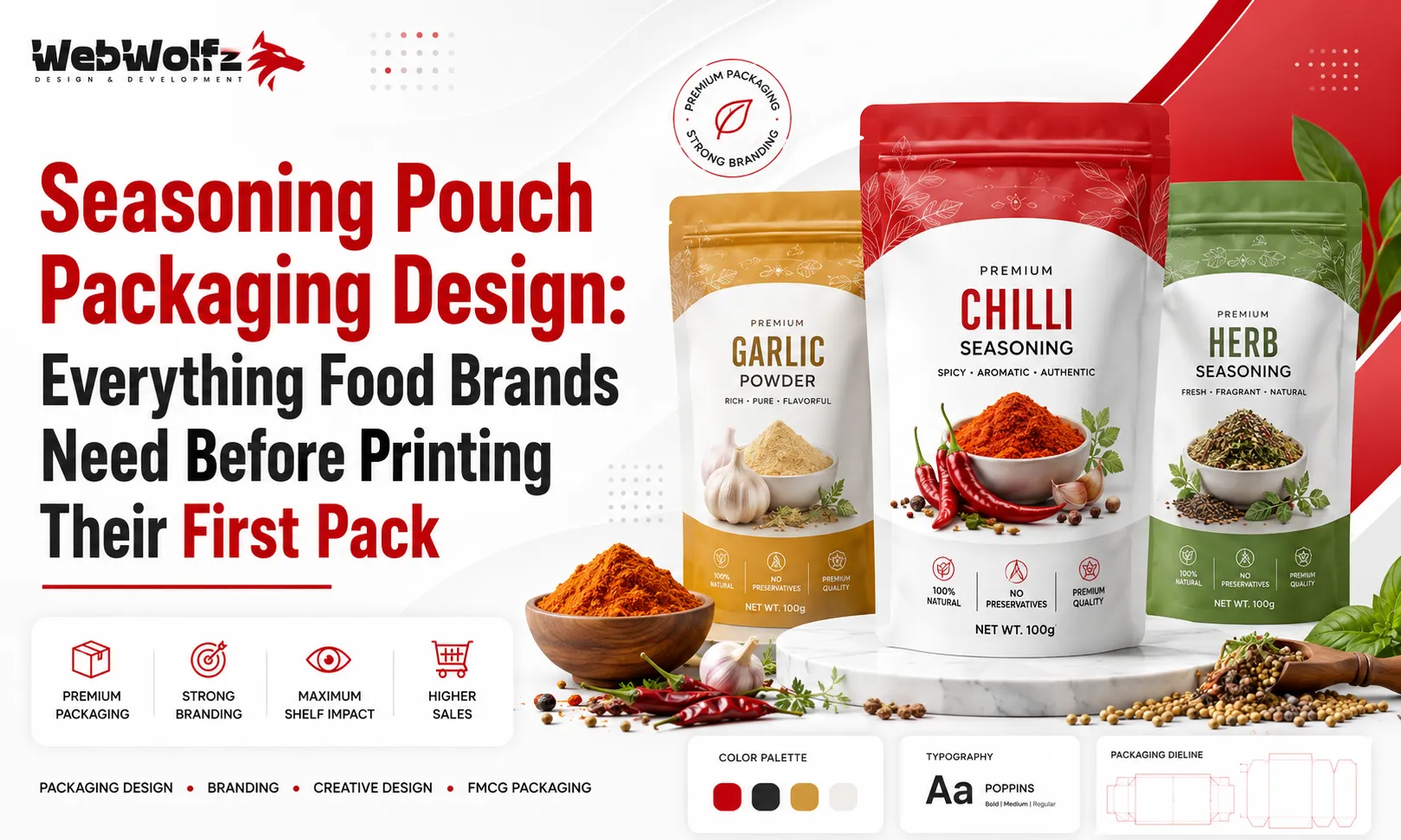
Launching a seasoning product is exciting, but creating a successful product involves much more than developing a great recipe. The packaging you choose becomes the first thing customers notice before they ever taste your seasoning. In today’s competitive food market, attractive packaging can influence purchasing decisions within a few seconds, making it one of the most valuable investments for any food business.
Whether you’re launching peri peri seasoning, BBQ spice blends, pizza seasoning, masala mixes, garlic seasoning, or gourmet herb blends, your packaging should immediately communicate quality, freshness, and trust. A professionally created Seasoning Pouch Packaging Design helps your product stand out on supermarket shelves while strengthening your overall brand identity.
This guide explains everything food brands should consider before sending their first pouch design for printing, helping you avoid expensive mistakes and create packaging that customers remember.
Why Packaging Matters Before Customers Taste Your Product
Customers cannot smell or taste your seasoning while shopping. Instead, they judge the product based on its packaging.
A premium pouch creates confidence by communicating professionalism and product quality. Even if two products contain similar ingredients, consumers often choose the one with better packaging because it appears more trustworthy.
Good packaging helps:
- Build customer trust
- Improve shelf visibility
- Strengthen brand recognition
- Increase perceived product value
- Encourage repeat purchases
- Support online sales
According to Nielsen, packaging design remains one of the strongest factors influencing consumer buying decisions in retail environments.
For startups entering the food industry, packaging often becomes the first marketing tool customers experience.
Why Pouches Are the Preferred Choice for Seasonings
Flexible stand-up pouches have become one of the most popular packaging formats for spices and seasoning products.
Compared with traditional containers, pouches offer several advantages.
They are lightweight, occupy less storage space, reduce transportation costs, and provide excellent printable surface areas for branding.
Many modern seasoning brands also choose resealable zipper pouches because they improve convenience and preserve product freshness after opening.
Consumers increasingly expect packaging that combines functionality with attractive design.
Start With Your Brand Identity
Before designing your pouch, define your brand clearly.
Ask yourself:
- Who is your target customer?
- Is your product premium or affordable?
- What makes your seasoning different?
- What personality should your packaging communicate?
A gourmet seasoning designed for professional chefs requires a completely different visual approach than a fun family-friendly spice blend.
Your brand identity influences every design decision, including colors, typography, photography, illustrations, and messaging.
Understand Your Retail Environment
Packaging should never be designed in isolation.
Instead, imagine your pouch displayed alongside competing products.
Visit supermarkets and grocery stores to study:
- Competitor colors
- Typography styles
- Pouch sizes
- Product photography
- Shelf organization
This research helps identify opportunities to differentiate your product rather than blending into existing designs.
Choose Colors That Match Your Flavor Profile
Color psychology plays an important role in food packaging.
Different seasoning categories often use different visual styles.
Examples include:
- Red for spicy blends
- Orange for barbecue flavors
- Green for herbs
- Black for premium gourmet products
- Yellow for citrus seasonings
- Brown for roasted spices
Rather than copying competitors, develop a unique color palette that becomes part of your brand identity.
Consistency across every product variant helps customers recognize your products quickly.
Typography Should Be Easy to Read
Customers often make buying decisions while walking through supermarket aisles.
If they cannot read your product name within a few seconds, your packaging loses effectiveness.
Choose typography that remains clear from different viewing distances.
The product name should always receive the greatest visual emphasis.
Supporting information such as flavor, ingredients, or usage suggestions should remain organized beneath the primary headline.
Avoid using too many different fonts on a single package.
Simple typography almost always creates a stronger premium impression.
Put the Most Important Information on the Front
The front panel should communicate only the most essential information.
This usually includes:
- Brand logo
- Product name
- Flavor
- Key benefit
- Net weight
Everything else belongs on the back panel.
Keeping the front clean helps customers understand your product instantly.
Showcase Ingredients Naturally
Food buyers increasingly care about ingredient quality.
Instead of filling the pouch with decorative graphics, use attractive illustrations or professional photography that represents the actual ingredients.
Images of herbs, peppers, garlic, spices, or seasoning blends should look authentic rather than artificial.
Natural visuals increase trust and improve appetite appeal.
Make Your Product Suitable for Online Selling
Today’s seasoning brands sell through supermarkets, Amazon, Shopify stores, and social media.
Your packaging should perform equally well in physical stores and digital marketplaces.
Strong contrast, bold typography, and clean layouts ensure your pouch remains attractive even when displayed as a small thumbnail online.
If you’re building a complete snack product range, our guide on Snack Packaging Design for Startups offers additional ideas for creating retail-ready food brands:
https://webwolfz.com/blog/snack-packaging-design-for-startups/
Brands expanding into healthy snacks can also explore our Roasted Nuts Packaging Design guide:
https://webwolfz.com/blog/roasted-nuts-packaging-design/
Similarly, businesses developing modern healthy snack products may benefit from our detailed Makhana Packaging Design resource:
https://webwolfz.com/blog/makhana-packaging-design/
Consider Packaging Materials Carefully
The design is important, but material selection matters just as much.
Your pouch should protect the seasoning from:
- Moisture
- Oxygen
- Sunlight
- Contamination
Many food brands choose multilayer laminated pouches because they provide excellent barrier protection while maintaining print quality.
Selecting the right material helps preserve freshness throughout the product’s shelf life.
Design With Printing in Mind
Many first-time food brands focus entirely on how the pouch looks on a computer screen and forget that it must eventually be printed.
Printing introduces technical requirements that should be considered from the beginning.
Before approving artwork, confirm:
- Print resolution is at least 300 DPI.
- Colors are prepared in CMYK for commercial printing.
- Safe margins and bleed areas are included.
- Barcode placement is correct.
- Fonts are embedded or converted to outlines.
- Images remain sharp at actual print size.
Reviewing these details early helps avoid expensive reprints and production delays.
Leave Enough Space for Mandatory Information
Food packaging is not only about branding. It must also communicate essential product information clearly.
Depending on your target market and local regulations, the pouch may need to display:
- Ingredient list
- Nutritional information
- Allergen declaration
- Manufacturing details
- Batch number
- Best before date
- Storage instructions
- Barcode
- Customer support details
The Food Safety and Standards Authority of India (FSSAI) provides guidance on food labeling requirements.
Planning these sections before designing the artwork keeps the final pouch clean and professional.
Create a Strong Visual Hierarchy
Customers should immediately know what they are looking at.
A simple visual hierarchy generally follows this order:
- Brand logo
- Product name
- Flavor or variety
- Key benefit
- Product image
- Supporting information
Avoid giving every element the same visual weight. Good hierarchy guides the customer’s eyes naturally across the package.
Add Premium Finishing Options
Small finishing details can dramatically improve the perceived quality of your packaging.
Popular premium finishes include:
- Matte lamination
- Soft-touch coating
- Spot UV
- Metallic foil
- Embossing
- Transparent windows
These enhancements help premium seasoning brands compete with established products on retail shelves.
Design a Product Family, Not Just One Pouch
Many businesses begin with one seasoning and later expand into multiple flavors.
Your packaging should be flexible enough to support future products.
Maintain consistency through:
- Logo placement
- Typography
- Layout
- Illustration style
- Color system
Then differentiate flavors using unique accent colors and ingredient imagery.
A consistent product family strengthens brand recognition and encourages repeat purchases.
Think About Customer Convenience
Modern consumers appreciate packaging that is practical as well as attractive.
Features that improve usability include:
- Resealable zipper closures
- Easy-tear notches
- Stand-up pouch bases
- Durable materials
- Comfortable handling
Convenience influences customer satisfaction long after the initial purchase.
Sustainable Packaging Is Becoming a Competitive Advantage
Consumers are increasingly interested in environmentally responsible packaging.
Many food brands are exploring:
- Recyclable materials
- Reduced plastic usage
- Lightweight packaging
- Eco-friendly inks
- Sustainable production methods
The Sustainable Packaging Coalition provides useful information for brands interested in improving packaging sustainability.
https://sustainablepackaging.org/
Sustainability should support your brand story rather than becoming a marketing slogan.
Avoid Overdesigning the Pouch
One of the most common mistakes is trying to include every possible graphic, icon, and marketing message.
Premium packaging usually communicates more by showing less.
Leave sufficient white space.
Keep the message focused.
Use high-quality visuals instead of excessive decoration.
Simple packaging often creates the strongest impression.
Build Trust Through Transparency
Today’s consumers appreciate honest communication.
If your product offers meaningful benefits, present them clearly.
Examples include:
- No Artificial Colors
- No Added Preservatives
- Vegan Friendly
- Gluten Free
- Small Batch Crafted
- Natural Ingredients
Only make claims that can be supported.
Transparent communication helps build long-term customer confidence.
Learn From Other Successful Food Categories
Many packaging ideas can be adapted from other FMCG products.
For example, snack brands often use bold typography and clear flavor communication to attract attention.
Our Potato Chips Packaging Design guide demonstrates how shelf visibility influences purchase decisions:
https://webwolfz.com/blog/potato-chips-packaging-design/
Brands creating healthier snack ranges can also explore our Popcorn Packaging Design article:
https://webwolfz.com/blog/popcorn-packaging-design/
Businesses working with functional nutrition products may find inspiration in:
Protein Cookie Packaging Design
https://webwolfz.com/blog/protein-cookie-packaging-design/
Protein Brownie Packaging Design
https://webwolfz.com/blog/protein-brownie-packaging-design/
High Protein Mini Cake Packaging Design
https://webwolfz.com/blog/high-protein-mini-cake-packaging-design/
Although these products serve different markets, the same packaging principles apply: clear branding, strong hierarchy, and excellent shelf visibility.
Think Beyond Retail Stores
Many seasoning brands now sell directly through their own websites, marketplaces, and subscription models.
Your pouch should therefore perform well in:
- Product photography
- Social media campaigns
- E-commerce listings
- Promotional videos
- Influencer collaborations
Packaging designed with digital marketing in mind often produces stronger online conversions.
Test Before Final Printing
Avoid approving artwork based only on a computer screen.
Instead, print physical samples and evaluate them under real conditions.
Check:
- Readability
- Color accuracy
- Shelf visibility
- Material quality
- Overall appearance
Gather feedback from retailers, distributors, and potential customers whenever possible.
Testing before production is far less expensive than correcting thousands of printed pouches later.
Why Professional Packaging Design Makes a Difference
Packaging combines branding, marketing, printing knowledge, consumer psychology, and product positioning.
A professionally designed pouch does more than look attractive. It communicates value, builds trust, and helps customers make faster buying decisions.
Many successful food companies invest in experienced packaging designers because strong packaging often delivers a higher return than many traditional advertising campaigns.
Common Packaging Mistakes First-Time Food Brands Should Avoid
Many seasoning brands invest heavily in recipe development but underestimate the importance of packaging. Even a high-quality product can struggle if the pouch fails to create a strong first impression.
Some of the most common mistakes include:
- Using too many colors and fonts on one package.
- Placing important information where it is difficult to read.
- Choosing low-quality product images or generic stock graphics.
- Ignoring shelf visibility during the design process.
- Printing without checking color proofs or physical samples.
- Forgetting mandatory food labeling requirements.
- Creating inconsistent branding across different flavors.
Avoiding these mistakes can save significant time and production costs while helping your product compete with established brands.
Packaging Is an Investment, Not an Expense
Many startups try to reduce costs by choosing generic packaging templates.
Although this may seem economical initially, generic packaging often makes products look similar to dozens of competitors.
Professional packaging provides long-term value by helping businesses:
- Build brand recognition
- Increase customer trust
- Improve shelf visibility
- Support premium pricing
- Encourage repeat purchases
- Strengthen online marketing campaigns
Unlike paid advertisements that stop generating results when the budget ends, packaging continues representing your brand every single day.
Learn From Other Successful Packaging Categories
Studying packaging across different food categories can inspire better design decisions.
For example, energy products often focus on functionality and performance.
Our Energy Gel Sachet Packaging Design guide demonstrates how clear messaging influences purchasing decisions.
https://webwolfz.com/blog/energy-gel-sachet-packaging-design/
Wellness beverages rely heavily on premium branding and minimalist presentation.
You may also find these guides useful:
Collagen Water Packaging Design
https://webwolfz.com/blog/collagen-water-packaging-design/
Beauty Water Bottle Packaging Design
https://webwolfz.com/blog/beauty-water-bottle-packaging-design/
Brands entering functional beverage categories can also explore:
Hydration Drink Packaging Design
https://webwolfz.com/blog/hydration-drink-packaging-design/
Electrolyte Drink Packaging Design
https://webwolfz.com/blog/electrolyte-drink-packaging-design/
Similarly, businesses creating premium food products may benefit from our detailed guide on Peri Peri Seasoning Packaging Design, which explores branding strategies specifically for seasoning products.
https://webwolfz.com/blog/peri-peri-seasoning-packaging-design/
Coffee and wellness brands can also learn from:
CBD Coffee Packaging Design
https://webwolfz.com/blog/cbd-coffee-packaging-design/
Functional Coffee Packaging Design
https://webwolfz.com/blog/functional-coffee-packaging-design/
Each category has unique customer expectations, but the core principles of effective packaging remain the same: clarity, consistency, quality, and trust.
Why More Food Brands Choose WebWolfz
Designing packaging that performs well in retail stores and online marketplaces requires much more than creativity.
Successful packaging combines branding strategy, consumer psychology, typography, color theory, print production knowledge, and marketing expertise.
At WebWolfz, we work with food startups, FMCG companies, and established brands to create packaging that not only looks professional but also supports business growth.
Whether you’re launching a seasoning blend, snack product, beverage, protein food, coffee brand, or wellness product, our design approach focuses on building packaging that attracts customers, strengthens brand identity, and improves shelf performance.
Explore our complete Packaging Design Services for Food Brands here:
https://webwolfz.com/blog/packaging-design-services-for-food-brands/
If you’re ready to discuss your packaging project, our team is here to help.
https://webwolfz.com/contact-us
Final Thoughts
Your packaging is often the first conversation your product has with a customer.
Before anyone experiences your seasoning, they judge its quality through the pouch, typography, colors, layout, and overall presentation.
Thoughtful packaging creates trust, builds brand recognition, and helps products stand out in crowded retail environments.
As competition continues growing in 2026, investing in professional packaging design is no longer optional for brands that want to build a lasting presence in the market.
By planning your packaging carefully before printing the first pouch, you’ll reduce costly mistakes, create a stronger customer experience, and give your seasoning brand the best possible opportunity to succeed.