

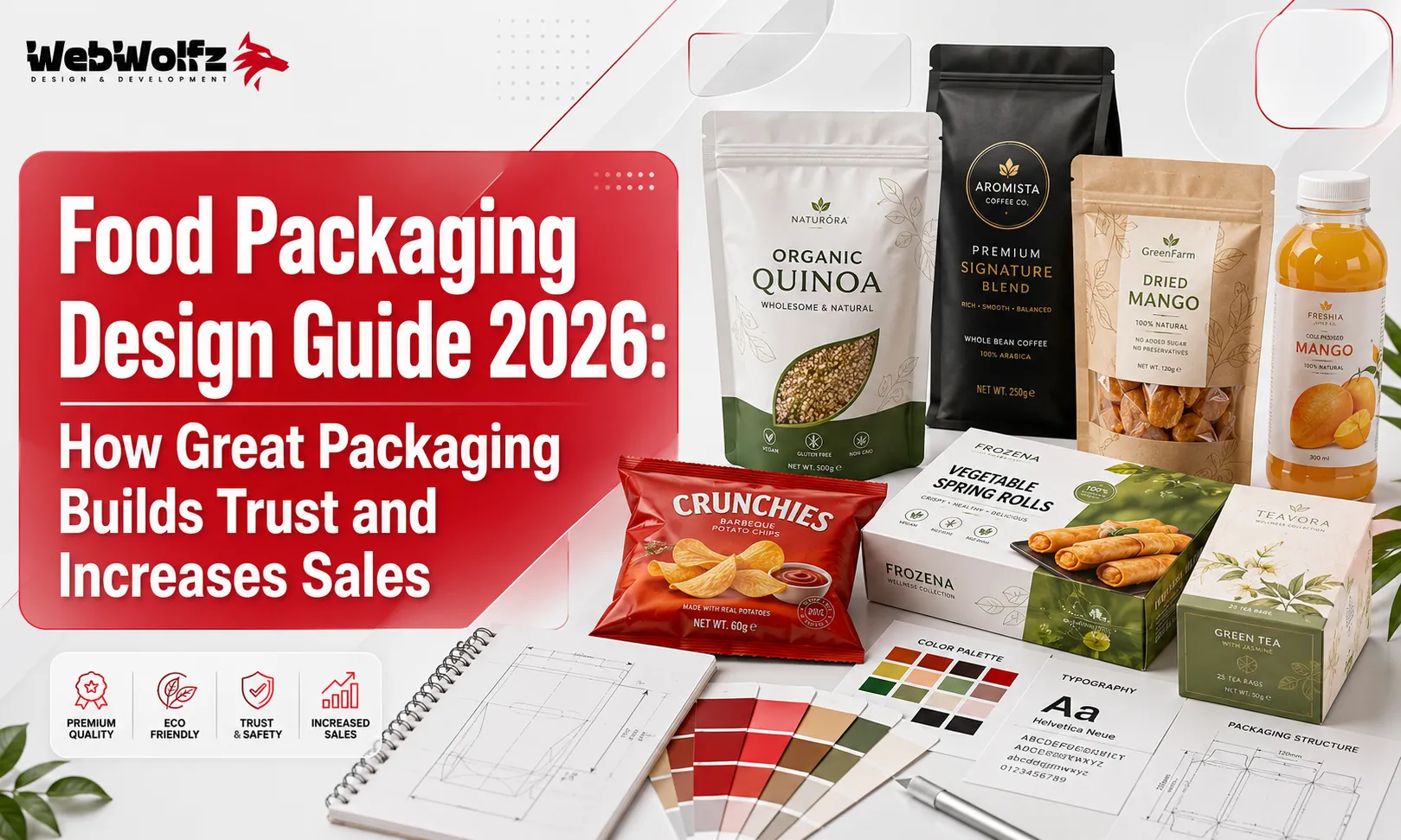
Walk into any supermarket today and you’ll notice something interesting. Hundreds of food products compete for attention on the same shelf, often offering similar ingredients, prices, and quality. Yet, some products are picked up within seconds while others remain unnoticed. The difference is rarely the product itself. More often, it is the packaging.
Packaging has evolved from being a protective layer into one of the most powerful marketing tools a food business can invest in. It influences first impressions, communicates quality, reflects brand values, and often determines whether a customer makes a purchase. In 2026, as competition continues to grow across retail stores and eCommerce platforms, businesses that invest in strategic packaging are seeing stronger customer trust and better sales performance.
This Food Packaging Design guide explains why packaging matters more than ever, what modern consumers expect, and how food brands can create packaging that not only looks attractive but also drives business growth.
Packaging Is the First Conversation With Your Customer
Before customers taste your product, they judge it.
This judgment happens in just a few seconds. During that brief moment, shoppers evaluate whether the product looks trustworthy, premium, healthy, affordable, or worth trying. Packaging becomes the silent salesperson that communicates everything without saying a word.
Research from NielsenIQ shows that packaging remains one of the strongest influences on consumer purchasing decisions, particularly in highly competitive food categories where buyers compare multiple products at once.
If the packaging looks outdated, cluttered, or unprofessional, customers often assume the product inside follows the same standard. On the other hand, clean, modern, and thoughtfully designed packaging immediately creates confidence.
Why Trust Has Become More Important Than Price
Consumer behavior has changed dramatically over the last few years.
People are paying closer attention to ingredient quality, nutrition, sustainability, manufacturing standards, and brand transparency. They want reassurance before spending money, especially on products they consume every day.
Great packaging helps answer important questions instantly:
- Is this product safe?
- Does it look premium?
- Can I trust this brand?
- Is the information easy to understand?
- Does this company appear professional?
When customers feel confident, they are far more likely to complete the purchase.
Modern Packaging Is Part of Your Brand Identity
Many food businesses still view packaging as simply a printed pouch or box.
Successful brands understand that packaging is actually part of their identity.
Everything contributes to customer perception, including:
- Colors
- Typography
- Material quality
- Product photography
- Icons
- Label hierarchy
- Finishing techniques
When all these elements work together, they create a memorable brand experience that customers recognize during future purchases.
This consistency becomes even more important as businesses introduce new products into their portfolio.
The Rise of Premium Packaging in 2026
Today’s shoppers are willing to pay more for products that appear trustworthy and professionally presented.
Premium packaging doesn’t necessarily mean expensive materials. It means thoughtful design.
Some of the biggest packaging trends this year include:
- Minimalist layouts
- Matte finishes
- Eco-friendly materials
- Bold typography
- Transparent ingredient communication
- QR codes for product information
- Soft natural color palettes
- Sustainable printing methods
Industry reports from Mintel continue to highlight sustainability, transparency, and premium visual identity as major packaging trends shaping purchasing decisions.
Packaging Has Become a Marketing Investment
Every package continues promoting your business long after the advertising campaign ends.
Unlike digital advertisements that disappear after a few seconds, product packaging remains visible:
- On supermarket shelves
- In customers’ kitchens
- On social media
- In unboxing videos
- On eCommerce marketplaces
Every time someone sees your product, the packaging reinforces your brand.
This makes packaging one of the highest-return branding investments available for food businesses.
Design for the Shelf and the Smartphone
Customers now discover food products in two places.
The first is the retail shelf.
The second is online.
Whether someone is browsing Amazon, Shopify, Blinkit, Instacart, Zepto, or Instagram, your product image must immediately capture attention.
Modern packaging therefore needs to perform equally well in physical stores and digital marketplaces.
Simple layouts, readable typography, and strong visual hierarchy generally outperform overcrowded labels.
Great Packaging Tells a Story
Customers enjoy buying from brands they connect with emotionally.
Instead of simply displaying ingredients, successful food brands communicate:
- Their mission
- Product quality
- Sourcing philosophy
- Health benefits
- Brand personality
A short but meaningful story helps transform an ordinary food product into a memorable brand.
For example, snack companies can create a stronger product family by maintaining a consistent visual identity across products such as Potato Chips Packaging Design, Makhana Packaging Design, and Roasted Nuts Packaging Design. You can explore practical examples here.
Maintaining consistency across multiple products helps customers recognize your brand instantly.
Different Food Categories Need Different Packaging Strategies
Every food category has unique customer expectations.
Protein products often focus on performance and nutrition.
Snack products emphasize fun, flavor, and convenience.
Hydration beverages highlight freshness and wellness.
Coffee packaging communicates craftsmanship and premium quality.
Instead of using one design approach for every product, businesses should tailor their packaging according to customer psychology and market positioning.
For example, the visual language used for Protein Cookie Packaging Design differs significantly from Functional Coffee Packaging Design or Hydration Drink Packaging Design, even though all belong to the broader food and beverage industry.
Understanding these differences helps brands communicate more effectively with their target audience while strengthening overall brand identity.
Packaging Psychology: Why Customers Buy With Their Eyes First
Shopping decisions are often emotional before they become logical. Even when customers compare ingredients or prices, the first thing they notice is how the product looks.
Studies in consumer behavior have consistently shown that visual presentation influences perceived quality. A professionally designed package suggests that the same level of care has gone into developing the product inside.
This is why successful food brands focus on creating packaging that immediately communicates confidence, quality, and authenticity instead of trying to fit every piece of information onto the front of the pack.
The Food Packaging Design process should always begin with understanding the target audience rather than simply choosing attractive colors.
Color Psychology Can Influence Buying Decisions
Colors create expectations long before customers read the product name.
For example:
- Green often represents freshness and natural ingredients.
- Red creates excitement and stimulates appetite.
- Yellow attracts attention and conveys energy.
- Blue is commonly associated with cleanliness and trust.
- Black is frequently used for premium or gourmet products.
- White communicates simplicity and purity.
The right color palette depends on the product category and brand positioning. A protein snack may benefit from bold, energetic colors, while a premium wellness drink may perform better with softer tones and a minimalist design.
When every product follows a consistent color strategy, customers begin recognizing the brand instantly.
Typography Should Make Information Easy to Read
Beautiful packaging is ineffective if customers struggle to read it.
Typography should guide the customer’s eyes naturally through the label.
A strong hierarchy usually includes:
- Product name as the primary focus
- Key benefit immediately underneath
- Supporting information in smaller text
- Ingredients and nutritional details organized neatly
Avoid using too many fonts or decorative styles that reduce readability. Simple, modern typefaces often perform better because they look professional across both printed packaging and online product images.
Sustainable Packaging Is No Longer Optional
Consumers are becoming more aware of environmental responsibility.
Many shoppers actively look for brands that reduce unnecessary packaging and use recyclable or renewable materials.
According to the Sustainable Packaging Coalition, sustainable packaging should protect the product while minimizing environmental impact throughout its lifecycle.
Simple improvements include:
- Recyclable pouches
- FSC-certified paperboard
- Lightweight packaging
- Water-based inks
- Reduced plastic usage
Sustainability should be genuine rather than just a marketing claim. Customers quickly recognize when brands communicate authentic environmental efforts.
Shelf Impact Determines Whether Customers Notice Your Product
Retail shelves are crowded with competing products.
A customer may only spend a few seconds scanning an entire category before making a decision.
Strong shelf impact comes from:
- Clear branding
- Balanced layouts
- Bold product names
- Consistent colors
- High-quality product photography
- Simple benefit statements
Instead of filling every available space with graphics and text, leaving strategic white space often makes the packaging more noticeable.
Premium Finishes Increase Perceived Value
Small finishing details can dramatically improve how customers perceive a product.
Popular premium finishing techniques include:
- Matte lamination
- Soft-touch coating
- Spot UV
- Embossing
- Foil stamping
- Metallic inks
These finishes create a more premium experience without changing the product itself. Many successful brands use subtle finishing techniques rather than excessive decoration.
Packaging Should Perform Well Online
Food products are increasingly purchased through online marketplaces and quick-commerce platforms.
This means packaging must look attractive even as a small thumbnail image.
Before approving a design, ask:
- Can the product name be read quickly?
- Does the logo remain visible?
- Are the key benefits easy to identify?
- Does the product stand out against competitors?
Packaging that works well online supports higher click-through rates and stronger brand recall.
Build a Product Family Instead of Individual Designs
As food businesses grow, they often introduce new flavors, sizes, or product categories.
Every new product should feel connected to the existing brand rather than looking completely different.
For example, if you’re developing a snack portfolio, maintaining consistent branding across Popcorn Packaging Design, Extruded Snacks Packaging Design, and Peri Peri Chips Packaging Design helps customers immediately recognize your products on the shelf.
This consistency strengthens brand recognition and makes future product launches more effective.
Common Packaging Mistakes That Reduce Sales
Many food businesses invest heavily in product development but overlook packaging quality.
Some of the most common mistakes include:
- Overcrowded labels
- Poor typography
- Low-quality product images
- Weak color contrast
- Confusing information hierarchy
- Inconsistent branding
- Generic stock-style designs
- Lack of clear product benefits
Even a high-quality food product can struggle if its packaging fails to create a positive first impression.
Professional Packaging Saves Time and Cost
Packaging revisions after printing can be expensive.
Working with experienced packaging designers from the beginning helps businesses avoid production errors, improve print quality, and create packaging that aligns with long-term branding goals.
Rather than redesigning products every few months, investing in a strategic packaging system creates consistency across future product launches and marketing campaigns.
Whether you’re introducing a protein dessert, hydration beverage, or premium seasoning range, a professional design process helps position your brand more effectively from day one.
Packaging Creates an Emotional Connection
Customers rarely remember every ingredient, but they do remember how a product made them feel. Great packaging creates an emotional response before the product is even opened.
For example, a family buying healthy snacks for their children wants packaging that feels safe and trustworthy. A fitness enthusiast shopping for a protein product expects clean, modern, and performance-focused branding. Someone purchasing gourmet coffee looks for premium details that reflect quality and craftsmanship.
Understanding these emotions helps brands create packaging that resonates with their ideal audience instead of trying to appeal to everyone.
Transparency Builds Consumer Confidence
Today’s shoppers carefully examine labels before making a purchase. They want clear information about ingredients, nutritional values, allergens, certifications, and manufacturing practices.
Instead of hiding important details in small text, successful brands make them easy to find.
Customers appreciate transparency because it shows the company has nothing to hide. Whether it’s displaying nutritional information clearly or explaining where ingredients come from, honest communication strengthens long-term trust.
The Food Packaging Design strategy should always prioritize clarity over unnecessary decoration.
Convenience Matters as Much as Appearance
Packaging should not only attract customers but also improve their experience after purchase.
Consumers appreciate packaging that is:
- Easy to open
- Easy to reseal
- Convenient to store
- Durable during transportation
- Comfortable to hold
A product that is frustrating to use often receives negative reviews, even if the food quality is excellent.
Good design solves real problems while enhancing the overall customer experience.
Packaging Must Be Consistent Across Every Product
As brands expand their product range, consistency becomes increasingly important.
Customers should immediately recognize products from the same company, whether they are buying snacks, beverages, protein supplements, or seasonings.
Maintaining consistent branding across different categories creates familiarity and strengthens customer loyalty.
For example, if your business offers popcorn seasonings, snack foods, and roasted nuts, keeping a unified visual identity across products creates a stronger shelf presence. You can explore related ideas in our guides on Popcorn Seasoning Packaging Design, Top Chips Seasoning Packaging Trends 2026, and Seasoning Pouch Packaging Design.
The Rise of Smart Packaging
Packaging is becoming more interactive every year.
Many food brands now include QR codes that direct customers to:
- Ingredient sourcing information
- Recipe ideas
- Product demonstrations
- Brand stories
- Loyalty programs
- Customer support
Smart packaging extends the customer journey beyond the physical product and creates additional opportunities for engagement.
Packaging Photography Influences Online Sales
As food shopping increasingly moves online, product images play a critical role in purchasing decisions.
Your packaging should look attractive not only in stores but also in:
- Amazon listings
- Shopify stores
- Social media advertisements
- Google Shopping
- Food delivery platforms
High-quality packaging design ensures your product remains recognizable even in small thumbnail images.
Why Startups Should Invest in Packaging Early
Many startups focus on product development and postpone professional packaging until later.
Unfortunately, this often results in weak branding and missed sales opportunities.
Launching with professional packaging from the beginning helps businesses:
- Build credibility
- Compete with established brands
- Improve customer confidence
- Create a memorable first impression
- Support future product expansion
For startups entering the food industry, investing in packaging is often more valuable than spending heavily on advertising because the packaging continues promoting the product every day.
Common Packaging Mistakes That Hurt Brand Growth
Even excellent products can struggle because of avoidable packaging mistakes.
These include:
- Using too many fonts
- Poor color contrast
- Low-quality printing
- Inconsistent branding
- Cluttered layouts
- Generic stock graphics
- Confusing product hierarchy
Modern consumers expect packaging that feels clean, premium, and easy to understand. Simplicity often performs better than excessive decoration.
Packaging Should Support Long-Term Business Growth
Successful brands don’t redesign every product independently.
Instead, they build a packaging system that allows new products to be introduced while maintaining a recognizable identity.
Whether adding protein snacks, hydration drinks, or wellness beverages, consistent branding makes it easier for customers to trust and purchase new products from the same company.
This strategic approach reduces future design costs and strengthens overall brand recognition.
Why Professional Packaging Design Delivers Better Business Results
Designing food packaging is about much more than making a product look attractive. Every design decision influences how customers perceive the brand, whether they trust the product, and ultimately whether they decide to buy it.
A professional packaging process considers:
- Consumer psychology
- Shelf visibility
- Brand positioning
- Material selection
- Print production
- Packaging regulations
- Product photography
- Retail and eCommerce presentation
When these elements work together, packaging becomes a long-term business asset instead of just a printed pouch or box.
Brands that invest in thoughtful design often experience stronger customer loyalty because people remember products that are easy to recognize and pleasant to use.
Create One Brand, Not Just One Package
Many food businesses begin with a single product but eventually expand into multiple categories. Without a consistent packaging system, every new launch can look like it belongs to a different company.
A stronger approach is to create a visual identity that works across your entire product range.
For example, a brand selling snacks today may later introduce protein products, hydration mixes, or functional beverages. Keeping a consistent design language across Protein Brownie Packaging Design, Protein Cookie Packaging Design, Protein Cake Packaging Design, and High Protein Mini Cake Packaging Design helps customers immediately recognize the brand.
Similarly, businesses entering the wellness beverage market can maintain consistency across Collagen Water Packaging Design, Beauty Water Bottle Packaging Design, Hydration Drink Packaging Design, Electrolyte Drink Packaging Design, Protein Shake Packaging Design, and Protein Drink Packaging Design.
As your product portfolio grows, customers begin to associate the same quality and trust with every new product you release.
Think Beyond Today’s Trends
Packaging trends change every few years, but strong branding lasts much longer.
Rather than following every design trend, build packaging around timeless principles:
- Clear communication
- Excellent readability
- Premium presentation
- Honest product information
- Consistent branding
- High-quality materials
- Memorable visual identity
A package that clearly communicates value today is far more likely to remain effective tomorrow.
Why Many Food Brands Choose WebWolfz
Developing packaging that attracts attention and builds trust requires strategy as much as creativity.
At WebWolfz, we work with startups and established food brands to create packaging that performs across retail shelves, supermarkets, online marketplaces, and social media. Our design approach focuses on balancing aesthetics with commercial performance so your packaging not only looks professional but also supports long-term business growth.
Whether you’re launching snacks, beverages, seasonings, protein products, or wellness foods, our goal is to create packaging that customers remember and retailers are proud to display.
If you’re looking for more inspiration, you can explore our guides on Snack Packaging Design for Startups, Packaging Design Services for Food Brands, Hydration Powder Packaging Design, Electrolyte Powder Packaging Design, Energy Gel Sachet Packaging Design, CBD Coffee Packaging Design, Functional Coffee Packaging Design, and Peri Peri Seasoning Packaging Design.
When you’re ready to create packaging that reflects the quality of your product, our team is always happy to discuss your project through our contact page:
https://webwolfz.com/contact-us
Final Thoughts
In today’s competitive food industry, packaging is no longer just a protective layer. It is one of the most powerful tools for building trust, improving brand recognition, and increasing sales.
Customers often make buying decisions within seconds, and those decisions are heavily influenced by how a product looks and feels. Clean layouts, clear messaging, premium materials, and consistent branding all contribute to a positive first impression that encourages purchase.
As consumer expectations continue to evolve in 2026, brands that invest in thoughtful packaging will be better positioned to compete in both retail stores and digital marketplaces. Whether you’re introducing your first product or expanding an existing range, strategic packaging helps communicate quality before a customer even opens the package.
If your goal is to build a memorable food brand that customers trust, professional packaging design is one of the smartest investments you can make.
Frequently Asked Questions
1. Why is food packaging important for increasing sales?
Food packaging is often the first thing customers notice. Attractive and professional packaging builds trust, improves shelf visibility, communicates product quality, and encourages first-time purchases, all of which can contribute to higher sales.
2. What makes good food packaging in 2026?
The best packaging combines clean design, easy-to-read typography, sustainable materials, clear product information, consistent branding, and a premium appearance. It should perform well both on retail shelves and in online stores.
3. How does packaging build customer trust?
Customers are more likely to trust products that look professional, provide transparent information, and maintain consistent branding. High-quality packaging signals that the same care has been taken with the product inside.
4. Should startups invest in professional packaging design?
Yes. Professional packaging helps new brands establish credibility, compete with larger companies, and create a memorable first impression. It also provides a consistent foundation for future product launches.
5. Is sustainable packaging important for food brands?
Absolutely. Many consumers actively prefer brands that reduce environmental impact through recyclable materials, responsible printing methods, and thoughtful packaging design. Sustainability also strengthens brand reputation over time.
6. Why should I hire WebWolfz for food packaging design?
WebWolfz creates strategic packaging that combines branding, consumer psychology, modern design trends, and production-ready artwork. The focus is not only on making packaging look attractive but also on helping food brands build trust, stand out in competitive markets, and support long-term business growth.