

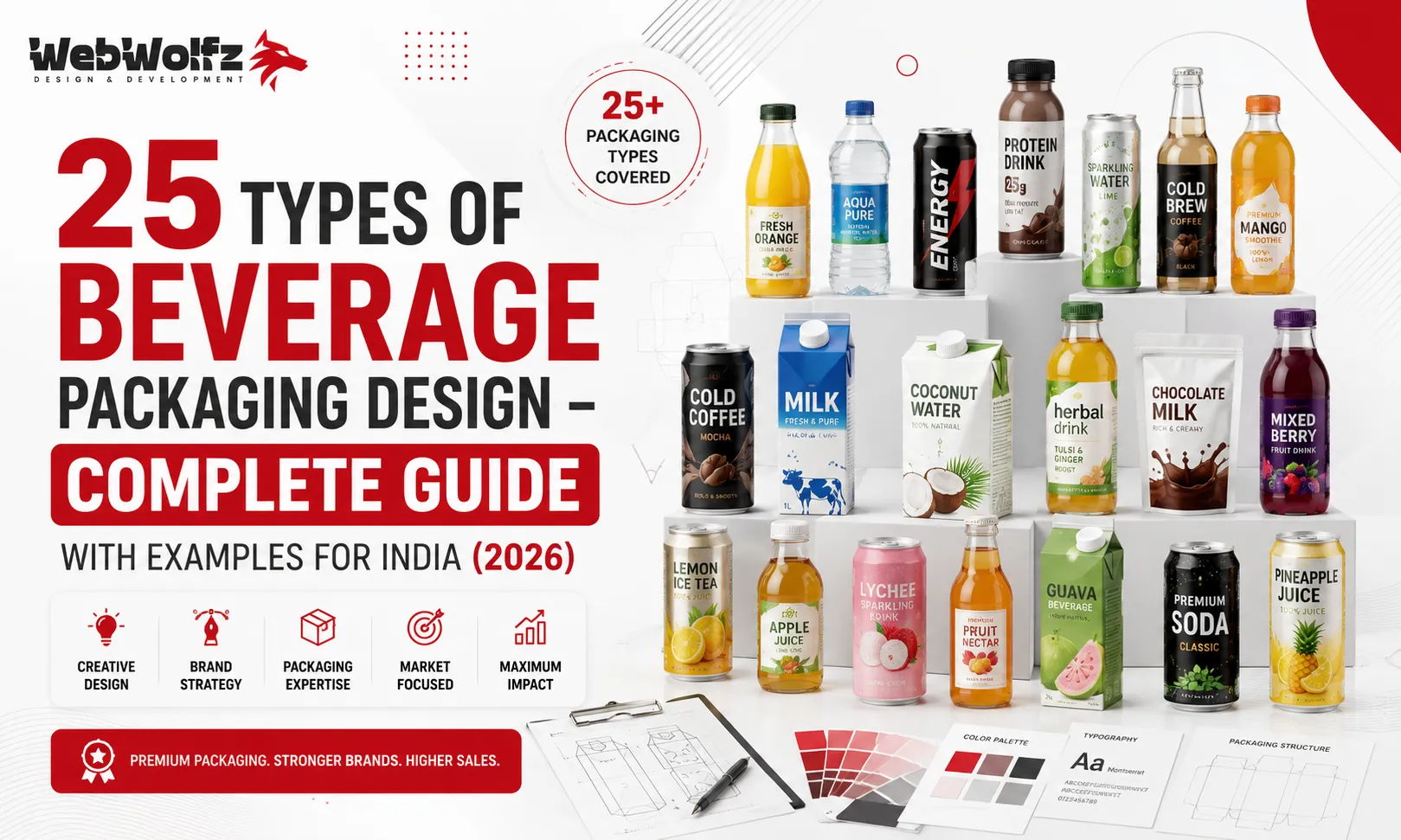
If your drink brand is sitting on a great product but not converting on shelf or online, the problem is almost never the taste. It is the packaging. In India’s beverage market, which is projected to grow at a 7.6% CAGR through 2036, the brands that win are the ones that choose the right packaging format and then design it with purpose. Whether you are launching a new energy drink, a functional water, a protein shake, or a traditional Indian juice, understanding the 25 types of beverage packaging design available to you in 2026 is the first step toward building a brand that gets noticed, trusted, and repurchased.
This guide covers every major packaging format used in the Indian beverage market right now, why each one exists, which drink categories they serve best, and what you need to know before briefing your design team.
Why Beverage Packaging Design Matters More Than Ever in India
Walk into any modern trade store in Delhi, Mumbai, or Bangalore and you will see the shelf pressure that Indian beverage brands are under. Hundreds of SKUs, similar claims, and a consumer who decides within a few seconds whether to pick up a bottle or scroll past it online. According to recent market data, bottles currently lead with around 35% of the total beverage packaging share, but cans, pouches, cartons, and sachets are all growing fast as Indian consumers shift toward on-the-go, single-serve, and functional beverage formats.
Your packaging is not just a container. It is the first impression, the trust signal, and often the deciding factor at point of purchase. The right format combined with sharp design can put a new brand on the map. The wrong one, even with good design on top, will limit your distribution, raise your production costs, and confuse your customer.
Before we dive into all 25 types, if you are a food or beverage brand looking to skip the trial and error, WebWolfz has helped multiple Indian F&B brands build packaging systems that perform both on shelf and in search. For now, let us get into the formats.
The 25 Types of Beverage Packaging Design Used in India
1. PET Bottle Packaging Design
PET (Polyethylene Terephthalate) bottles are the most widely used beverage packaging format in India. From Bisleri water to Paperboat juices, the PET bottle is everywhere. It accounts for nearly 48% of the plastic beverage packaging share in the Indian market. The design possibilities are huge: you can go for a shrink sleeve label that wraps the entire bottle, a front-and-back paper label, or even embossed branding directly into the mould.
For startups, PET offers low tooling costs and easy availability across manufacturers in Gujarat, Maharashtra, and UP. The design challenge with PET is standing out among the noise. Premium brands are now using frosted finishes, textured labels, and bold typography to make their PET bottles feel more elevated. If you are building a hydration drink or an electrolyte drink, PET is likely your most practical first format.
2. Aluminum Can Packaging Design
Slim aluminum cans have become the face of premium beverage branding in India. Energy drinks, craft sodas, sparkling water, hard seltzers, and sports nutrition RTDs have all embraced the can. Cans are highly recyclable, cool faster than bottles, and give brands a large, 360-degree canvas for design without a label gap.
The design language for cans is typically bolder and more confident than bottles. Bold color blocking, metallic finishes, gradient wraps, and minimal copy that punches hard on the front panel all work well on cans. Indian brands like Rhino Energy and newer D2C players are using the can format to project a global, modern identity to urban consumers. If you are working on a protein drink or a protein shake in RTD format, the slim can is worth serious consideration for your premium SKU.
3. Glass Bottle Packaging Design
Glass communicates premium and trust like no other material. In the Indian market, glass bottles are used for craft beverages, premium juices, kombucha, cold brew coffee, tonic water, and traditional health drinks like sharbats. The weight, clarity, and tactile quality of glass make the consumer feel the value before they even open the cap.
From a design standpoint, glass allows for embossed logos, screen printing directly on the bottle, and paper or polyester labels. Indian brands like Raw Pressery originally used glass to signal freshness and premium quality. The trade-off is cost and fragility during distribution, which is why glass is mostly used for premium channels and gifting SKUs.
4. Tetra Pak and Aseptic Carton Packaging Design
Tetra Pak is one of the most recognized packaging formats in Indian households. From Amul milk to Real fruit juice, the aseptic carton dominates ambient distribution in India. Tetra Pak recently became the first food and beverage packaging company in India to offer carton packaging with certified recycled polymers, which makes it even more relevant for sustainability-forward brands.
The design space on a carton is rectangular and structured, which rewards clean, organized visual systems. Typography, photography, and color fields all need to work across flat panels that fold into a three-dimensional shape. Cartons are ideal for dairy beverages, juices, plant-based drinks, and children’s beverage brands where ambient shelf life and convenience matter.
5. Flexible Stand-Up Pouch Packaging Design
Stand-up pouches are growing fast in the Indian beverage market. Paperboat’s early Aamras and juice pouches popularized this format among Indian consumers as a nostalgic, affordable, and convenient option. Pouches use significantly less material than rigid packaging, making them lighter and cheaper to ship.
From a design perspective, pouches offer full-surface printing with excellent color reproduction. The front panel is where the brand does its work, but the back and gusset panels are increasingly being used for storytelling, ingredients, and QR codes. If you are planning a seasoning pouch or a functional drink mix, the stand-up pouch format deserves a hard look.
6. Sachet and Single-Serve Pouch Packaging Design
Sachets are the most accessible entry point for Indian consumers, especially in Tier 2 and Tier 3 markets. A 5 Rs or 10 Rs sachet of an electrolyte powder, health drink, or coffee mix can introduce a brand to millions of consumers who would never buy a full-size pack at first trial.
The design challenge with sachets is doing a lot with very little space. Brand name, flavor, and one key benefit need to be legible on a tiny surface. Color and bold typography are your most important tools here. If you are building a hydration powder or electrolyte powder, a sachet SKU can dramatically expand your reach without heavy capital investment.
7. Shrink Sleeve Packaging Design
Shrink sleeve labels wrap around the entire bottle or can, giving brands a 360-degree canvas that covers even the shoulder and base of the container. This format is excellent for brands that want a high-visual-impact design without investing in custom mould tooling.
In India, shrink sleeves are popular for juice drinks, flavored water, and energy drinks. They allow for bold gradients, full-bleed photography, and intricate illustrated patterns that would be impossible on a standard paper label. The key design consideration is that the artwork must account for distortion during the sleeve shrinking process, which requires experienced prepress work.
8. Paper Label on Bottle Packaging Design
Paper labels, whether wet-glue applied or pressure-sensitive, remain one of the most versatile and cost-effective options for Indian beverage brands. Craft beer, kombucha, flavored waters, and artisan juices often use paper labels because they signal handcrafted quality and allow for premium paper stocks with textured finishes.
From a design standpoint, paper labels reward restraint and craft. A letterpress-style label on a glass bottle can communicate far more about a brand’s values than a busy shrink sleeve on a plastic bottle. Indian craft beverage brands are increasingly using recycled paper stocks and minimalist design to attract the conscious urban consumer.
9. HDPE Bottle Packaging Design
HDPE (High-Density Polyethylene) bottles are less common in consumer beverages but are used for milk, certain health drinks, and large-volume water dispensers. HDPE is opaque, durable, and resistant to impact, which makes it suitable for products that require light protection or rugged handling.
Design on HDPE bottles is typically done via screen printing or pressure-sensitive labels. The material does not have the visual clarity of PET or glass, which means brands using HDPE need to work harder on their label design to communicate quality. In India, HDPE is most commonly seen in institutional and pharmacy-channel beverage products.
10. Spouted Pouch Packaging Design
The spouted pouch is a hybrid between the flexible pouch and the rigid bottle. It combines the lightweight, cost-efficient structure of a pouch with a resealable spout, making it ideal for beverages that are consumed over multiple sittings. In India, coconut water, cold-pressed juices, and baby food drinks have adopted the spouted pouch successfully.
From a design standpoint, the spout is a branding opportunity in itself. Colored spouts that match the brand palette, or spouts shaped to reflect the product inside, are details that sharp brands pay attention to. The large printable front panel works well for fruit imagery, ingredient callouts, and bold brand names. If you are planning a collagen water or beauty water product, the spouted pouch positions the brand as both premium and practical.
11. Doy Pack Packaging Design
The doy pack is a specific style of stand-up pouch with a rounded bottom gusset that gives it a stable, self-standing shape. It looks more premium than a flat pouch and carries a higher perceived value on shelf. In the Indian market, doy packs are used for imported premium juices, cocktail mixers, and specialty health drinks.
The design opportunity with a doy pack is in its three-dimensional shelf presence. Because it stands upright without a holder, the full front panel is visible to the shopper. Clean, bold design with clear flavor communication works exceptionally well here. International brands entering India often use doy packs to signal quality while keeping production costs lower than glass.
12. Aluminum Pouch Packaging Design
Aluminum foil pouches are used when the product inside needs complete protection from light, moisture, and oxygen. In the Indian beverage space, this format is common for powdered drink mixes, protein shakes in powder form, and concentrated flavoring sachets. The metallic surface gives an inherently premium look that catches light on shelf.
Design on aluminum pouches relies heavily on the print quality and color choices since the substrate reflects light differently than paper or PET. Matte black with metallic accents is a popular combination for protein and fitness drink brands in India right now. If you are designing packaging for an energy gel sachet, aluminum foil laminate is often the go-to material choice.
13. Tetrahedral Carton Packaging Design
Tetra Classic, the original triangular carton shape, is still used in India for impulse-purchase beverages at a low price point. You will find these at railway platforms, school canteens, and small kirana stores. The three-dimensional tetrahedral shape is immediately recognizable and the design must work on triangular panels, which is a unique creative challenge.
Brands like Amul Masti and certain regional milk brands still use this format for its cost efficiency at scale. Despite its older look, some new-age brands are experimenting with the tetra shape as a nostalgic, retro-cool packaging choice for limited-edition launches.
14. Bag-in-Box Packaging Design
Bag-in-box is primarily a B2B or institutional format in India, used for bulk juices, wine, and beverage concentrates supplied to restaurants, airlines, and catering companies. A flexible bag containing the liquid sits inside a cardboard box with a tap. The bag collapses as the liquid is dispensed, minimizing oxidation.
While this format is not consumer-facing in most Indian retail contexts, it is worth knowing for food service brands and D2C brands targeting cafes, cloud kitchens, and hotels. The design focus shifts from shelf appeal to brand credibility on the outer box, including certifications, serving instructions, and B2B brand language.
15. Tin Can Packaging Design
Tin cans, as opposed to aluminum cans, are used for certain traditional Indian beverages like concentrated squashes, syrups, and herbal tonics that have a long shelf life. Some premium coconut water and exotic juice brands are also exploring tin cans for a heritage, artisanal aesthetic.
The design language for tin cans in India tends to be either vintage and illustrative, drawing on Indian folk art or retro advertising motifs, or ultra-modern and typographic for contrast. A well-designed tin can stands out dramatically in a sea of plastic bottles and pouches, which is why challenger brands sometimes use it as a premium and collectible format.
16. Glass Jar Packaging Design
Glass jars are less common for beverages but are used for premium concentrate juices, cocktail syrups, cold brew coffee concentrates, and functional health shots in the Indian market. The jar format allows for a wide-mouth opening, which communicates freshness and the ability to add ice or mix at home.
From a design perspective, glass jars have a visible product advantage since you can see the color of the liquid inside. This makes the product itself part of the design. Labels on glass jars tend to be smaller and more focused, letting the product do some of the visual work. If you are working on a functional coffee or CBD coffee product, a jar format with a minimal label can be a strong shelf differentiator.
17. Straw Hole Carton Packaging Design
This is the classic juice box with a straw, seen in Indian school tiffin boxes for decades. Brands like Frooti, Mango Sip, and various regional fruit juice brands use this format. The design is compact, with small panels that need to communicate clearly to both children and parents simultaneously.
Bright colors, fruit photography, and playful typography dominate this format in India. For any brand targeting children or impulse-purchase juice consumption, the straw hole carton remains one of the most trusted and widely distributed formats in the country.
18. Miniature Bottle Packaging Design
Miniature bottles, typically under 200ml, are gaining traction in the Indian premium beverage market. They are used for premium water brands, flavored shots, concentrated health drinks, and certain alcoholic beverages in travel retail. The miniature format is also popular as a gifting and sampling vehicle.
Design for miniature bottles needs to work at a very small scale. Brand identity elements like the logo and color must be legible and impactful even at thumbnail size. The bottle shape itself often does more branding work in miniature formats than in larger sizes, which is why custom moulding is more common at this end of the market.
19. Multi-Layer Laminate Pouch Packaging Design
Multi-layer laminates are used for products that need extended shelf life without refrigeration. These pouches combine multiple material layers (usually a combination of PET, aluminum, and polyethylene) to create a barrier that protects against moisture, oxygen, light, and contamination.
In the Indian beverage sector, this format is widely used for protein drink mixes, herbal drink powders, and health supplement sachets. From a design standpoint, the surface can be matte or glossy, and the finish chosen has a significant impact on perceived quality. Matte finishes are currently associated with premium positioning in the Indian health and wellness category.
20. Composite Can Packaging Design
Composite cans are cylindrical containers made from layers of paperboard, foil, and plastic. They are used for powdered beverage mixes, instant coffee, cocoa powder, and health drink powders in India. Think of Horlicks or Complan tins as classic examples of this format.
The design canvas is a full wrap-around cylinder with both a top lid and a bottom base to consider. Indian brands using composite cans tend to use strong photography, bold product naming, and clinical or aspirational color palettes depending on whether they are targeting health, indulgence, or child nutrition. If you are selling a protein shake powder or sports nutrition mix, the composite can is a high-perceived-value retail option.
21. Paper Bottle Packaging Design
Paper bottles are an emerging format that is gaining serious attention in the global beverage industry and slowly making its way into premium Indian brands. Companies like Paboco and others are developing paper-based bottles for beverages that can reduce carbon footprints compared to PET. While still early-stage in India, this format signals where sustainability-forward brands are heading.
From a design perspective, the natural texture of a paper surface creates a distinctive tactile experience that signals eco-consciousness without needing to say it explicitly. If your brand positioning is around environmental values or natural ingredients, watching this space closely is worthwhile. A few Indian craft water and wellness drink brands have already experimented with paper-adjacent packaging for their premium D2C channels.
22. Tumbler and Cup with Lid Packaging Design
Cups and tumblers with lids are the standard format for ready-to-drink coffee, bubble tea, smoothies, and fresh juice in the quick-service restaurant and cloud kitchen segment. While this is largely a foodservice format rather than a retail one, the design of the cup is increasingly a brand asset for Indian QSR chains and specialty beverage outlets.
Custom printed cups with brand colors, typography, and social media handles serve as mobile advertising. With the explosion of chai cafe chains and specialty coffee brands in Indian metros, cup design has become a serious branding investment. The sleeve that wraps the cup also offers a secondary design opportunity for seasonal campaigns and product callouts.
23. Nitrogen-Sealed Can Packaging Design
Nitro beverages, where nitrogen is infused into the drink to create a creamy, cascading texture, require specialized sealed cans with a widget inside. Nitro cold brew coffee and nitro craft beer are the primary products in this category globally, and the format is beginning to appear in premium Indian specialty stores and D2C channels.
The design for nitro cans tends to be premium and restrained, reflecting the craft and scientific precision involved in the product itself. Dark backgrounds, elegant typography, and minimal illustration are common in this category. The can itself is typically a standard 250ml or 330ml slim can, but the brand story around the nitro process is a powerful design narrative to leverage.
24. Flow Wrap and Pillow Pouch Packaging Design
Flow wrap or pillow pouches are primarily used for solid snack products but appear in the beverage space for certain powdered sticks, single-serve drink tablets, and concentrated flavoring discs. In India, this format is growing in the functional nutrition and sports category where portability and single-serving convenience are paramount.
Design on flow wrap packaging is fast, bold, and information-dense since the format is small and the consumer is looking for rapid product identification. Flavor names, key benefits, and the brand mark need to work together in a very compact space. The hydration multiplier and drink mix category in India is seeing a lot of innovation in this format right now.
25. Custom Moulded Bottle Packaging Design
The most premium expression of beverage packaging design is a custom-moulded bottle where the physical shape of the container is itself the brand. Think of the iconic Coca-Cola contour bottle or the distinctive angular shape of a Johnnie Walker bottle. In the Indian market, premium water brands, craft spirits, and luxury health drink brands are increasingly investing in custom bottle tooling to create a shape that cannot be mistaken for any other brand on shelf.
Custom moulding requires higher upfront investment in tooling and minimum order quantities, but the payoff in brand recognition and shelf presence is significant. Indian brands like Paperboat have historically used distinctive shapes to stand out in a category dominated by interchangeable formats. If you are building a brand meant to hold shelf space long-term, custom moulded packaging is the endgame.
How to Choose the Right Beverage Packaging Format for Your Indian Brand
With 25 formats on the table, the decision comes down to four factors: your product’s formulation and shelf life requirements, your target consumer’s purchase context (impulse, planned, gifting, online), your distribution channel (modern trade, general trade, D2C, food service), and your budget for tooling and minimum order quantities.
A functional beverage brand targeting gym-goers in metro cities has very different packaging needs compared to a traditional sharbat brand targeting Tier 2 markets via kirana stores. There is no universally right answer, which is exactly why getting the format decision wrong is so expensive to fix later. Getting this decision right from day one is something that experienced packaging design agencies help brands do before committing to production.
If you are a snack or supplement brand too, it helps to look at how sister categories are solving similar problems. The approaches used in food packaging design and snack packaging design for startups often translate directly into beverage format decisions, especially for hybrid products that sit at the nutrition and food crossover.
The Design Principles That Work Across All 25 Formats
Regardless of which format you choose, the principles of effective beverage packaging design remain consistent. First, clarity of communication: the brand name, product type, and primary flavor or benefit must be readable within two seconds on shelf or on a product card online. Second, color coherence across a range: if you have multiple flavors or SKUs, the design system needs to hold together as a family while still allowing individual differentiation. Third, material finish alignment with brand positioning: a matte finish on a black aluminum pouch says something fundamentally different from a glossy white shrink sleeve, even if the typography and logo are identical.
Indian brands that are winning in 2026 are the ones treating packaging as a system, not a series of individual design decisions made product by product. Brands like those covered in the whey protein packaging space have shown that a cohesive design language across formats creates compounding brand recognition over time.
One of the most common mistakes Indian beverage brands make is treating the packaging brief as a one-time project rather than a brand asset that needs strategic thinking from the beginning. If you want to see how that plays out, the pattern of errors is well documented in analyses of whey protein branding and packaging mistakes and is essentially the same across every beverage subcategory.
Where WebWolfz Comes In
If reading through all 25 types has made you realize how many decisions are involved in getting beverage packaging right, you are not alone. Most brand founders are excellent at their product but have never had to think through format choice, material selection, label construction, FSSAI compliance, and visual design all at the same time.
WebWolfz is a packaging design agency that works with Indian food and beverage brands to get all of these decisions right the first time. Instead of going through rounds of expensive redesigns or launching with packaging that underperforms on shelf, brands that work with WebWolfz get a strategic design partner from day one. If you are ready to build packaging that actually earns its place in a shopper’s hand, get in touch here.
Frequently Asked Questions
Q1. What is the most popular type of beverage packaging design in India?
PET bottles are currently the most widely used beverage packaging format in India, holding close to 48% of the plastic beverage packaging share. They are affordable, lightweight, widely available through local manufacturers, and offer strong design flexibility through shrink sleeve or paper label options.
Q2. Which beverage packaging format is best for a premium Indian brand?
Glass bottles, aluminum slim cans, and custom moulded PET bottles are the top choices for premium beverage positioning in India. Glass communicates the highest perceived value, while slim cans offer a modern, globally recognized premium aesthetic at a lower cost point than glass.
Q3. What should a beverage brand check for FSSAI compliance in packaging design?
The FSSAI label requirements for beverages include the product name, brand name, net content, ingredients list, nutritional information per 100ml, FSSAI license number, best before date, batch number, manufacturer address, and vegetarian or non-vegetarian symbol where applicable. These must all be legible and correctly placed before any product goes to market.
Q4. How does packaging design affect sales for Indian beverage brands?
Research consistently shows that packaging influences purchase decisions within seconds at the shelf. Consumers associate professional packaging with product quality and trust. Poor packaging, even for a great-tasting product, directly reduces conversion rates in modern trade and online channels. The investment in good beverage packaging design almost always delivers a measurable return in sales performance.
Q5. What is the difference between a shrink sleeve and a paper label for beverage bottles?
A shrink sleeve is a full-wrap printed plastic film that covers the entire bottle including the shoulder and base, offering maximum visual coverage and 360-degree branding. A paper label is applied to a specific section of the bottle, typically the front and back panels. Paper labels have a more natural, craft feel and are better suited for premium or artisanal brand positioning, while shrink sleeves work better for high-impact retail visibility and complex multi-color designs.
Q6. Can a small beverage startup in India afford custom packaging design?
Yes. Many packaging formats used by small Indian beverage brands, including standard PET bottles with paper labels, stand-up pouches, and sachets, require no custom tooling and have accessible minimum order quantities. The design investment itself is separate from manufacturing costs, and working with a focused packaging design agency can actually save money long-term by avoiding costly redesigns after launch.
Q7. What are the latest beverage packaging trends in India for 2026?
The major trends shaping beverage packaging design in India in 2026 include sustainable and recyclable materials like rPET and paper-based formats, minimalist design with clean typography, cultural and regional design motifs for hyperlocal brand identity, smart packaging with QR codes linking to brand stories or reorder pages, and the use of matte finishes and premium material textures to elevate mid-range products into a premium tier.