

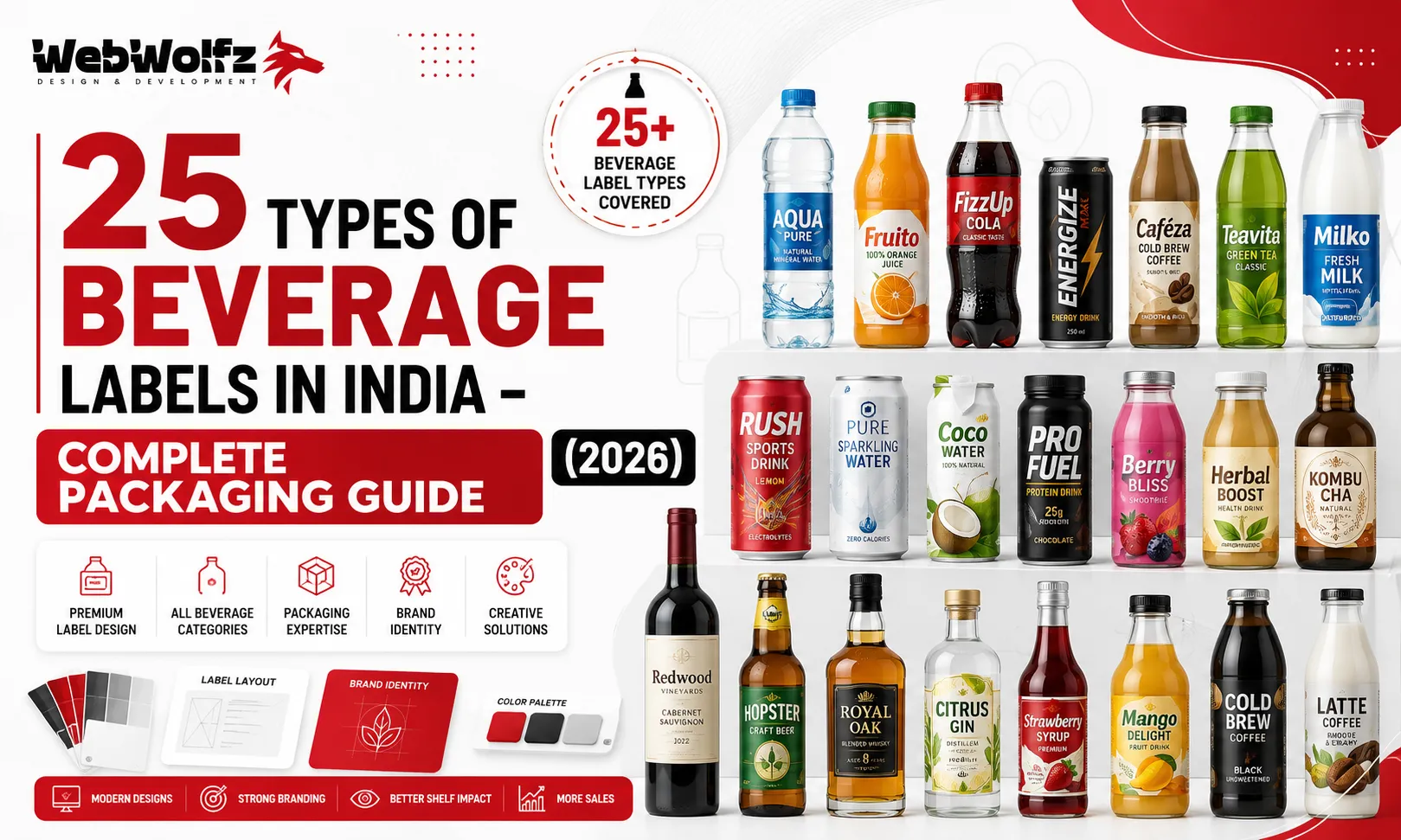
If you are launching a drink brand in India in 2026, your label is the first conversation your product has with a buyer. Before they taste the drink, before they read the benefits, before they even pick up the bottle, they see the label. And in a country where thousands of beverage SKUs are fighting for the same shelf space, the wrong label can quietly kill a product that actually tastes great.
This guide covers all 25 types of beverage labels used across the Indian market, what makes each one relevant, where each one works best, and what FSSAI expects you to put on every single one of them. Whether you are building a new energy drink, a functional water, a craft beer, or a health beverage, this is the resource you need before you go to print.
Why Beverage Labels in India Are Taken So Seriously Now
The Indian beverage market is growing fast. The alcoholic beverage segment alone is projected to touch roughly Rs 5.1 trillion by 2026, and the non-alcoholic functional drinks space is expanding at a similar pace. With that growth has come stricter oversight. FSSAI updated its labelling regulations significantly in 2025, and many of those changes came into effect in 2026. The new rules require clearer nutrition declarations, larger fonts for critical nutrients like added sugar, saturated fat, and sodium, mandatory FSSAI license numbers, and, for alcoholic products, a disclosure of the approximate number of standard drinks per pack. For drink brands, this means that beverage label design India-side is no longer just a creative exercise. It is a legal and compliance exercise first.
A well-designed label for a beverage product must therefore carry the product name, net quantity, ingredient list in descending order of weight, nutritional information per 100ml, the 14-digit FSSAI licence number, manufacturer details, and a best-before date. For alcoholic beverages, the percentage of alcohol by volume must also appear on the label. Any claim that appears on the label, whether it says “no preservatives” or “high protein,” must accurately reflect what is inside. Getting any of this wrong does not just create a bad impression. It gets your product pulled from retail.
If you want to understand how beverage branding and digital presence work together, our beverage company website design India guide for 2026 walks through exactly that.
Now, let us get into the 25 types of labels that matter for Indian drink brands.
The 25 Types of Beverage Labels Used in India
1. Pressure-Sensitive Labels (PSL)
Pressure-sensitive labels are the most common drink bottle label type used by FMCG and D2C brands in India. These are self-adhesive stickers that go on the bottle with pressure and no additional moisture or heat. They are cost-effective, work well for cylindrical bottles, and are ideal when your brand is doing frequent design changes or smaller production runs. Most mainstream juice, water, and health drink brands in India use this format. The limitation is that they struggle in very high-moisture or cold-chain environments where condensation attacks the adhesive.
2. Shrink Sleeve Labels
Shrink sleeves are printed film tubes that slip over the bottle and then shrink tightly around its shape when heat is applied. They give 360-degree coverage, which means your entire bottle surface becomes a branding canvas. For beverages with irregular bottle shapes, or products stored in cold or wet environments, shrink sleeves are a better choice than pressure-sensitive labels because they use no adhesive at all. Energy drinks, carbonated soft drinks, and functional beverages in India increasingly use this format. If your protein drink packaging design needs to stand out in a refrigerator aisle, shrink sleeves give you the coverage and the moisture resistance to do that.
3. Wraparound Labels
Wraparound labels cover the full circumference of a bottle in one single label. Unlike front-and-back label setups, a wraparound label is one piece that goes all the way around. This is common in water bottles, cold-pressed juice bottles, and energy drink cans. The advantage is visual consistency. The design flows continuously without any break, which can look very premium when executed well.
4. Front-and-Back Label Format
This is the classic two-label approach where one label sits on the front panel and a separate, smaller label carries nutritional and compliance information on the back. It is the standard for most packaged water, soft drinks, and ready-to-drink beverages in India. It is cost-effective, familiar to consumers, and easy to update if FSSAI regulations require additions to the information panel without redesigning the front.
5. Paper Labels
Paper labels are a traditional format that is still widely used, especially in the spirits and wine segment. Textured paper, uncoated paper, and specialty paper stocks give a product a handcrafted or premium feel that plastic films cannot always replicate. The limitation in the Indian context is that paper labels are vulnerable to moisture. For cold beverages, you need wet-strength paper that is treated to survive condensation. Standard paper will swell and peel on a chilled bottle.
6. BOPP Labels (Biaxially Oriented Polypropylene)
BOPP is one of the most popular label materials for beverage bottles in India because it is inherently water-resistant. Polypropylene is hydrophobic, so it handles refrigeration, moisture, and humidity without degrading. Most mainstream cold drink labels and packaged water labels in India are printed on BOPP. You can get BOPP in clear, white, and metallic variants, making it versatile across premium and mass-market products.
7. Clear or Transparent Labels
Transparent labels are made from clear film, usually BOPP or PET, and give the impression of a no-label look. The bottle itself becomes part of the design. This works exceptionally well for premium water brands, collagen waters, and beauty drinks where the purity of the liquid is itself a selling point. Our collagen water packaging design blog explores how this aesthetic works in the Indian functional beverage space. Clear labels let the liquid color speak directly to the buyer.
8. Metallic or Foil Labels
Foil labels use a metallic substrate or foil stamping to create a reflective, premium finish. They are used extensively in the spirits category, for premium water brands, and for high-end health beverages. Gold and silver foil labels communicate luxury and trust on the shelf. In the Indian market, where premium packaging is increasingly associated with product quality, foil labels are a strong choice for brands targeting urban, aspirational consumers.
9. Embossed and Debossed Labels
Embossing raises part of the label surface, while debossing presses it inward. Both techniques add a tactile quality to the label that draws buyers to touch and examine the product. This format is common in premium spirits, craft beers, and high-end energy drinks. It is more expensive than standard printing but creates a memorable shelf presence. Indian consumers at the premium end of the market respond strongly to packaging they can feel, not just see.
10. Digital Printed Labels
Digital printing allows brands to print short runs with high precision and no plates, which reduces cost and lead time significantly. For emerging beverage startups in India, digital labels are a practical starting point. You can test designs, launch limited editions, and iterate quickly without committing to large print runs. As volume scales, most brands graduate to flexographic printing for cost efficiency. If you are just starting your drink brand, understanding snack packaging design for startups can also give you perspective on how early-stage brands should approach packaging decisions across categories.
11. Flexographic Printed Labels
Flexographic printing, known as flexo, is the workhorse of high-volume beverage label production in India. Once you have a stable design and large order sizes, flexo delivers consistent, cost-efficient output at scale. Nearly every mainstream FMCG drink brand in India uses flexo for its labels. The quality is reliable, the speed is fast, and the cost per unit drops significantly compared to digital printing.
12. Offset Printed Labels
Offset printing produces very high-quality, sharp imagery. It is used when the design demands the finest color reproduction, particularly for wine labels, premium spirits, and luxury beverage products. The setup cost is higher than flexo, but the visual output for detailed illustrations, fine gradients, and complex color palettes is significantly better. Premium beverage packaging design often demands offset printing when the brand story is told through intricate visual work.
13. UV Coated Labels
UV coating is a finishing technique that applies a clear lacquer cured with ultraviolet light. It gives the label surface a high-gloss, hard finish that protects against scuffs, moisture, and fading. UV-coated labels are used across beverage categories in India, from energy drinks to fruit juices, because the finish makes colors more vibrant and the label more durable. Spot UV, where only selected elements are coated, creates a contrast between matte and gloss that works beautifully on premium beverage packaging.
14. Matte Finish Labels
Matte labels are the opposite of gloss. They suppress shine and give the product a subtle, sophisticated look. In 2026, matte finish has become a strong trend in the Indian functional beverage space, especially for protein drinks, electrolyte drinks, and wellness shots. The reasoning is simple. Consumers associate matte packaging with seriousness, science, and authenticity. A matte label on your electrolyte drink packaging design can communicate clinical effectiveness better than a glossy label sometimes will.
15. Holographic Labels
Holographic labels use special substrates or films that produce a rainbow, shifting light effect. They serve two purposes in the Indian beverage market. First, they create visual excitement on the shelf. Second, they work as an anti-counterfeiting measure, making it very difficult for fake products to replicate the label accurately. This makes them popular in the spirits and premium supplement drink categories where counterfeiting is a known risk.
16. Textured Labels
Textured labels use specialty paper or embossing to create a surface that feels different from standard smooth labels. Linen-texture, sandpaper-texture, and laid-texture paper labels are popular in the craft beverage segment, particularly for craft beers, specialty teas, and artisan juices. They communicate handmade authenticity in a way that no digital design element can. For Indian craft beverage brands trying to look different from mass-market competitors, textured labels are a powerful tool.
17. Eco-Friendly or Recycled Material Labels
With sustainability becoming a key concern among Indian urban consumers, especially the 25-35 age group that dominates D2C purchases, eco-friendly labels made from recycled paper, FSC-certified stocks, or biodegradable materials are growing in adoption. These labels carry a real cost premium, but they also carry a brand story that resonates strongly with a growing segment of the Indian market. Brands in the wellness drink and natural juice category are the most active adopters.
18. In-Mold Labels (IML)
In-mold labeling is a process where the label is placed inside the mold during the manufacturing of plastic containers, and the plastic is molded around it. This creates a label that is literally part of the container rather than applied to it. For certain PET and HDPE beverage containers, IML produces a very premium look with no risk of peeling or lifting. The process is more expensive and requires specific container manufacturing setups, making it most viable for large-scale production.
19. Heat-Applied Labels
Heat-applied labels bond to the container through a combination of pressure and heat. They are used primarily on glass bottles in the spirits and wine segment. Unlike pressure-sensitive labels, they require no adhesive layer, which makes them extremely durable and gives the bottle a very clean, direct-print appearance. Many premium spirits brands in India use heat-applied ceramic or enamel labels for bottles they want to position at the very top of the market.
20. Neck Labels
Neck labels are small labels that wrap around the neck of a bottle and serve a distinct purpose from the main body label. In the Indian beverage market, they are commonly used to communicate an award or recognition (“Gold Medal Winner”), to flag a new variant (“Now With Added Vitamin C”), or to carry a tax stamp or excise seal as required by state authorities for alcoholic beverages. For spirits brands in India, the neck label is often a legal requirement and a branding opportunity simultaneously.
21. Back Panel Information Labels
The back panel label carries all the mandatory FSSAI disclosures that the front label cannot accommodate without cluttering the design. This includes the full ingredient list, nutritional information per 100ml, allergen declarations, storage instructions, and the FSSAI licence number. In 2026, FSSAI now requires that the percentage of recommended daily allowance for added sugar, saturated fat, and sodium must be displayed in bold and larger font to ensure consumers cannot miss them. Getting the back panel right is not optional. It is what keeps your product on shelves. You can also read more about FSSAI label requirements for whey protein products to understand how the compliance framework works across product types.
22. Veg and Non-Veg Symbol Labels
The green dot for vegetarian and the brown dot for non-vegetarian products is mandatory under FSSAI regulations for all applicable packaged food and beverage products in India. For beverages this applies when the product contains ingredients of animal origin, such as gelatin-based clarification agents in juices, animal-derived collagen in beauty drinks, or dairy in protein shakes and RTD beverages. The symbol must appear on the front panel, clearly visible, in a defined minimum size.
23. Functional and Health Claim Labels
As India’s health beverage market grows, more brands are using labels to communicate specific functional benefits. Terms like “high protein,” “zero sugar,” “electrolyte enriched,” “probiotic,” or “immunity boosting” require specific compliance. FSSAI’s guidelines on health claims are strict. You cannot claim a functional benefit unless the product actually meets the nutritional threshold that justifies that claim. Brands in the hydration drink packaging design and protein shake packaging design segments need to be especially careful here because both categories are under increasing regulatory scrutiny.
24. Barcode and QR Code Labels
Every beverage product sold through modern retail in India needs a barcode. Most organised retail chains and e-commerce platforms will not list a product without a valid barcode, typically a GS1-registered EAN-13 barcode. Beyond the standard barcode, many Indian beverage brands now also include QR codes on their labels that link to the brand website, nutritional information in detail, or promotional campaigns. This is a simple but effective way to extend the label into a digital experience. If your label has a QR code, make sure it links to a well-designed landing page, because that is where a lot of first-time buyers will form their brand impression.
25. Anti-Counterfeit and Security Labels
Premium beverages, spirits, and health drinks are counterfeiting targets in the Indian market. Anti-counterfeit labels use technologies like holographic overlays, void patterns that appear when the label is removed, sequential numbering, or tamper-evident materials to protect the product. Some brands in India are now integrating NFC tags into labels, allowing consumers to authenticate a product using a smartphone tap. As the Indian premium beverage market grows, security labelling is shifting from a luxury to a necessity for brands with serious distribution.
What FSSAI Actually Expects on Your Beverage Label in 2026
Beyond the 25 types above, it is worth being clear about what Indian law expects to see on every beverage label. The FSSAI Food Safety and Standards (Labelling and Display) Regulations 2020 and the 2025 amendments form the compliance backbone. Every beverage label must include the product name, net quantity in metric units, a complete ingredient list in descending order of weight, nutritional information per 100ml, the 14-digit FSSAI licence or registration number, manufacturer name and address, country of origin for imported products, date of manufacture, and a best-before or expiry date. For alcoholic beverages, the alcohol by volume percentage is mandatory, and from July 2026, the approximate number of standard drinks per pack must also be disclosed. All mandatory declarations must appear in English or Hindi.
One of the most common errors Indian brands make is treating the label as a design project rather than a compliance document. The design matters enormously, but compliance is what keeps the product in market. Before your designer starts working on visual hierarchy and color palette, your regulatory team or a compliance consultant should define exactly what mandatory information needs to appear, and where. Only then does design have the right brief to work from.
For brands wondering how to find the right partner for all of this, our guide on how to choose a packaging design agency in India covers what to look for when the stakes of getting the label wrong are high.
The Real Cost of Getting Labels Wrong
A label that fails compliance gets your product pulled from retail. A label that fails in a cold-chain environment peels off and makes the product look defective. A label that does not stand out on the shelf means your marketing spend does not convert. In the Indian beverage market in 2026, all three risks are real.
The practical solution is to work with a packaging design partner who understands FSSAI compliance requirements, label material science, and brand strategy simultaneously. Most founders try to manage these three things separately, which means they end up with a label that looks good in a design presentation but fails in the real world.
WebWolfz has worked with beverage and food brands across India, handling everything from food packaging design to category-specific label systems. If you are spending time and energy figuring out which label type suits your product, what material to use, and how to make it FSSAI compliant while still being visually competitive, that is exactly the kind of problem we solve. You can reach us here and get clarity on what your product actually needs before you go to a printer.
Brands across categories, from electrolyte powders and protein snacks to functional coffee and beauty water bottles, have found that a clean, well-thought beverage label design not only passes compliance but also becomes the reason a buyer picks the product off the shelf. That outcome does not happen by accident. It happens when you have a proper beverage packaging design process in place from day one.
For broader perspective on how your label connects to your full brand identity, the beverage logo design types guide for India is worth reading alongside this one.
FAQ
Q1. What are the mandatory elements on a beverage label in India as per FSSAI 2026?
Every beverage label in India must carry the product name, net quantity, ingredient list in descending order of weight, nutritional information per 100ml, a 14-digit FSSAI licence number, manufacturer details, date of manufacture, and a best-before date. Alcoholic beverages must also state the percentage of alcohol by volume and, from July 2026, the number of standard drinks per pack. All mandatory content must appear in English or Hindi.
Q2. Which label type is best for cold drink bottles stored in refrigerators?
For cold beverages or products that face condensation, shrink sleeve labels or BOPP-based pressure-sensitive labels with cold-temperature adhesives are the most reliable choices. Standard paper labels swell and peel under refrigeration unless they use a wet-strength treated grade.
Q3. What is a shrink sleeve label and when should a beverage brand use it?
A shrink sleeve label is a printed film tube that wraps around the entire bottle and shrinks tightly to its shape when heat is applied. It is the best choice for irregularly shaped bottles, products in cold or wet environments, and brands that want 360-degree coverage for their design without any adhesive-related risk.
Q4. How many types of beverage labels exist in India?
There are at least 25 distinct types of beverage labels used in the Indian market, including pressure-sensitive labels, shrink sleeves, foil labels, matte labels, holographic labels, eco-friendly labels, in-mold labels, and more. Each type serves a different purpose based on the product category, storage environment, budget, and brand positioning.
Q5. Can a small beverage startup afford good beverage label design in India?
Yes. Digital printing has made it possible for startups to produce high-quality labels in short runs without the cost of printing plates. Many emerging drink brands in India begin with digital labels and shift to flexographic printing as their volumes grow. The key investment is in getting the design and compliance right from the start, so labels do not need to be redone every few months.
Q6. Do whey protein drinks and health beverages follow different label rules?
The core FSSAI requirements apply across all packaged beverages, but functional and health claim beverages have additional restrictions on what they can say on the label. Claims like “high protein” or “immunity booster” require the product to meet specific nutritional thresholds. Brands in this segment should review both the FSSAI labelling regulations and the common whey protein branding and packaging mistakes before finalising label copy.
Q7. How do I find a good packaging design agency for my beverage label in India?
Look for an agency that has worked across beverage categories and understands FSSAI compliance, not just visual design. The agency should be able to advise on label material, print method, compliance layout, and shelf impact. Our packaging design services for food brands page gives a good overview of what a full-service approach looks like.